




Painted Vanity Table
A painted vanity table brings functional surface space and decorative charm to a bedroom, combining historical periods with hand-painted finishes.
Painted Vanity Table
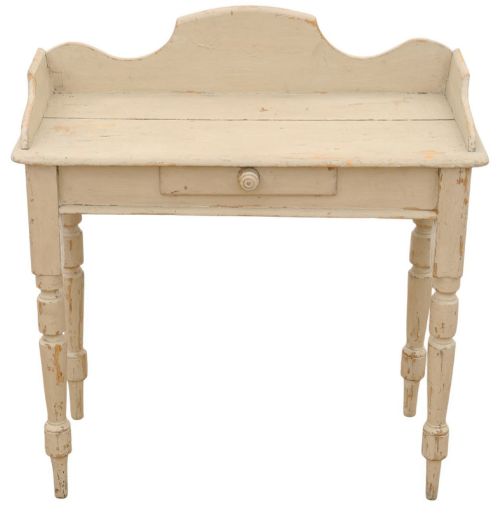
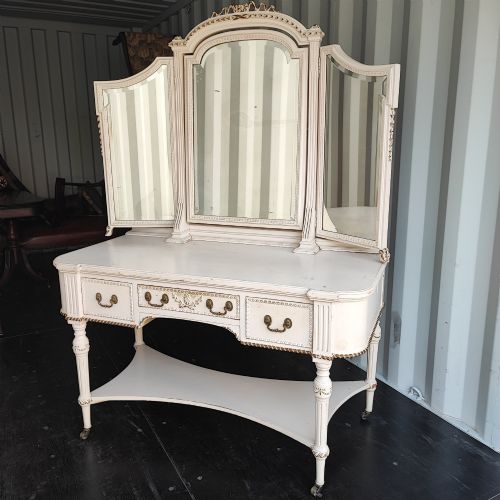
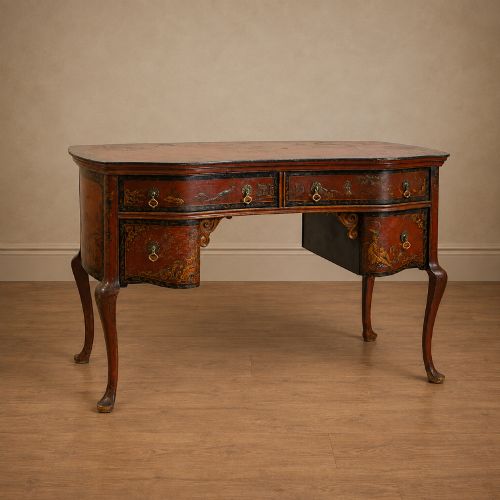
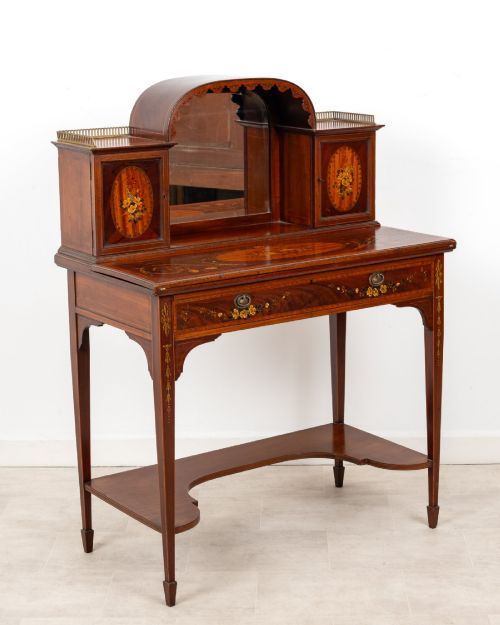
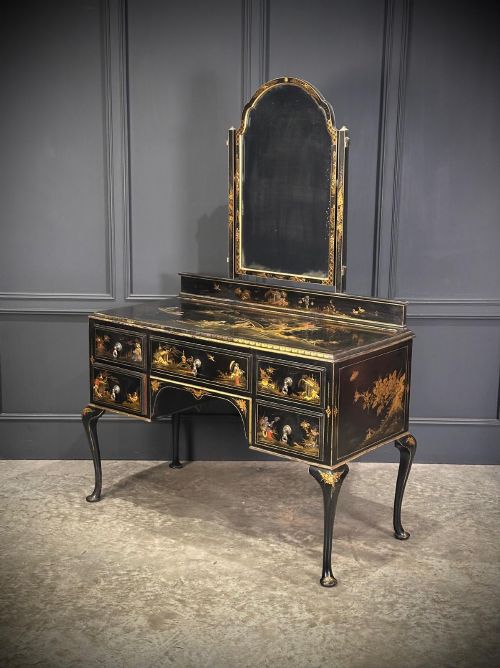
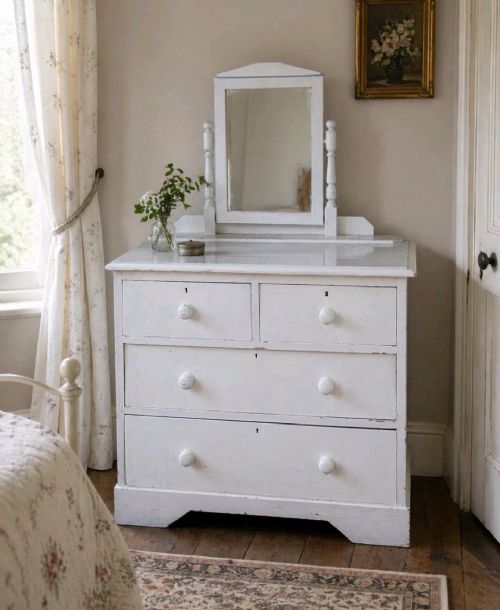
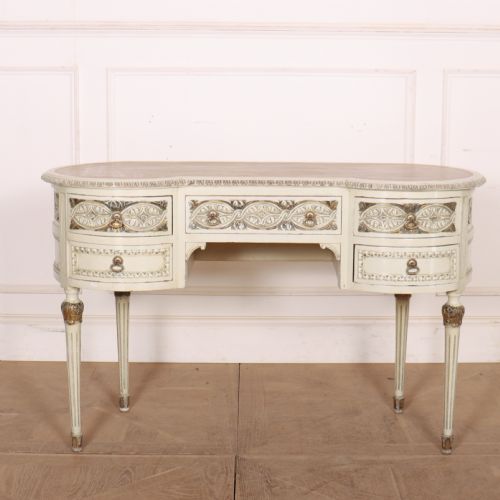
A painted vanity table serves primarily as a dedicated station for grooming and writing, appearing in various forms across multiple historical periods. When searching for a painted vanity table, buyers encounter dressing tables, writing desks with mirrors, and kidney-shaped designs from the nineteenth and early twentieth centuries.
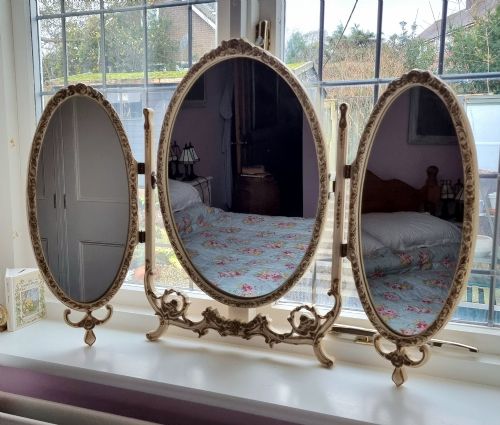
The pieces available originate from diverse styles including Edwardian satinwood items, Victorian pine pieces, and French Rococo Revival or Chinoiserie lacquered examples. Many incorporate matching elements such as dressing table mirrors, triple mirrors, or associated stools.
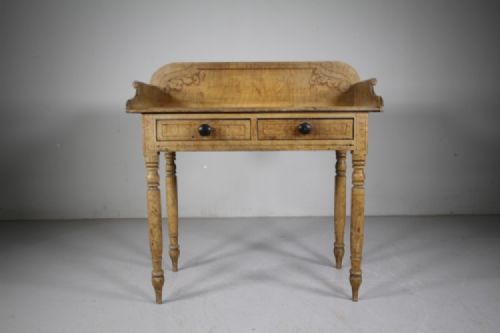
Makers and manufacturers utilised various woods including mahogany, satinwood, pine, and walnut as bases for decorative paint, lacquer, or scumble glazing. These items range from simple rustic farmhouse washstands to elaborate decorative boudoir tables.
How they were made
Craftsmen built the frames using native and imported timbers like pine, mahogany, satinwood, and walnut, often shaping them into serpentine or kidney forms. Structural elements frequently incorporated joined wood, brass fittings, and inset marble tops.
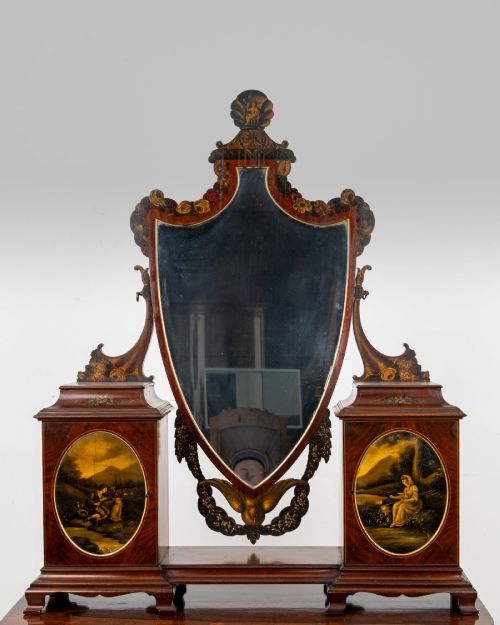
Surfaces received hand-painted decoration, Chinoiserie lacquering, stencilling, or scumble glaze over a prepared wooden base. Mirrored superstructures, cheval mirrors, and adjustable shaving stand vanity mirrors were then fitted to the main body using metal brackets and hinges.
Materials recorded across these dressing tables include painted wood, satinwood, pine, brass, glass, and marble.
What varies in quality
The integrity and preservation of the original painted surface or lacquer distinguish standard items from finer examples. Hand-painted details, delicate satinwood inlays, and intact historical gilding elevate the visual standard of a piece.
Construction methods and the choice of underlying timber dictate the durability and refinement of the furniture. Solid drawer linings, well-fitted joinery, and original matching mirrors indicate superior workshop production.
Maples of London and Paris·Jacob Petit·Joseph Meissonnier
The Painted Vanity Table Glossary
- Scumble glaze
- A translucent paint layer manipulated with tools to create textured or faux-wood effects. This technique appeared on nineteenth-century and early twentieth-century utilitarian furniture.
- Cheval mirror
- A full-length floor mirror suspended on a vertical frame that allows it to swing. Table top versions also exist for dressing furniture.
- Kidney-shaped
- A curved furniture top resembling a kidney bean. This form became popular for nineteenth-century writing desks and dressing tables.
- Satinwood
- A hard, durable timber with a natural golden sheen. It provided a smooth surface for painted decoration during the Edwardian period.
Painted Vanity Table: Frequently Asked Questions
How do I date a painted vanity table?
Dating relies on identifying stylistic markers, construction timber, and the nature of the painted finish. Pieces from the Victorian era often utilise pine or walnut, whilst Edwardian examples frequently feature satinwood and delicate floral hand-painting.
Hardware, mirror bevels, and secondary woods inside drawers provide further chronological clues. Comparing the decorative motifs against known periods helps narrow down the decade of manufacture.
Are the mirrors original to the tables?
Many dressing tables retain their original swinging plates or fixed superstructures, particularly those with fitted triple mirrors or backboards. However, mirrors on older pieces were often replaced or reunited over time due to glass degradation.
Signs of originality include matching timber patination, corresponding paint wear, and original mounting brackets. Examining the silvering on the glass can also indicate whether a mirror dates to the same period as the base table.
How do I care for a painted surface?
Painted and lacquered furniture requires gentle maintenance to preserve the decorative layer. Dusting with a soft, dry cloth prevents particulate accumulation without introducing moisture that could harm aged paint.
Harsh chemical cleaners, abrasive cloths, and direct sunlight must be avoided to prevent fading and surface cracking. Wax polishes should only be used if the painted surface has a protective clear coat.