


Painted Two Over Two
These painted two over two drawer chests and related forms offer practical storage wrapped in characterful historic finishes.
Painted Two Over Two
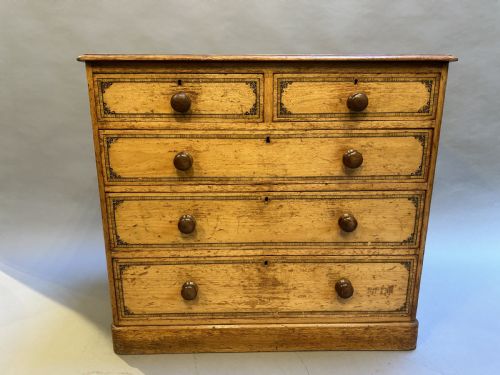
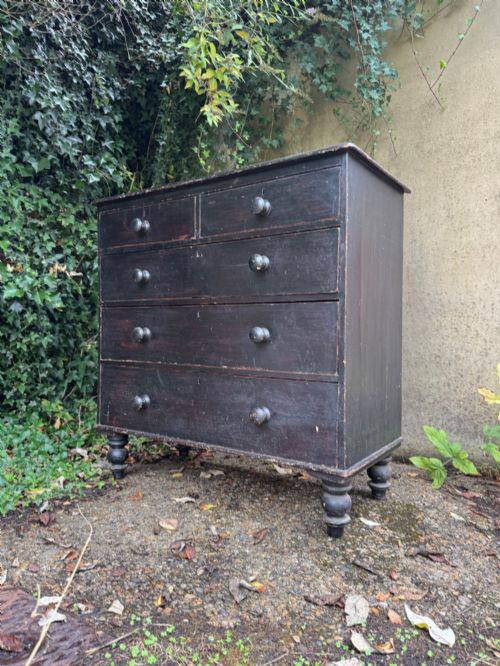
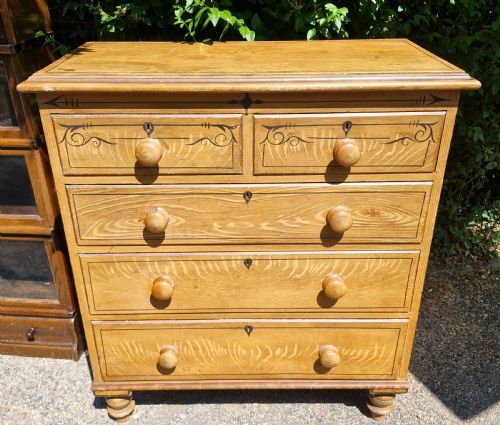
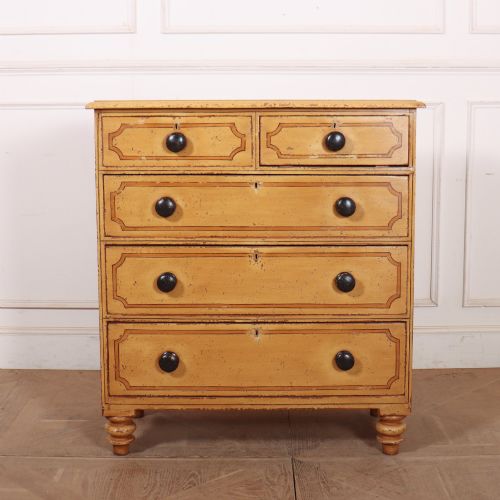
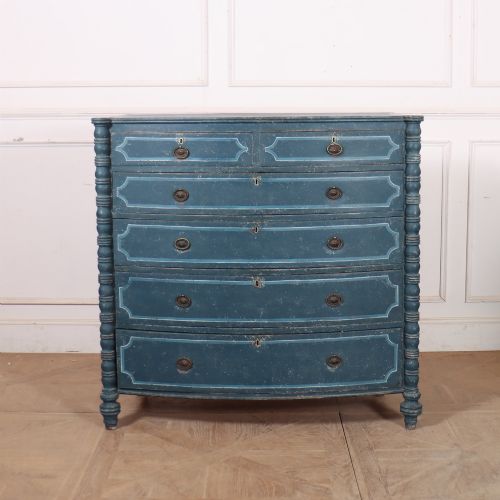
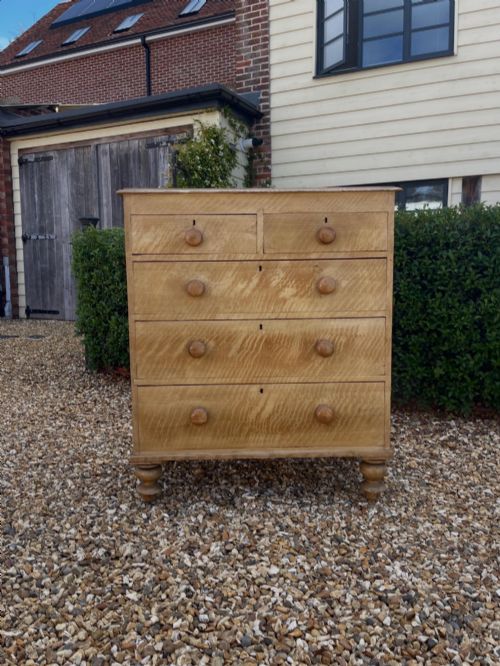
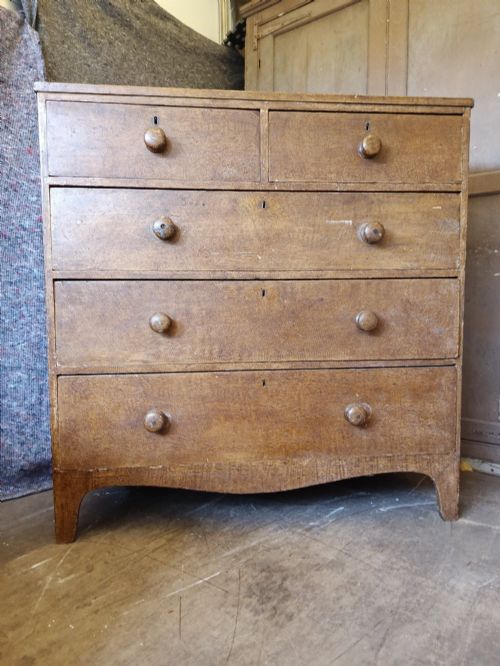
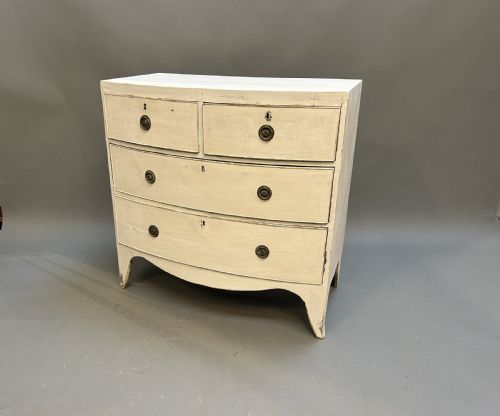
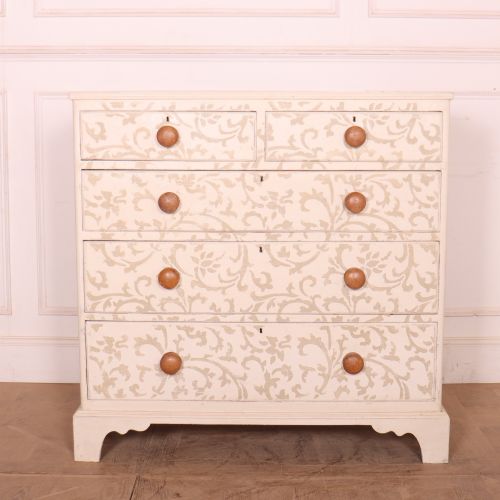
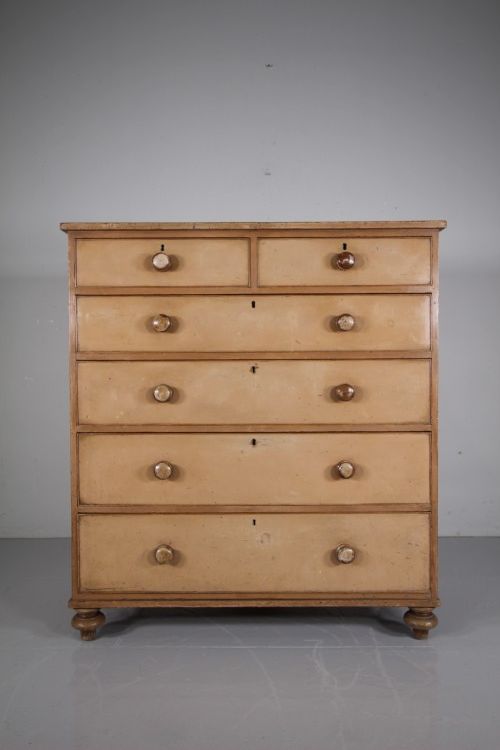
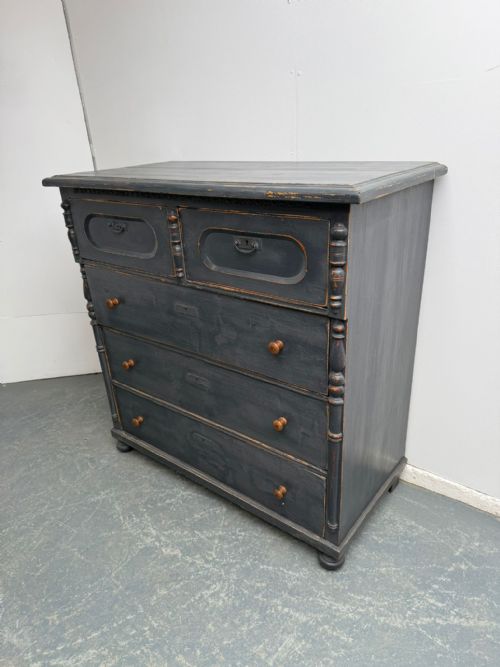
A painted two over two chest of drawers provides a compact storage format featuring two smaller drawers above two larger ones, often encountered in pine across this selection.
The pieces span the eighteenth century through the Victorian era, taking in Regency forms alongside English country styles and French chateau influences.
Makers utilised solid timbers, applying paint finishes that range from early schemes and scumbles to later hand-painted treatments.
How They Were Made
Carpenters constructed these chests primarily in pine and wood, integrating iron and brass hardware for handles and drawer pulls.
Surfaces received layers of paint, scumble glazes, or stencilling directly onto timber, preserving the grain beneath decorative coats.
A solitary watercolour depicting two young girls walking over a bridge sneaks in among the sturdy chests of drawers.
What Varies in Quality
Differentiation lies in the survival of original surface finishes, where untouched scumble or early paint schemes hold greater interest than later redecoration.
Proportion and timber selection dictate the presence of the piece, distinguishing standard utilitarian furniture from finer Regency or provincial examples.
The Painted Two Over Two Glossary
- Scumble
- A decorative painting technique involving a translucent top coat dragged or wiped over a lighter base colour to simulate wood grain or texture.
- Bowfront
- A convex, curved cabinet front popular during the Regency period that softens the linear profile of a chest.
- Overmantle
- A large mirror designed to hang above a fireplace mantel, frequently framed in giltwood and painted timber.
- Pine
- A softwood commonly utilised for vernacular and country furniture due to its availability and suitability for painted finishes.
Painted Two Over Two: Frequently Asked Questions
Are these chests made of solid pine?
Many examples on this page utilise solid pine timbers throughout their construction and drawer linings. Carpenters favoured pine for its steady working properties.
When painted or scumbled, the softwood takes decorative finishes effectively and holds historic pigments well over centuries of use.
How do I care for original painted surfaces?
Original painted surfaces require gentle dusting with a dry cloth to prevent abrasion. Avoid modern chemical solvents or abrasive cleaners that strip historic finishes.
Maintaining stable room humidity protects the underlying timber from movement, which helps keep the paint stable and secure.
What does scumbled pine mean?
Scumbled pine refers to furniture finished with a specialised glazing technique that creates mottled or simulated grain effects. Painters dragged darker translucent glazes over lighter base coats.
This method was common in Victorian workshops to add decorative depth and texture to plain softwood furniture.
How do I date an antique painted chest?
Dating relies on construction methods, timber preparation, and the characteristics of the paint layers. Hand-cut dovetails and forged iron fittings point towards earlier periods.
Comparative analysis of hardware and the wear patterns on the painted surfaces help narrow down the decade of manufacture.