
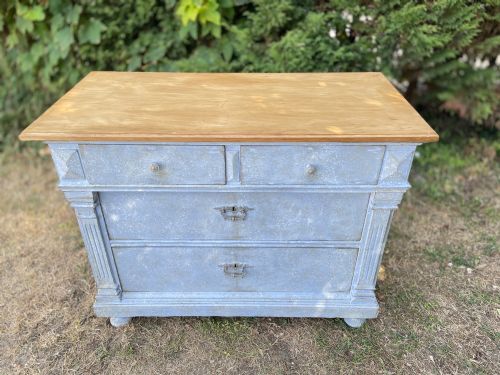
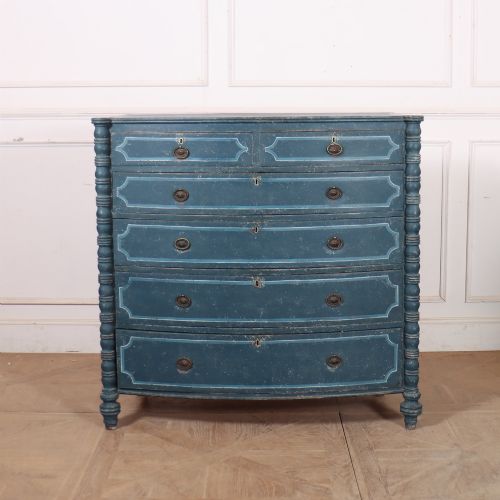
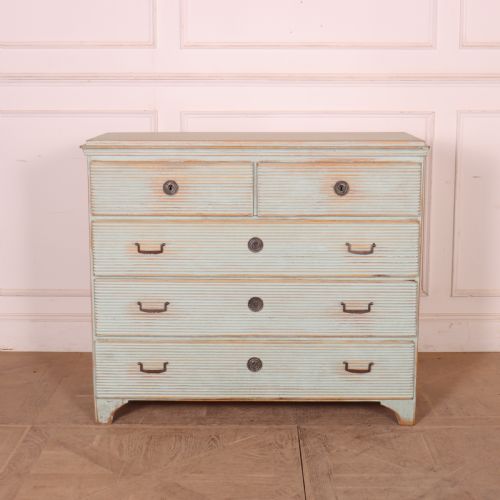


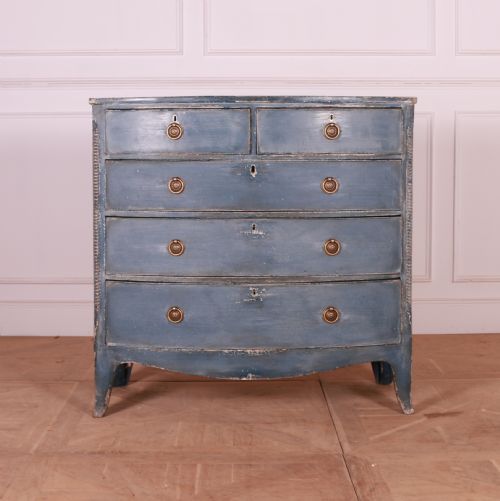

Distressed Blue Painted Commode
A distressed blue painted commode brings rustic Continental character and practical drawer storage into a room.
Distressed Blue Painted Commode
A distressed blue painted commode is a practical storage chest defined by its surface treatment and regional European origins. Buyers searching for a distressed blue painted commode encounter 18th-century and 19th-century chests of drawers originating from Sweden, Denmark, Austria, Portugal, England, France, and the Netherlands. These pieces include serpentine forms, flat fronts, and bowfronts spanning provincial, baroque, and rococo styles.
The version most commonly met on this page is a 19th-century Scandinavian or English painted chest of drawers. Pieces frequently feature regional traits such as fluted drawer fronts, diamond-point detailing, or faux marble tops. They serve as functional storage units that double as decorative focal points in hallways, bedrooms, or living spaces.
How they were made
These commodes are constructed primarily from timber carcases in pine, oak, and painted wood. Cabinetmakers built the structural frames using traditional joinery, housing drawers designed for everyday domestic use.
Surfaces were finished with paint and patinated over time, sometimes incorporating metal hardware such as brass handles and iron fittings. Continental examples often utilised specific regional decorative motifs, including carved baroque revival details or layered painted finishes.
The listings span the 18th century and 19th century, featuring oak, pine, metal, and brass across English, French, and Scandinavian designs.
What varies in quality
Quality varies according to the integrity of the original timber construction and the character of the painted surface. Pieces retaining their original period paintwork hold greater historical interest than later surface treatments.
Regional detailing and cabinetry execution also distinguish the range. Serpentine or bowfront profiles, crisp carving on baroque revival examples, and well-fitted drawer construction separate standard provincial pieces from finer Continental work.
The Distressed Blue Painted Commode Glossary
- Commode
- A low chest of drawers or cabinet originating in France during the 18th century. It typically provides substantial storage capacity while sitting lower than a tallboy.
- Serpentine
- A curved furniture front characterised by a convex centre flanked by concave ends. This undulating shape requires advanced woodworking skill.
- Bowfront
- A convex, outwardly curving furniture front that projects forward from the corners. It became a popular profile in 19th-century chests of drawers.
- Gustavian
- The Swedish interpretation of French neoclassical styles, marked by restrained elegance and pale painted finishes. It developed during the reign of King Gustav III.
- Baroque
- An ornate European style spanning the 17th and 18th centuries, known for dramatic curves and rich surface carving. Scandinavian baroque pieces adapt these grand motifs for provincial interiors.
Distressed Blue Painted Commode: Frequently Asked Questions
How do I clean a painted commode?
Dust the surface regularly with a soft, dry cloth to prevent dirt accumulation. Avoid harsh chemical cleaners or abrasive pads that can damage the historic paint layer.
For stubborn marks, use a slightly damp cloth with mild soap, drying the timber immediately afterwards. Preserving the existing patina requires gentle, minimal intervention.
Where should I place a commode?
A commode works well in a hallway as a statement piece with surface display space. It also provides practical drawer storage inside a bedroom or living room.
Keep the piece away from direct sunlight and heat sources to protect the painted timber from drying out and cracking. Allow enough clearance around the drawers for smooth daily operation.
How do I date an old commode?
Examine the timber construction, drawer linings, and secondary woods used inside the carcase. Hand-cut dovetails and regional design traits often point toward 18th-century or 19th-century origins.
Compare the overall hardware, proportions, and decorative styles like Gustavian or Scandinavian baroque against documented period examples. Paint analysis can also help determine whether a finish is original or applied later.