

Painted Trumeau
A painted trumeau combines wall glass with an integrated oil painting or decorative panel, offering architectural presence to a room.
Painted Trumeau
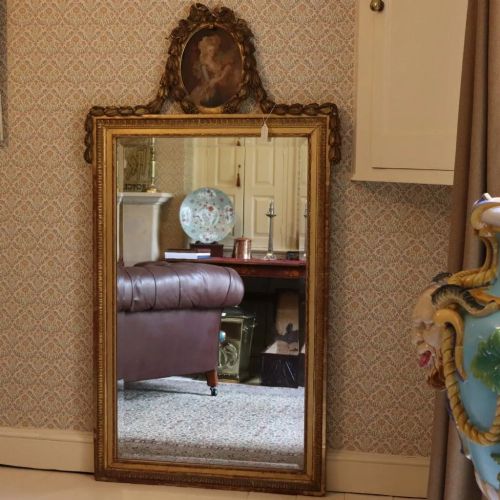
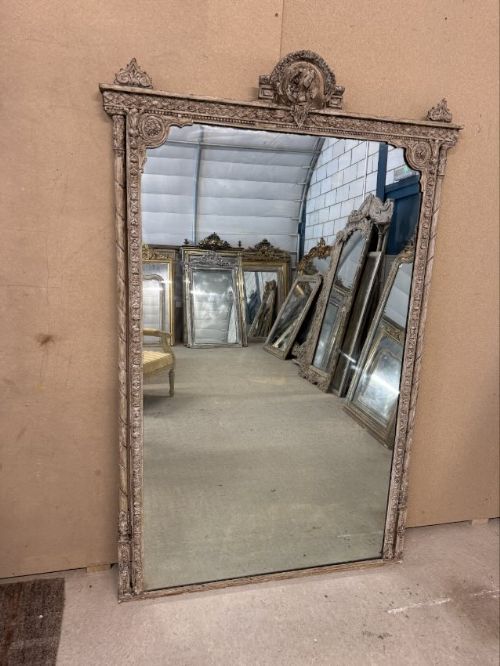
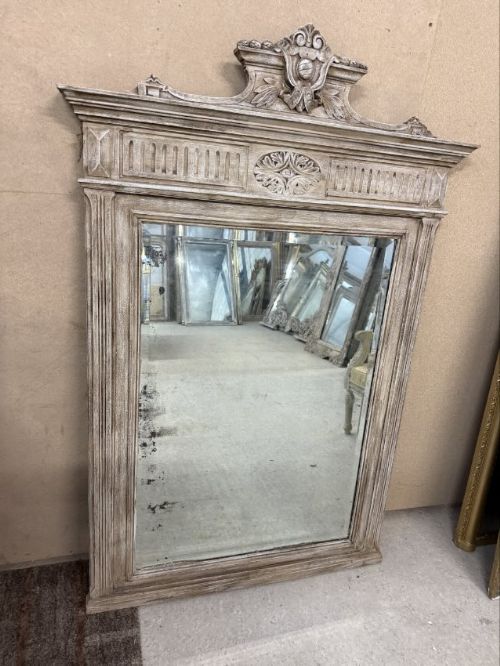
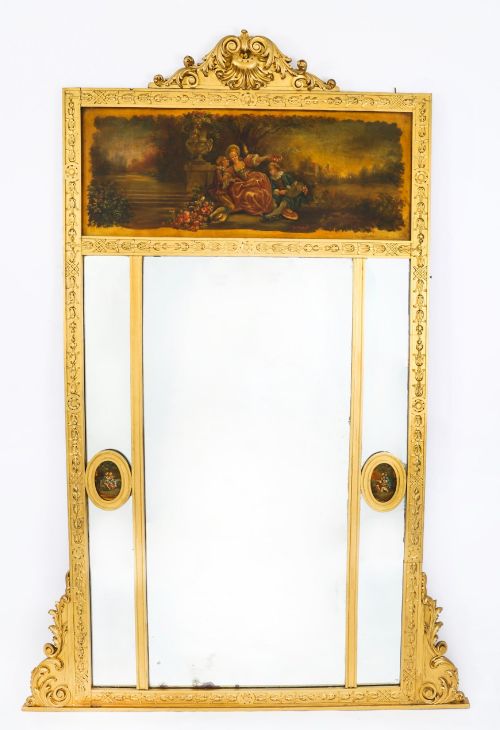
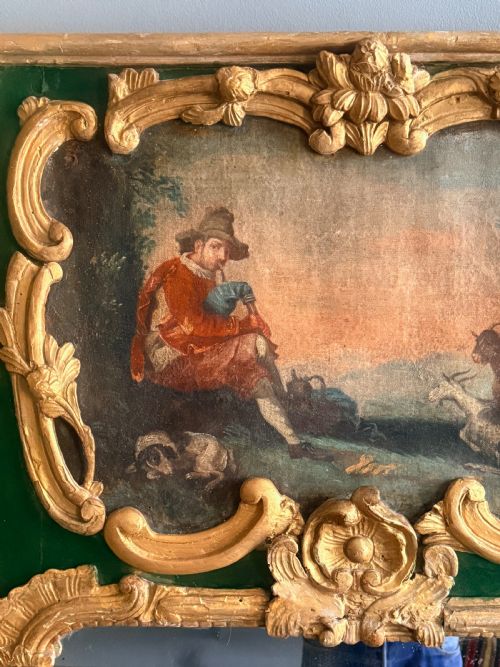
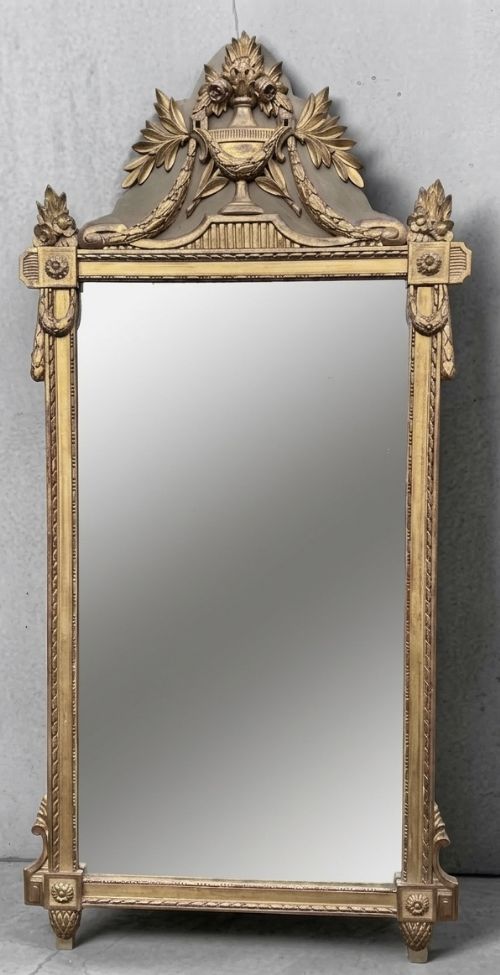
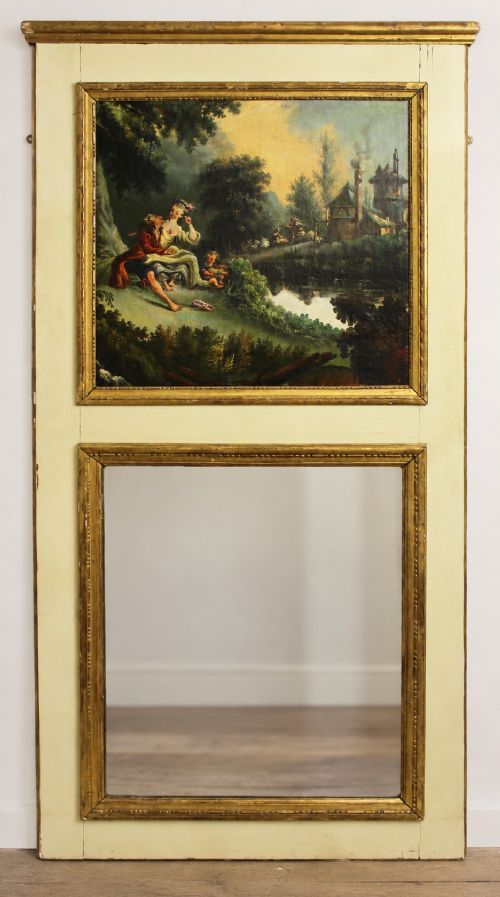
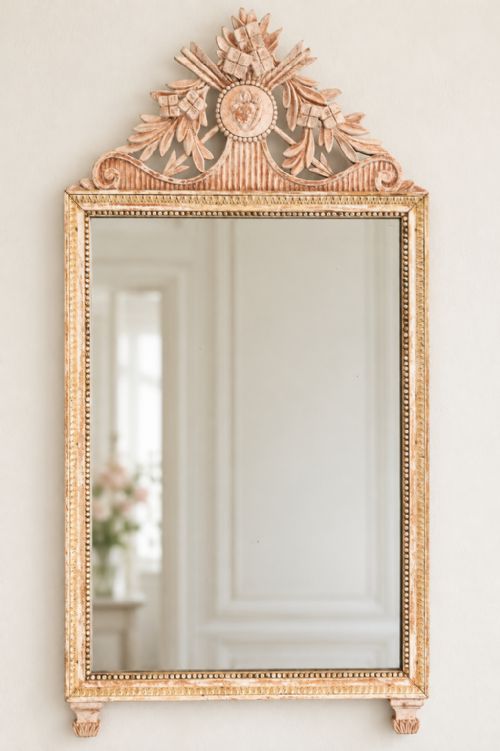
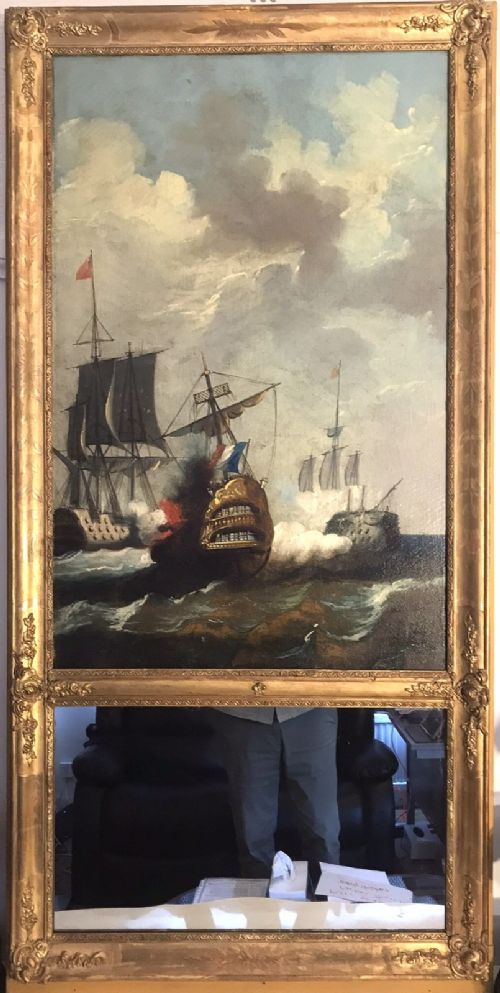
A painted trumeau unites a mirror plate with an upper pictorial or decorative panel inside a single architectural frame designed for wall hanging or placement above a mantel.
Most examples encountered here originate from France and Britain, spanning periods from the eighteenth century through the early twentieth century.
Forms range from tall pier mirrors positioned between windows to grand overmantels and console table combinations.
Materials and construction
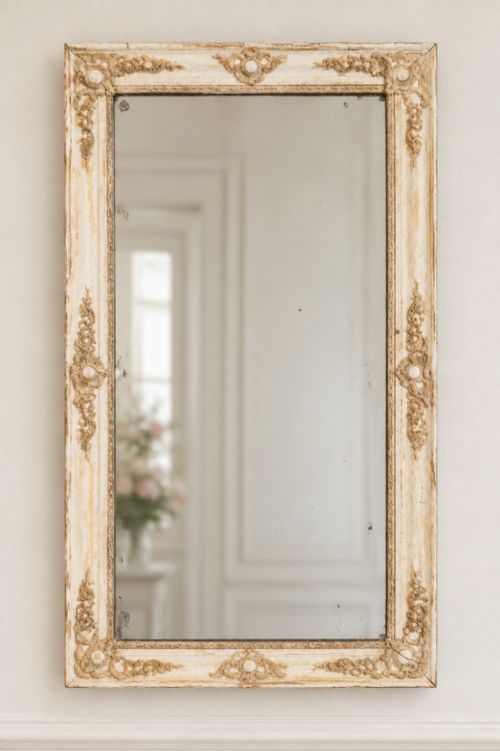
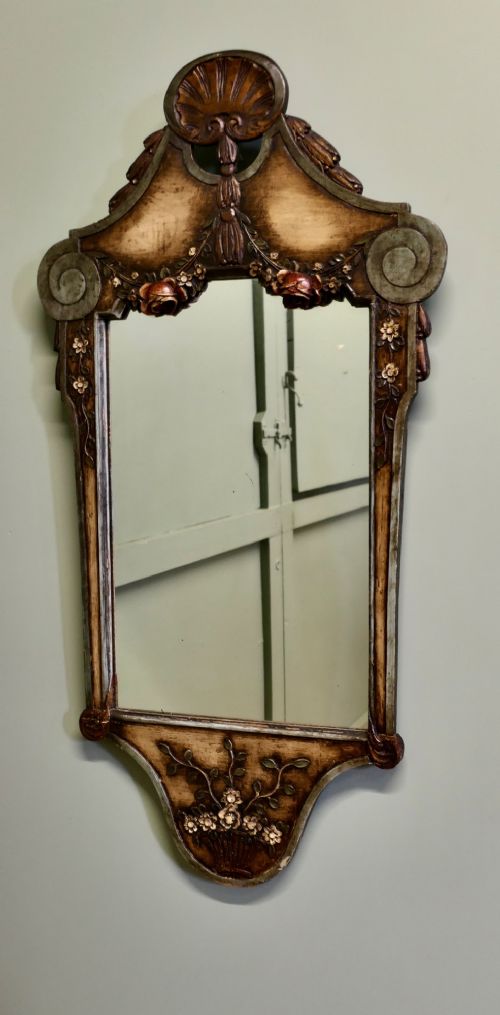
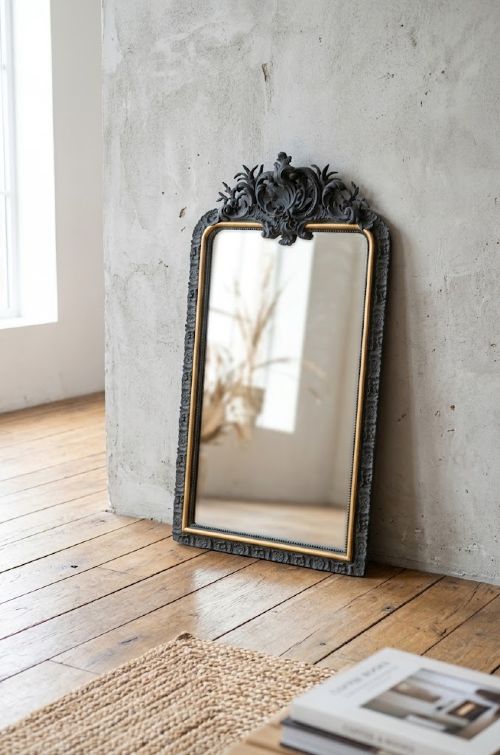
Wood frames, constructed from pine, walnut, mahogany, or maple, receive coats of paint, gesso, and sometimes parcel gilding or gold leaf.
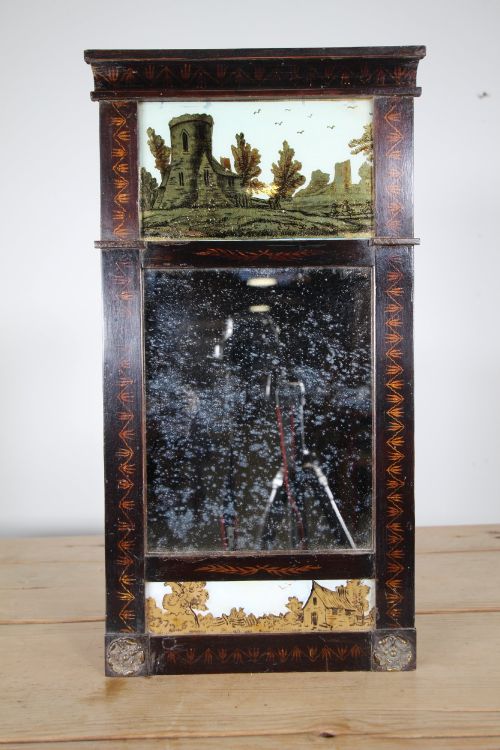
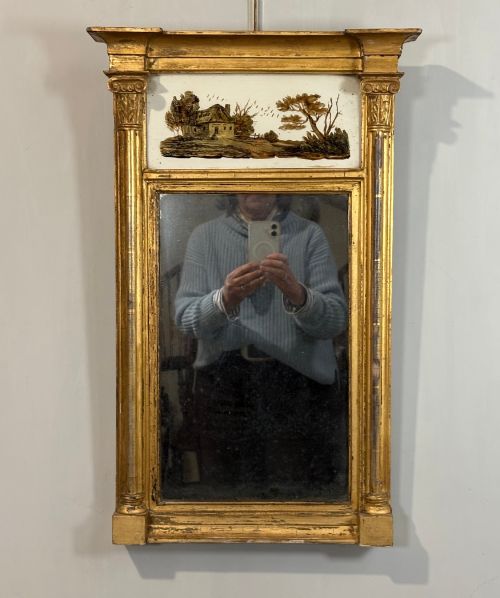
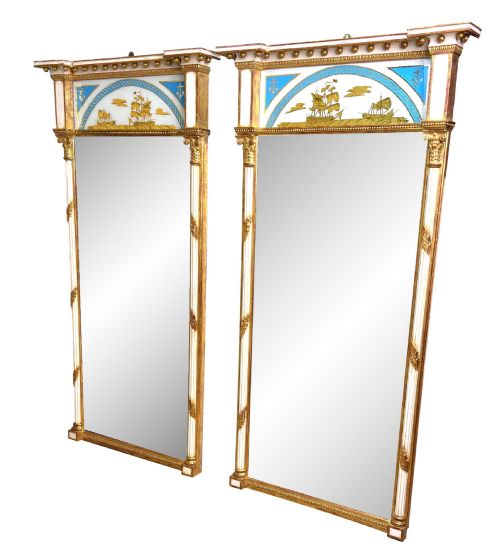
Upper panels frequently feature oil paintings on canvas or wood depicting pastoral scenes, seascapes, or equestrian subjects, alongside verre églomisé reverse glass panels.
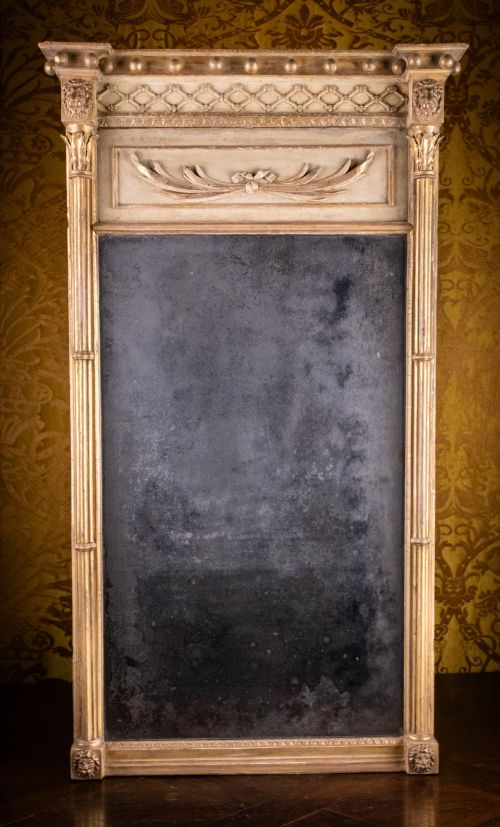
Original mirror plates often utilise mercury glass, showing the distinct ageing and speckling characteristic of older manufacturing methods.
Painted Trumeau Retail Price Guide 2026
Typical asking prices for painted trumeau among the pieces listed under this phrase on Sellingantiques today, from the lower quarter to the upper quarter. They describe what is for sale here now, not the wider market.
Listings span the eighteenth century through the early twentieth century, featuring French Provincial, Regency, and Louis XVI styles.
Judging quality
Quality rests upon the execution of the painted panel and the harmony between the glass plate and the surrounding wood or gesso carved ornament.
Subtlety in the layering of paint, gilding, and original surface patination separates finer artisan production from simpler decorative items.
The Painted Trumeau Glossary
- Trumeau mirror
- A wall mirror incorporating an upper painted or decorated panel within a unified wooden frame. These pieces were traditionally built to fit the pier wall between two windows.
- Verre églomisé
- A cold decoration technique where design work is applied to the reverse side of glass using gold or silver leaf and paint. This creates a reflective, metallic surface often seen in Regency pier glasses.
- Pier mirror
- A tall vertical glass designed to hang on the narrow wall space between windows or above a console table. They reflect light deep into period rooms.
- Gesso
- A plaster mixture applied to wood frames to provide a smooth base for gilding and painting. Carved details are often built up in gesso before finishing.
- Overmantel mirror
- A wide horizontal mirror manufactured specifically to hang above a fireplace mantelpiece. They frequently share stylistic motifs with trumeau panels.
Painted Trumeau: Frequently Asked Questions
What is a painted trumeau?
A painted trumeau is a decorative wall mirror that incorporates an integrated painting or decorative panel directly above the glass plate. These architectural fittings were designed to sit flush against drawing room walls.
They bring height, reflected light, and original artwork into an interior space within a single unified wooden frame.
Where were painted trumeaus placed?
These mirrors were traditionally installed on the pier wall situated between two large windows to maximise daylight within eighteenth and nineteenth century rooms.
They also appeared frequently mounted above fireplace mantelpieces or paired directly with matching console tables.
How do I identify mercury glass?
Mercury glass older plates display dark speckling, uneven reflection, and soft cloudiness caused by the historical silvering process. These visual characteristics develop naturally over centuries of oxidation.
Modern replacement plates appear uniformly bright and lack this characteristic mottled depth.
How do I care for a painted trumeau?
Maintain the painted wood and gilt surfaces by dusting gently with a dry, soft cloth without applying liquid cleaning products. Protect the original oil painting and silvered glass from direct sunlight and damp conditions.
Ensure wall fixings are secured adequately to support the substantial weight of wood, gesso, and glass.