
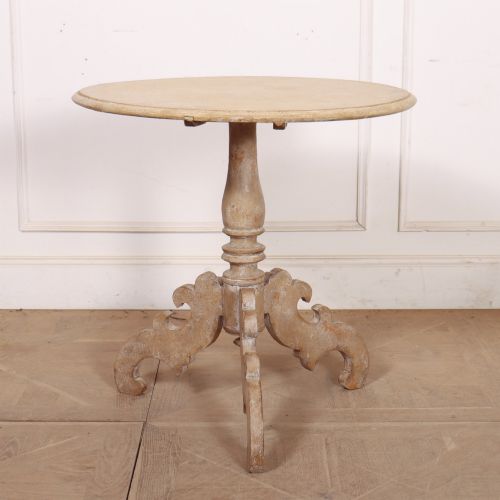
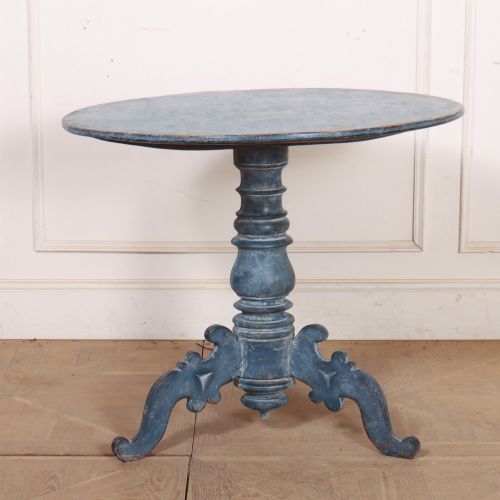
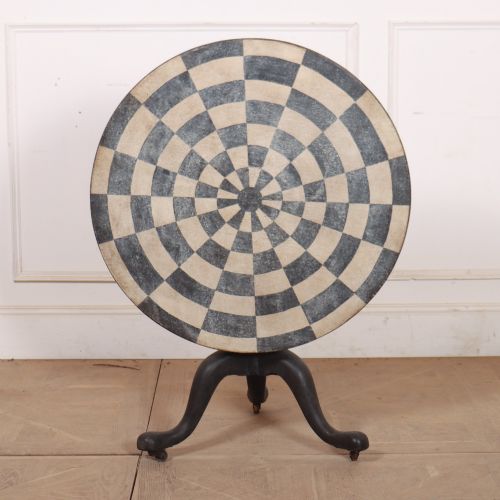
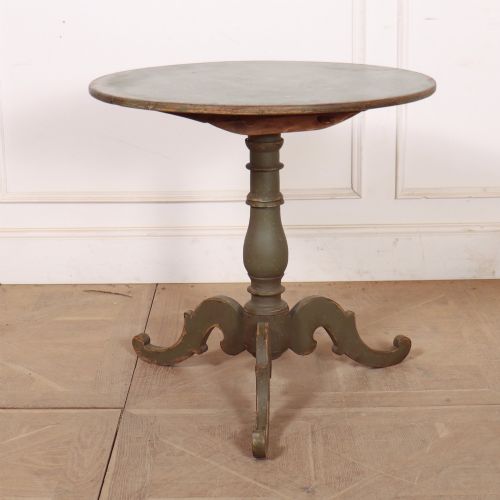
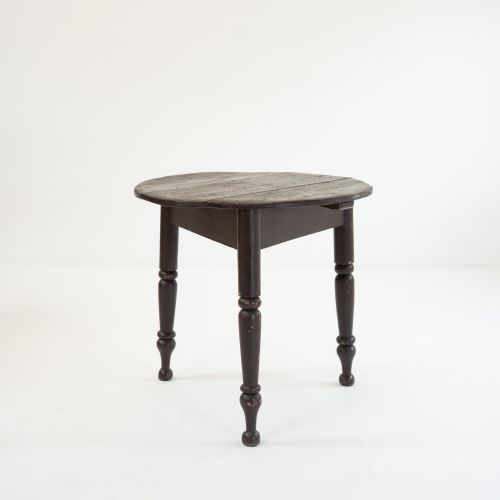
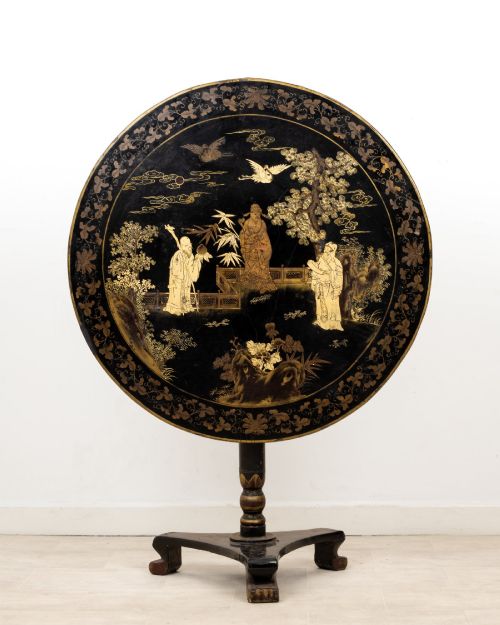
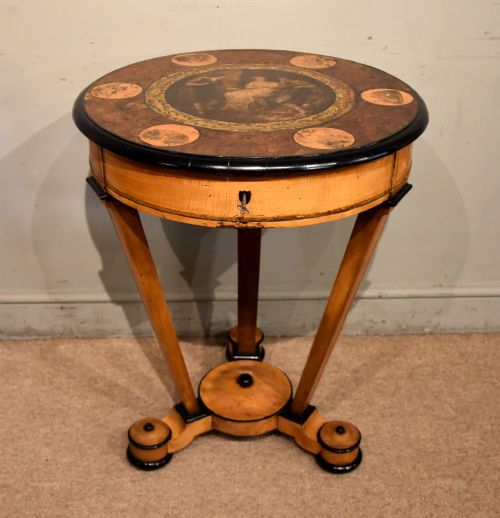
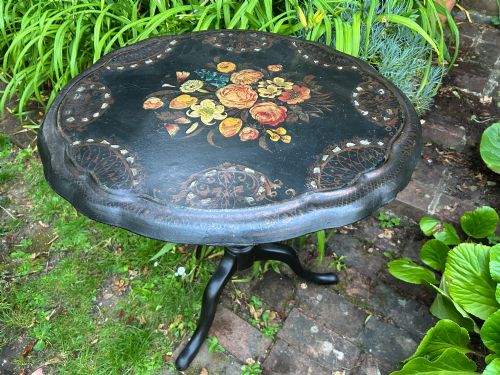
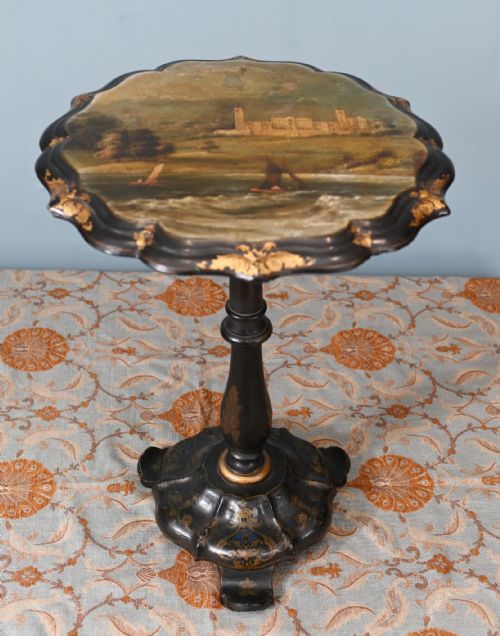
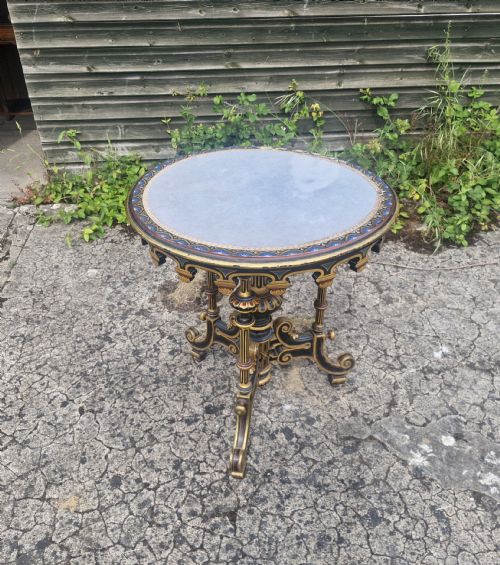


Painted Tripod Side Table
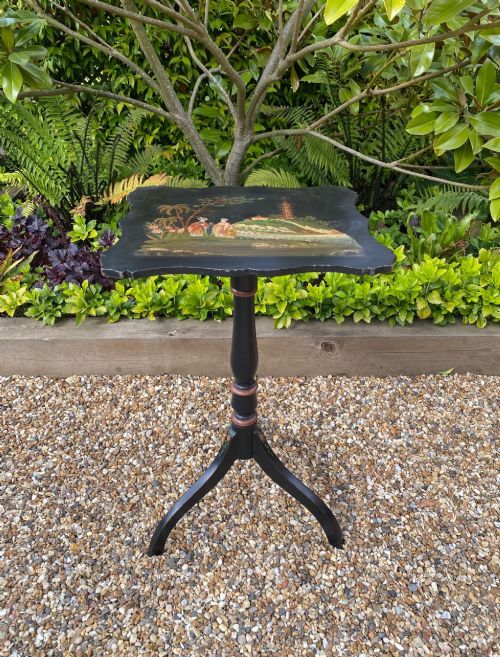
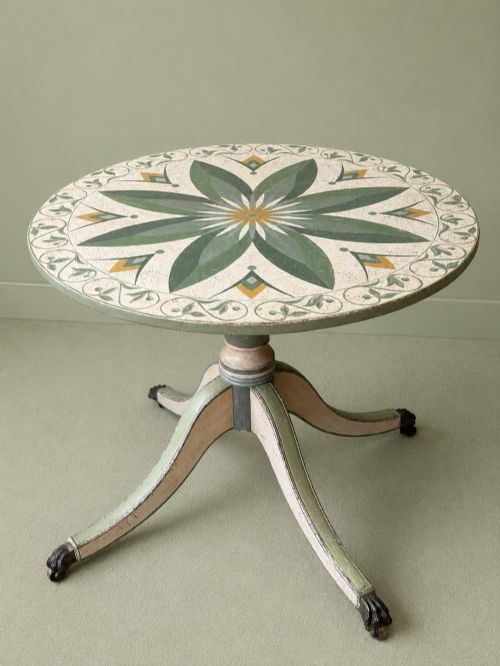
A painted tripod side table brings functional charm and decorative colour to a room, resting on three stable legs.
Painted Tripod Side Table
A painted tripod side table is a compact furniture form supported by a central pillar above three legs, featuring decorative surface finishes. Buyers looking at this phrase seek versatile small stands suited for lamps, drinks, or incidental display.
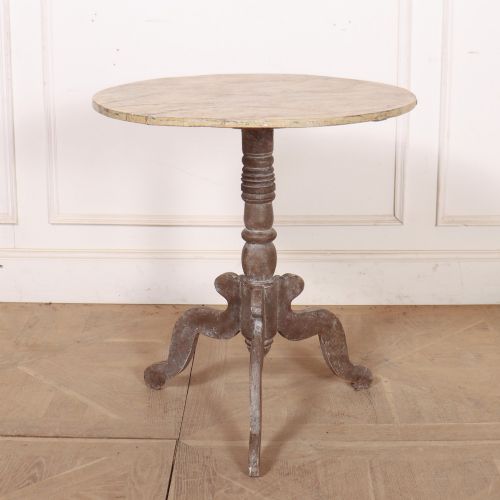
The versions most commonly met on this page span the nineteenth century and the Victorian era, alongside Swedish country pieces. These items appear in forms such as tilt top tables, lamp tables, and occasional tables.
Regional variations include English cricket tables, Scandinavian country designs, and Chinoiserie lacquer work. Each style brings distinct proportion and decorative vocabulary to the basic three-legged format.
How they were made
Construction relies primarily on wood, utilising pine, oak, satinwood, and ebonised timber shaped into turned pedestals and supporting legs. Tops are frequently formed from solid timber boards or tilt top mechanisms designed to pivot upright when not in use.
Surface decoration employs paint, lacquer, and gilt, sometimes executed through hand painting or ink work. Certain pieces feature later decorative additions or specialised finishes such as japanning and parcel silvering.
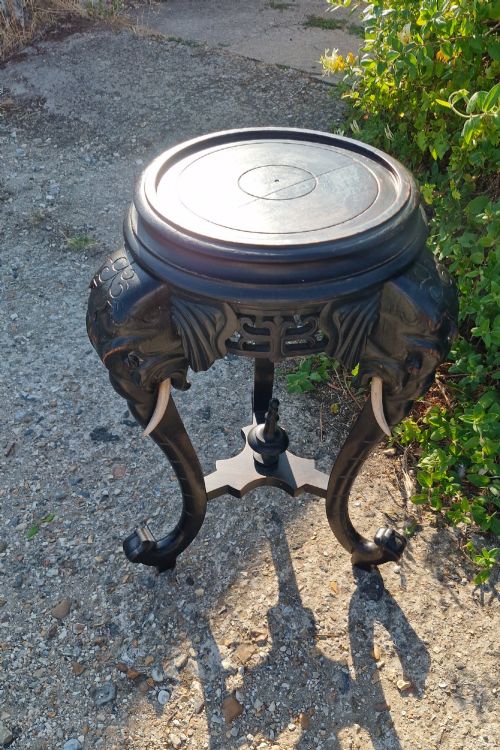
One exceptional late Victorian piece includes painted wooden tusks, offering a whimsical sculptural detail to the traditional tripod format.
What varies in quality
Quality rests upon the crispness of the original paintwork and the structural integrity of the tripod base. Fine examples display harmonious proportion between the central column and the splayed legs, alongside undisturbed decorative surfaces.
The sophistication of the painted ornamentation distinguishes standard utility furniture from finer artistic output. Original untouched decorative schemes hold greater visual coherence than later surface enhancements applied during subsequent decades.
The Painted Tripod Side Table Glossary
- Tripod table
- A small circular table supported on a central pillar with three legs. This construction prevents wobbling on uneven floors.
- Tilt top table
- A table featuring a hinged mechanism that allows the surface to lock vertically. This design enabled compact storage against walls when the table was idle.
- Cricket table
- A small circular wooden table standing on three splayed legs, traditionally associated with vernacular English interiors. The three-legged format ensured stability on flagstone floors.
- Japanning
- A European imitation of East London and Asian lacquer work using heat-cured varnishes. It creates a dark, glossy surface often decorated with raised metallic motifs.
- Gueridon
- A small French occasional table or stand, often round and raised on a single pillar. They frequently incorporate marble tops or decorative painted woodwork.
Painted Tripod Side Table: Frequently Asked Questions
What is a tilt top table?
A tilt top table includes a hinged catch beneath the surface that allows the top to fold flat against the central pedestal. This mechanism made storage convenient in compact nineteenth century rooms.
Such tables served dual purposes as decorative display pieces when folded down and as space-saving objects when tilted away.
How do I use a lamp table?
A lamp table provides a convenient surface for lighting, books, or small decorative items beside seating or in corners. Their compact footprint suits spaces where larger furniture would crowd the room.
Positioning them carefully prevents accidental tipping, as three-legged bases respond differently to lateral pressure than four-legged designs.
Are painted finishes original?
Many pieces retain their original decorative schemes, whilst others display later painted surfaces applied during the Victorian period or the twentieth century. Examining the wear patterns and pigment integration helps determine the age of the decoration.
Both original and later decorative finishes offer distinct aesthetic qualities suited to traditional and country interiors.
How do I identify Swedish country tables?
Swedish country tables typically feature pale painted finishes, minimal turned woodwork, and simple proportions. They reflect Scandinavian interior traditions focused on maximising light in domestic spaces.
Their restrained decoration contrasts with the more ornate Chinoiserie or Victorian pieces found in other regional traditions.