






Painted Timber Sideboard Table
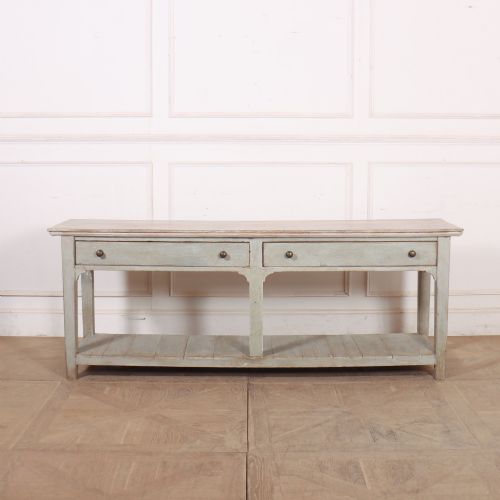
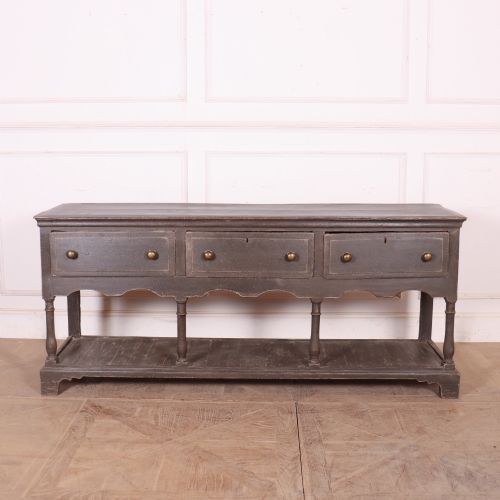
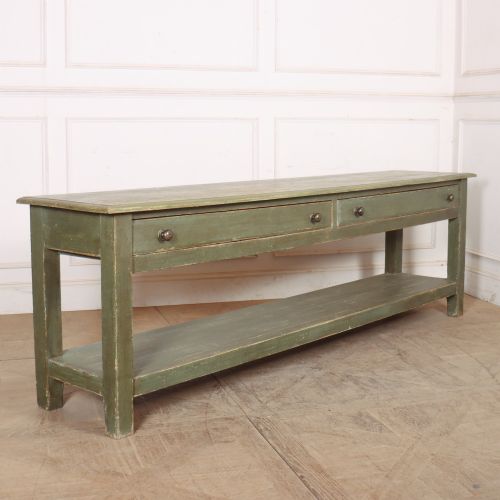
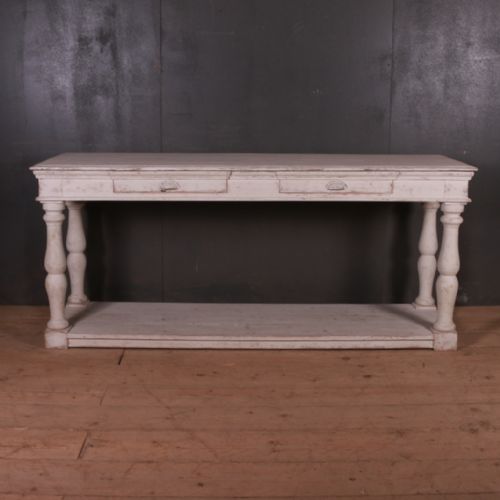
These painted timber sideboard table examples are sturdy utility pieces designed for storage and serving, bringing centuries of rustic character straight into your kitchen or dining room.
Painted Timber Sideboard Table
The selection ranges from expansive serving tables with lower potboards to smaller console tables, drapers tables, and lamp tables. These forms bridge the gap between kitchen workspace and dining room display, often constructed with practical drawers and open lower shelves for storage.
How they were made
Construction relies primarily on heavy timbers such as pine and oak, built to withstand daily domestic labour in country houses and farmhouses. Joinery focuses on utility and strength rather than delicate embellishment, utilising sturdy framing for potboards and serving surfaces.
Surfaces are finished with layers of paint, sometimes applied by hand over decades of use, giving these pieces their characteristic weathered appearance. Metal elements like brass and iron appear selectively in drawer pulls, hinges, and structural brackets.
Painted Timber Sideboard Table Retail Price Guide 2026
Typical asking prices for painted timber sideboard table among the pieces listed under this phrase on Sellingantiques today, from the lower quarter to the upper quarter. They describe what is for sale here now, not the wider market.
Several pieces show the glorious stubbornness of country carpenters who used whatever scrap iron was to hand to fix a wobbly drawer.
What varies in quality
Quality rests in the proportion and timber selection of the frame, distinguishing straightforward utilitarian work from more deliberate country house cabinet making. Well-balanced proportions in larger dresser bases and serving tables dictate how successfully the piece sits within a modern room.
The character of the painted surface significantly alters the visual weight of the piece, with genuine historic paint layers offering greater depth than later decorative applications. The retention of original brass or iron hardware and the structural integrity of lower pot-shelves complete the measure of quality.
The Painted Timber Sideboard Table Glossary
- Potboard
- A lower open shelf built into a dresser base or serving table, traditionally used for storing heavy pots and dishes. This practical addition provides structural stability to the base while offering visible display space.
- Dresser Base
- The lower section of a kitchen dresser featuring cupboards and drawers beneath a solid serving surface. These items often stand alone as sideboards or serving tables in contemporary interiors.
- Drapers Table
- A long, narrow utility table originating from textile shops and mercantile use, adapted for domestic serving and preparation. They typically feature shallow drawers and generous under-table clearance.
- Console Table
- A table designed to stand flat against a wall, frequently utilised for display and serving in hallways or dining rooms. In country pieces, these share the sturdy timber construction of larger work tables.
Painted Timber Sideboard Table: Frequently Asked Questions
What is a potboard dresser base?
A potboard dresser base is a heavy timber storage unit featuring a flat top for serving and an open lower shelf for bulky kitchenware. These robust pieces formed the backbone of rural kitchens before fitted cabinetry.
Today, they function brilliantly as sideboards or kitchen islands, offering both concealed drawer storage and open display below.
How do I style a serving table?
Serving tables look best against a plain wall where their painted timber finishes and utilitarian proportions can command attention. You can use the top surface for lamps, ceramics, or food display during gatherings.
The lower potboard or shelf provides an ideal spot to stack heavy mixing bowls, wooden boards, or large books.
Where were drapers tables used?
Drapers tables originated in commercial textile shops where merchants measured and displayed rolls of cloth on long timber surfaces. Their narrow proportions and practical under-frame storage made them exceptionally useful working furniture.
In domestic settings, their length and shallow depth suit hallways, dining rooms, and behind sofas.
How do I date a painted timber table?
Dating relies on observing construction methods, timber choices like pine or oak, and the wear patterns embedded in the paint layers. Eighteenth-century examples generally display heavier hand-planed timbers and older joinery techniques.
Nineteenth-century pieces, including those from the 1860s and 1880s, often show standardised regional workshop practices from English, Welsh, or French traditions.