
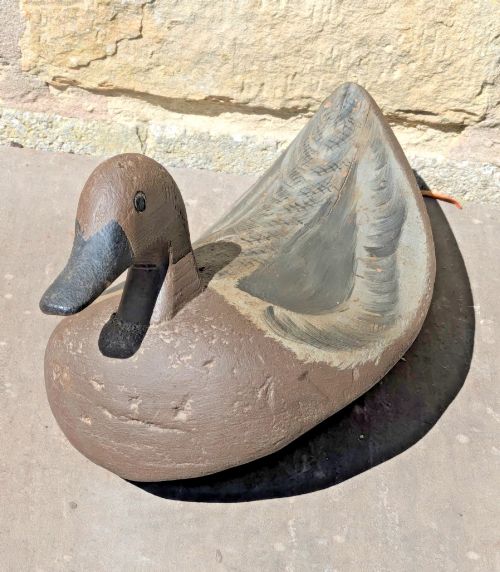
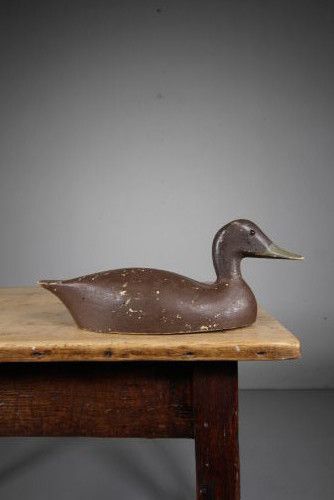
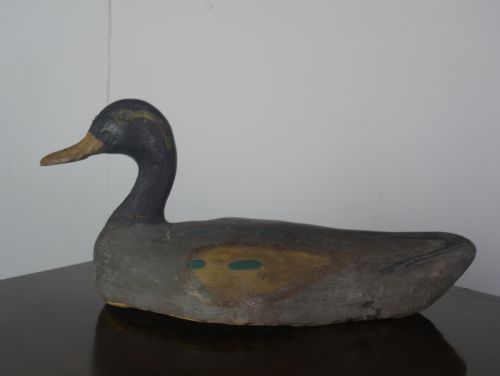


Painted Timber Duck Decoy
A painted timber duck decoy brings honest folk art character to a room, offering the warmth of old working objects shaped by hand.
Painted Timber Duck Decoy
A painted timber duck decoy is a traditional working carving created to attract waterfowl, now collected as decorative folk art. These pieces embody utilitarian craftsmanship from the nineteenth and early twentieth centuries.
Most examples encountered here originate from the nineteenth century, the Edwardian era, and the early twentieth decades up to 1930. Forms include single ducks, sets of three carved wood decoys, and specific subjects such as an American loon with her chick.
English country folk art traditions shape many of these sculptures, reflecting regional craft methods of the period. Buyers find both simple working models and more expressive decorative interpretations.
How they were made
Maker construction relies on carved wood and timber, shaped manually to mimic the natural silhouette of waterfowl. Craftsmen utilised hand tools to carve the body forms before applying surface finishes.
Paint provides the primary surface treatment, often applied by hand to render plumage details and naturalistic colouring. Some pieces incorporate glass elements for realistic eyes, adding expression to the wooden carvings.
Materials recorded across the selection include carved wood, timber, paint, and glass.
What varies in quality
Quality rests in the sculptural confidence of the carving and the character of the original painted surface. Stronger examples display expressive tool marks and harmonious patination developed through age and use.
Distinction also arises in the retention of early paint layers and the natural weathering of the timber. Finer pieces maintain a pleasing balance between utilitarian function and folk art charm.
The Painted Timber Duck Decoy Glossary
- Decoy
- A carved representation of a water bird utilised by hunters to lure real fowl within range. These working objects are now appreciated entirely as decorative sculptures.
- Folk art
- Artistic work created within a cultural tradition by untrained or self-taught makers, often using accessible local materials. This encompasses the vernacular carvings found in country workshops.
- Edwardian
- Pertaining to the reign of King Edward VII, spanning the early years of the twentieth century. Pieces from this period exhibit distinct craftsmanship styles.
- Timber
- Wood prepared for use in building and carpentry, forming the structural base of these carvings. Craftsmen selected specific woods for ease of carving and durability in wetland environments.
Painted Timber Duck Decoy: Frequently Asked Questions
How were decoy ducks used?
Hunters placed these carved wooden birds upon the water or shoreline to attract wild ducks within shooting distance.
Over time, changing methods in shooting made working decoys obsolete, shifting their purpose into decorative display pieces for the home.
How do I date an old decoy?
Dating relies on examining the tool marks, timber types, and the composition of the painted surface layers.
Earlier examples from the nineteenth century often show different wear patterns and construction methods compared to Edwardian or 1930s pieces.
Where should I display a wooden decoy?
These sculptures suit placement on bookshelves, sideboards, or mantels where their sculptural forms can be appreciated closely.
Keeping them away from direct heat sources helps preserve the stability of the timber and the original paint.
Are these decoys English origin?
Several pieces reflect English country folk art traditions and domestic nineteenth-century craftsmanship.
Makers across different regions produced distinct styles tailored to local hunting practices and available woods.