

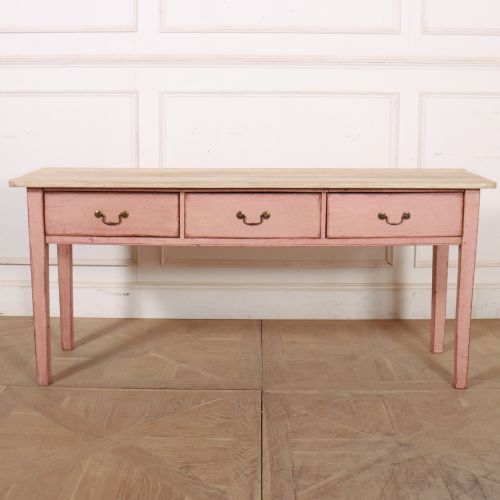


Painted Three Drawer Table
These painted three drawer table examples span centuries of regional craftsmanship, offering practical storage finished in surface colour.
Painted Three Drawer Table
A painted three drawer table combines surface pigment with functional storage across forms like bedside chests, console tables, and dresser bases. Buyers searching for a painted three drawer table encounter items originating from English, French, and Swedish workshops.
English country pieces and French provincial examples dominate the configurations, alongside Swedish Gustavian designs. These items function as servers, bedside cabinets, and console units while retaining their original or subsequent painted finishes.
Materials and construction
Constructed primarily from pine and general timber, these tables rely on solid wood framing combined with applied paint finishes. Craftsmen utilised brass handles and occasional marble tops to complete the surface design of the furniture.
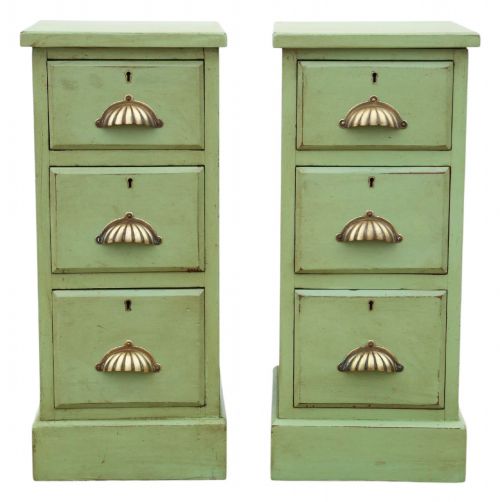
Layered paint and pigment form the characteristic exterior finish, appearing as green, black, red lacquer, or plain painted timber. Joinery methods reflect the period of origin, from seventeenth-century oak assembly to nineteenth-century pine carcases.
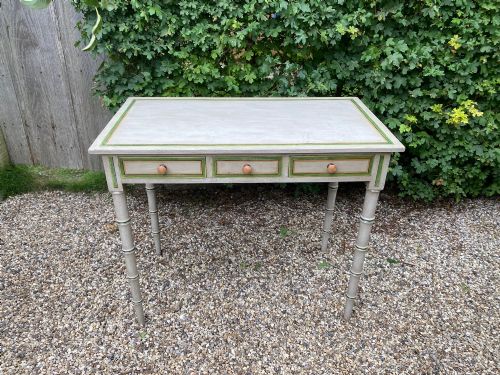
Several tables manage to disguise themselves as bamboo whilst being entirely made of solid timber.
Factors determining quality
The integrity of the timber carcase and the retention of early painted surfaces dictate the standing of each piece. Tables featuring authentic period paint layers hold greater interest than those with modern re-paintings.
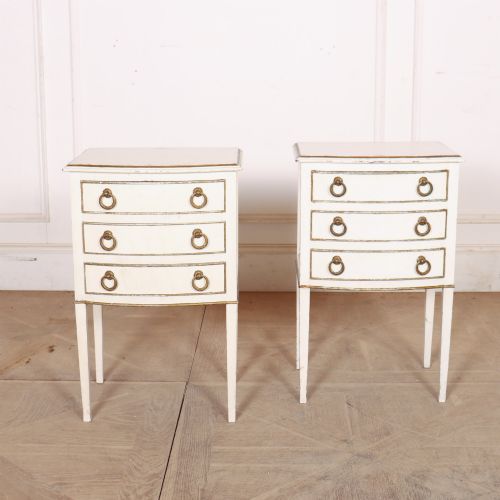
Proportion and regional detailing separate standard utility furniture from sophisticated examples, such as Gustavian-influenced chests or Regency faux bamboo writing tables. The refinement of drawer construction and original brass hardware further define the grade of the item.
The Painted Three Drawer Table Glossary
- Dresser base
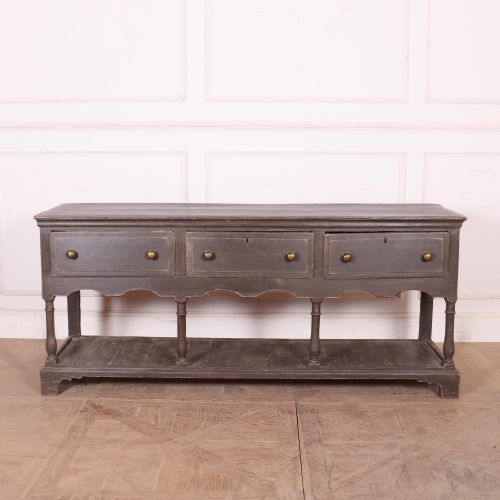
- A low sideboard or table fitted with drawers, traditionally used in English country kitchens for food preparation and storage. It sits on legs or a potboard base.
- Gustavian
- A Swedish neoclassical style popular in the late eighteenth and nineteenth centuries, known for pale painted finishes, restrained carving, and elegant proportions.
- Low boy
- A small English table with drawers, typically standing on four legs, used as a dressing table or side table from the late seventeenth century onwards.
- Faux bamboo
- A decorative technique where wood is carved or turned to imitate the segmented stalks of bamboo, popular during the Regency period.
- Potboard
- An open lower shelf fitted beneath a dresser base or dresser, historically used for storing pots and domestic utensils.
Painted Three Drawer Table: Frequently Asked Questions
Where were these tables used?
These tables served various domestic functions depending on their specific form, from bedside use to serving food in dining spaces.
Larger versions like dresser bases stood in kitchens or halls, while smaller bedside chests and writing tables functioned in private chambers.
How do I identify the period?
Dating relies on observing construction methods, timber types, and stylistic cues inherent to specific centuries.
Earlier pieces from the seventeenth and eighteenth centuries show heavy oak framing, whereas nineteenth-century examples frequently utilise pine carcases and lighter neoclassical or provincial styling.
Are the paint finishes original?
Paint history varies significantly across these items, with some retaining early or original pigment layers while others have been decorated later.
Examining the wear patterns, craquelure, and underlying wood preparation helps determine the age of the surface finish.
How do I care for painted wood?
Preserving the surface requires keeping the furniture away from direct sunlight and maintaining stable indoor humidity levels.
Dusting with a soft, dry cloth prevents abrasion, avoiding harsh chemical cleaners that might lift historic paint layers.