
Painted Storage Credenza
A painted storage credenza brings together utilitarian timber storage and decorative surface work, offering heavy capacity behind aged brushwork.
Painted Storage Credenza
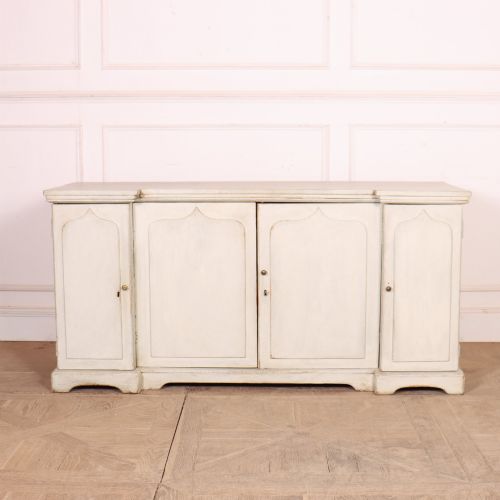
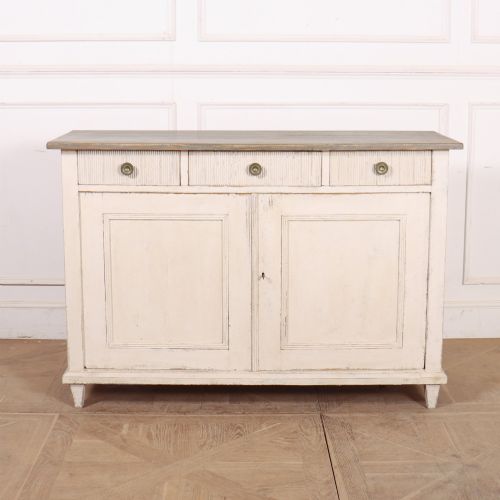
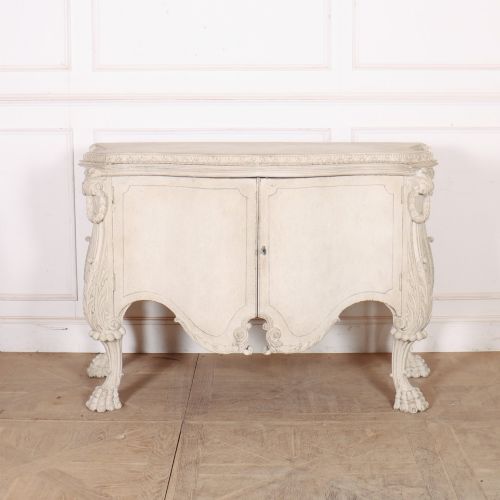
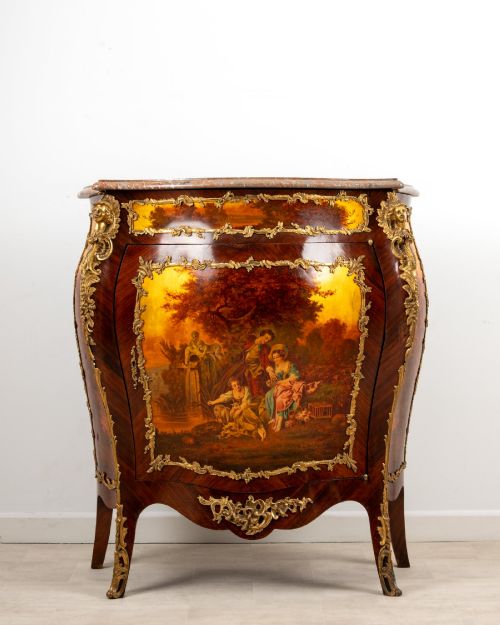
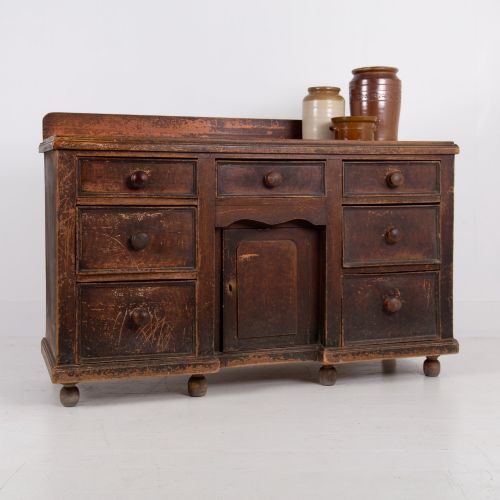
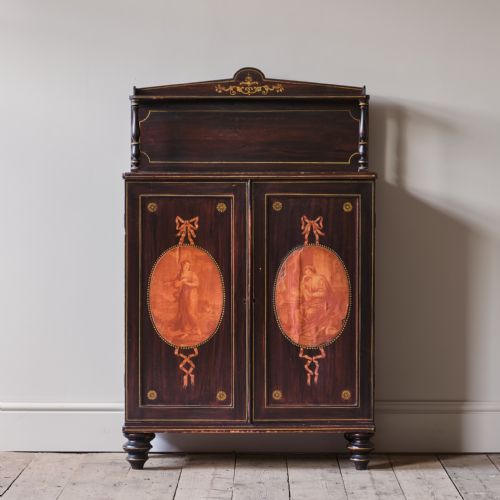
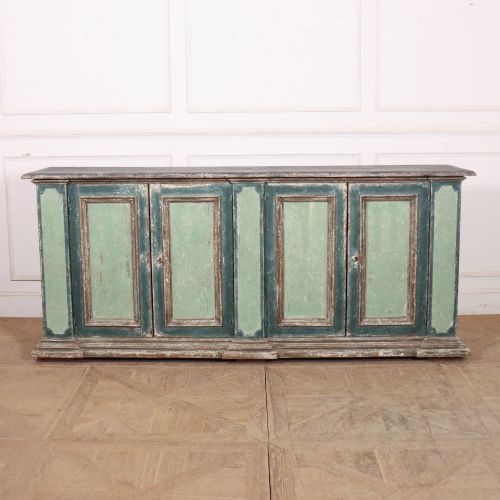
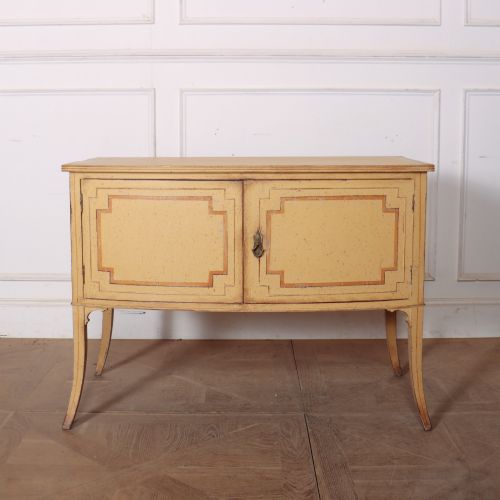
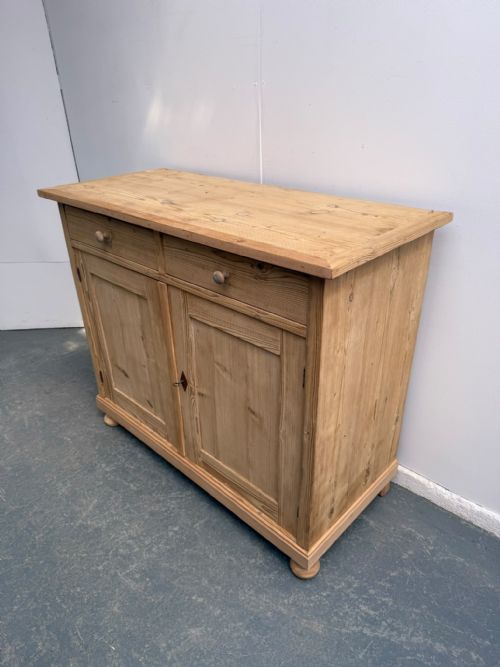
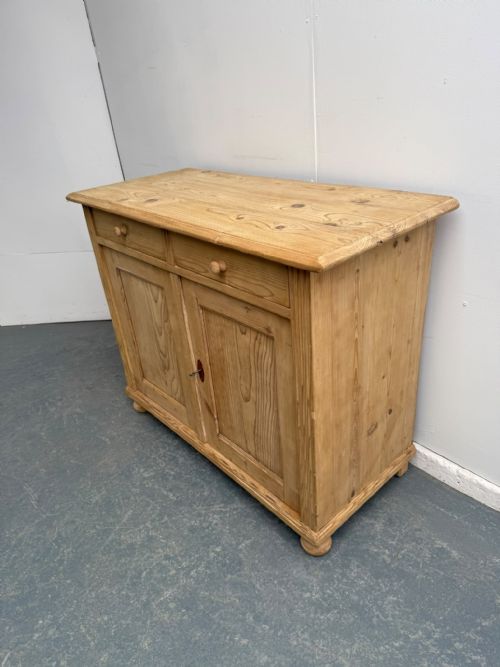
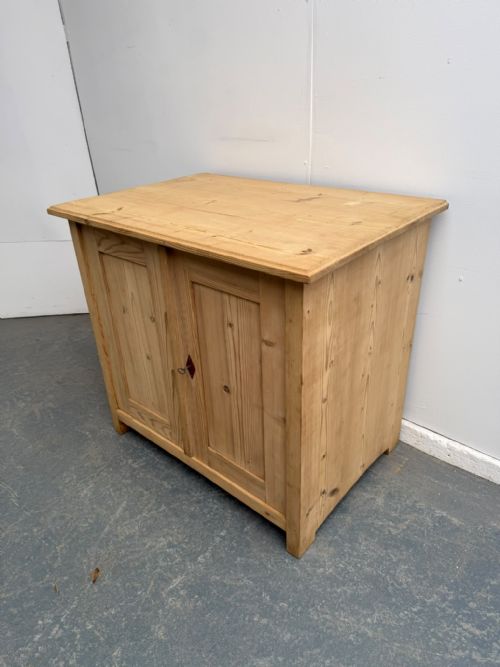
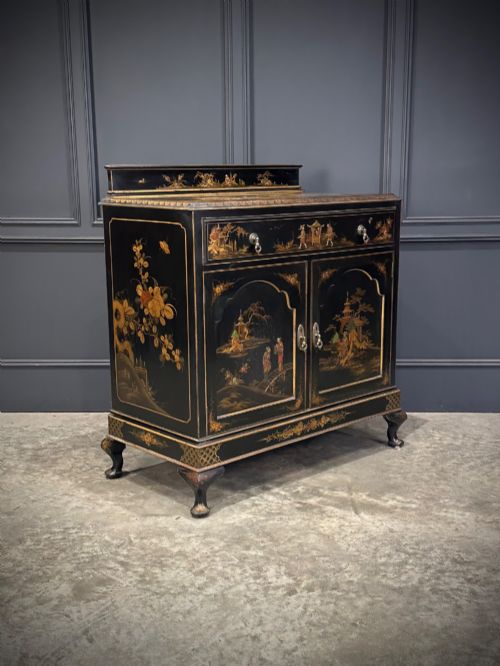
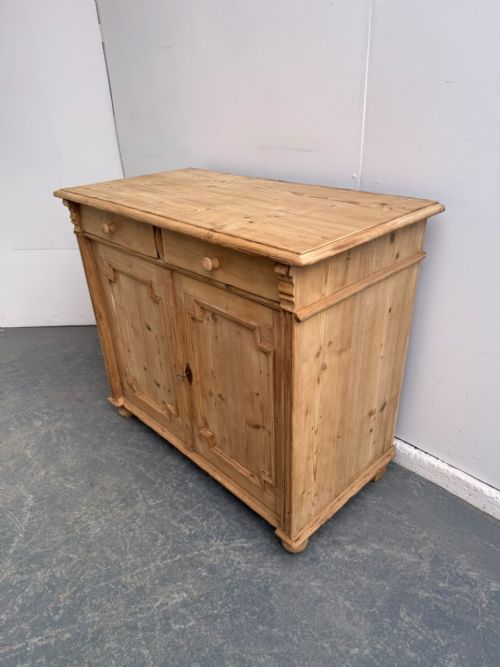
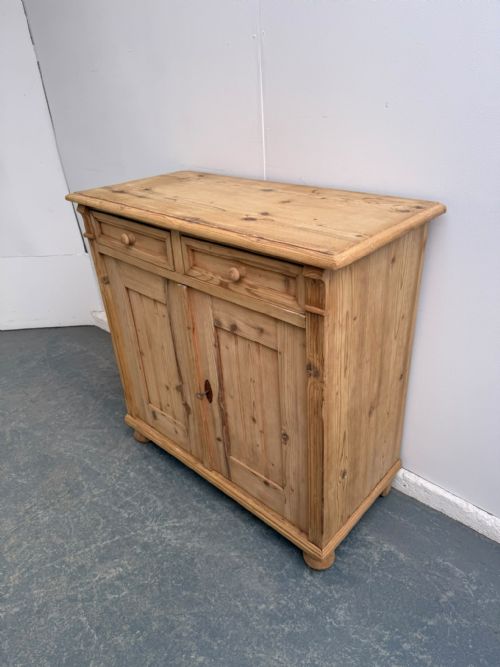
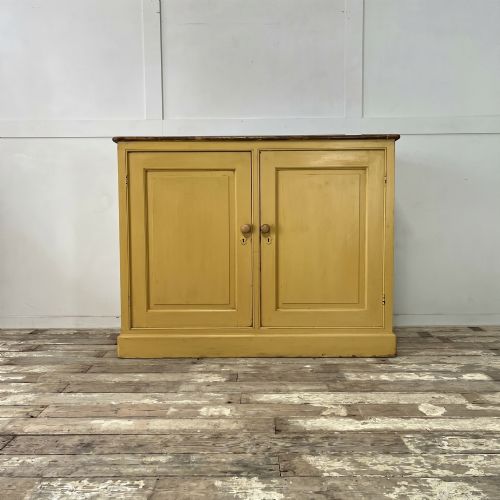
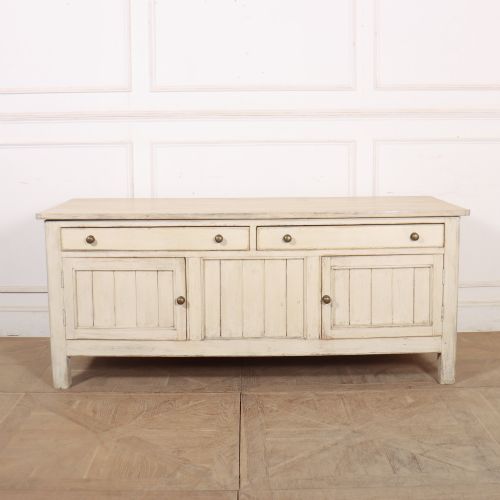
A painted storage credenza groups robust storage furniture such as dresser bases, side cabinets, buffets, and cupboards finished in period pigments. Buyers encounter heavy pine kitchen pieces alongside formal continental commodes and lacquered cabinets.
The majority of pieces stem from the nineteenth century, including Victorian country items and Scandinavian cupboards, supplemented by earlier eighteenth-century Dutch and Italian examples and twentieth-century chinoiserie work.
Forms alternate between long low sideboard credenzas, breakfront dresser bases with drawers and doors, and tall storage cupboards designed for household provisions.
Materials and construction methods
Makers built the structural carcass predominantly from solid pine, oak, and various woods, often employing straightforward dovetail joinery for drawers and frame-and-panel construction for doors.
Surfaces received layers of oil or water-based paint, sometimes scraped back to reveal original tones, alongside specialised finishes like japanning and Vernis Martin lacquer.
Mounts and hardware incorporated brass, iron, or ormolu, while high-end continental and French pieces featured inset marble tops.
Bread slides hide discreetly within eighteenth and nineteenth-century dresser bases, ready to hold loaves during kitchen prep.
Distinctions in construction and finish
Surface integrity dictates the character of the piece, distinguishing untouched original scraper paint and aged lacquer from later overpainting or stripped timber.
Structural tightness and the retention of original brass, iron, or ormolu mounts separate robust domestic utilitarian items from heavily altered examples.
The Painted Storage Credenza Glossary
- Dresser base
- A lower cabinet structure fitted with combinations of drawers and cupboards beneath a flat surface, traditionally utilised in kitchens and dining rooms.
- Chinoiserie
- European decorative style imitating Chinese artistic traditions, frequently expressed through black or red lacquered finishes and gilt motifs.
- Vernis Martin
- Simulated oriental lacquer developed in eighteenth-century France, applied in multiple translucent coats to cabinets and commodes.
- Breakfront
- A piece of furniture whose central section projects forward from the flanking outer sections, creating depth across the facade.
- Japanning
- European technique of finishing wood with hard resin varnishes in imitation of Japanese lacquerware.
Painted Storage Credenza: Frequently Asked Questions
Where were these cabinets used?
These storage pieces functioned primarily in domestic dining rooms, hallways, and kitchens for holding linens, tableware, and household provisions.
Larger dresser bases and sideboards supported food preparation and serving duties in country houses and farmhouses.
How do I maintain painted wood?
Protect antique painted surfaces from direct sunlight and excessive humidity to prevent paint flaking or timber movement.
Dust gently with a dry cloth and avoid harsh chemical cleaners that dissolve historical finishes.
What is simulated rosewood paint?
Simulated rosewood paint is a decorative graining technique where artists manipulate pigments on pine or other woods to mimic expensive tropical hardwoods.
This method offered fashionable aesthetics during the Regency period without importing costly materials.
How do I spot original paint?
Original paint exhibits natural craquelure, consistent wear patterns around handles, and multiple underlying layers visible through minor losses.
Modern repainting often presents a flat, uniform texture lacking the accumulated patina of decades.