



Painted Satsuma Ware
Painted satsuma ware brings intricate earthenware ceramics decorated with enamel and gold leaf into your collection.
Painted Satsuma Ware
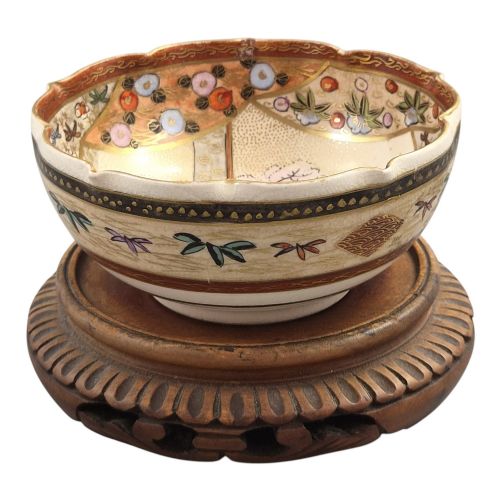
Painted satsuma ware comprises ceramic objects such as vases, decorative bowls, plates, and incense burners created across the nineteenth and early twentieth centuries. These pieces span the Meiji, Taisho, and Showa periods, originating predominantly from workshops in Kyoto and other centres of Japanese craftsmanship.
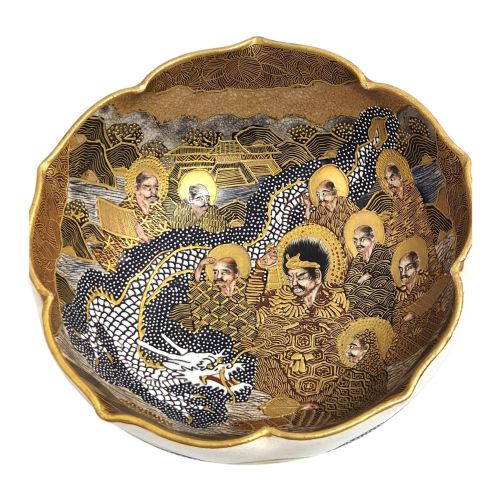
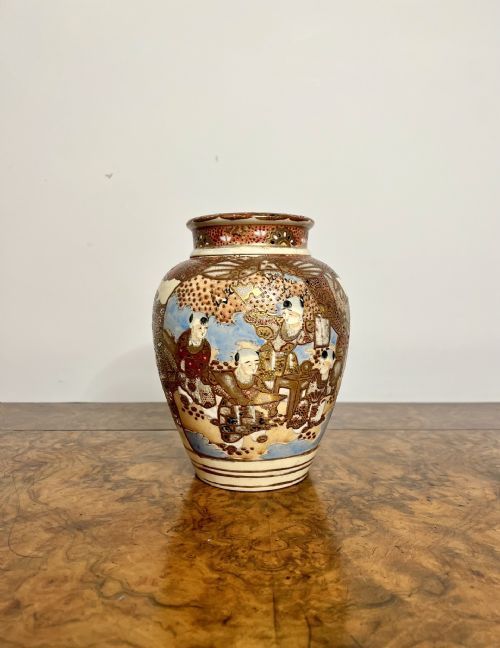
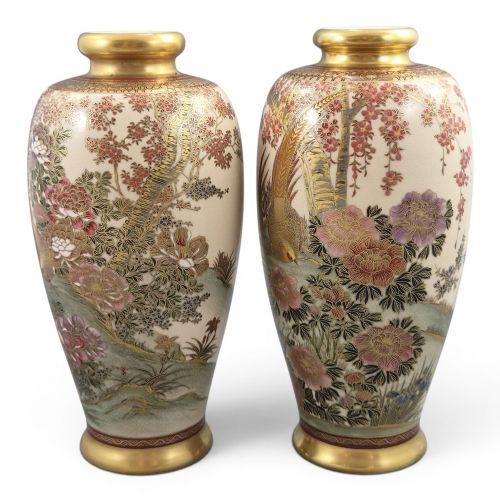
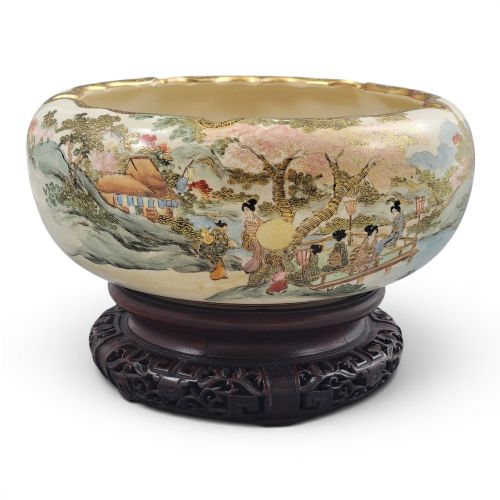
The version you are most likely to meet on this page is a nineteenth-century Meiji period vessel or bowl, often decorated with figural processions, floral motifs, or battle scenes enhanced by enamel and gilt. Such objects reflect the intense production of export ceramics tailored for Western tastes during that era.
How they were made
Potters formed these items primarily from earthenware and porcelain, applying a characteristic ivory-coloured or cream crackle-glaze to the body before decoration began. This porous base provided a textured canvas suited for absorbing fine pigments.
Master artisans then painted intricate designs using coloured enamels combined with gold leaf and gilt work. The application often required multiple firings to fix the detailed scenes of figures, landscapes, and floral patterns securely onto the ceramic surface.
Painted Satsuma Ware Retail Price Guide 2026
Typical asking prices for painted satsuma ware among the pieces listed under this phrase on Sellingantiques today, from the lower quarter to the upper quarter. They describe what is for sale here now, not the wider market.
Some miniature vases measure only a few inches high yet manage to crowd dozens of distinct samurai into a single battle scene.
What varies in quality
Quality in painted satsuma ware rests upon the precision of the brushwork and the complexity of the figural or landscape scenes. Master painters achieved remarkable detail in miniature faces and garments, whereas lesser pieces display repetitive patterns and coarser line work.
The reputation of the maker and the specific kiln or workshop involved also dictate the standing of a piece. Signed works associated with prominent Kyoto masters or exhibition-grade production command greater attention than unsigned or mass-produced commercial wares.
Kinkozan·Manpei·Shizan·Chosei·Seiko-en Chokei·Shuzan·Yasuda·Nikko·Hakusan·Hododa·Kotobuki-do·Tokyo Taizan·Meizan·Hattori·Taniguchi
The Painted Satsuma Ware Glossary
- Satsuma ware
- A type of Japanese earthenware traditionally featuring a crackled cream glaze and polychrome enamel decoration. It originated in Satsuma Province before production spread to major urban centres like Kyoto.
- Kinkozan
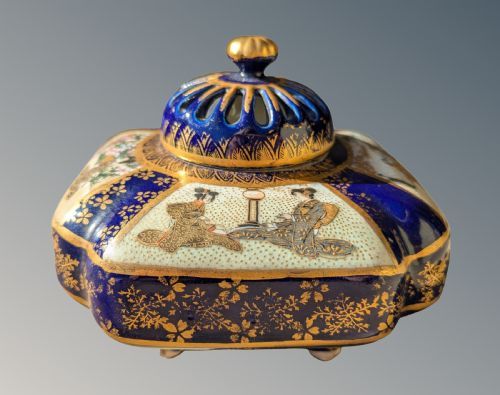
- A renowned Kyoto ceramic family and workshop responsible for producing high-quality painted satsuma ware during the Meiji period. Their pieces frequently combine cobalt blue grounds with dense gilding.
- Meiji period
- The era of Japanese history spanning from 1868 to 1912, corresponding to the reign of Emperor Meiji. This period marked the height of detailed export ceramic production.
- Koro
- A traditional Japanese incense burner, often fitted with a pierced lid. These vessels appear frequently in finely painted ceramic forms.
- Shimazu mon
- The heraldic crest of the Shimazu clan, featuring a cross within a circle. This mark often appears on satsuma ceramics associated with the province or ruling house.
Painted Satsuma Ware: Frequently Asked Questions
What is painted satsuma ware?
Painted satsuma ware is a distinctive category of Japanese ceramics characterised by an earthenware body covered in a finely crackled ivory glaze. Artisans decorated these surfaces with elaborate polychrome enamels and gold leaf.
Most surviving examples date from the Meiji period through to the early twentieth century. They encompass forms ranging from small miniature vases to monumental temple jars and decorative dishes.
How do I identify Meiji period pieces?
Meiji period pieces are generally identified by historical markers, stylistic conventions, and painted artist signatures or workshop seals on the base. The presence of the Shimazu mon crest is also common on higher-quality items.
Comparing the density of the enamel work and the fineness of the crackle-glaze helps distinguish nineteenth-century production from later Taisho or Showa period examples.
How were these ceramics used?
Many painted satsuma vessels served purely decorative functions in Western and Japanese interiors during the late nineteenth-century export boom. Large vases, plates, and decorative bowls were displayed prominently in parlours and drawing rooms.
Other specialised forms, such as the koro or incense burner and tea jars, retained functional roles linked to traditional domestic customs and tea gatherings.
How do I care for satsuma ware?
Caring for painted satsuma ware requires gentle handling due to the delicate nature of the earthenware body and surface gilding. Dusting with a soft, dry cloth is usually sufficient for routine maintenance.
Keep these ceramic pieces away from direct sunlight and moisture to protect the enamel pigments and prevent stress on the crackle-glaze.