




Painted Rush Chairs
These painted rush chairs bring together vernacular character and decorative grace, offering characterful seating that grounds a room.
Painted Rush Chairs
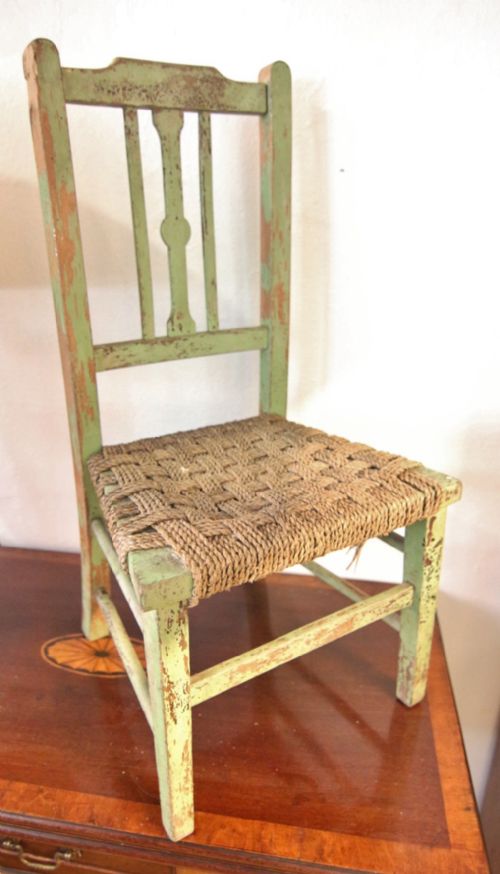
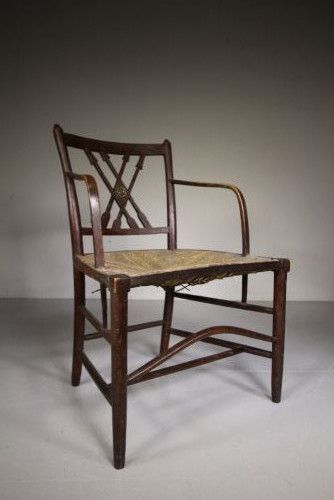
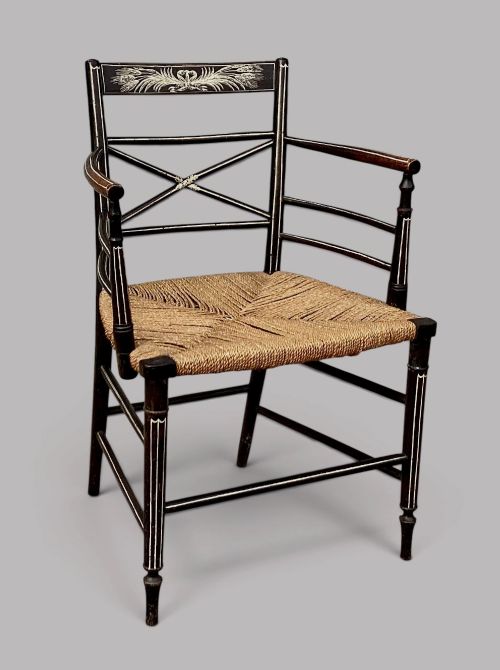
Painted rush chairs span regional vernacular traditions and refined domestic seating, bringing together timber frames, decorative paint finishes, and woven seats. When you search for painted rush chairs, you encounter a range of forms from country workshops and urban makers alike.
The examples gathered here include side chairs, armchairs, dining chairs, and rocking chairs. Their origins stretch from Regency elegance to nineteenth-century provincial and rustic country production.
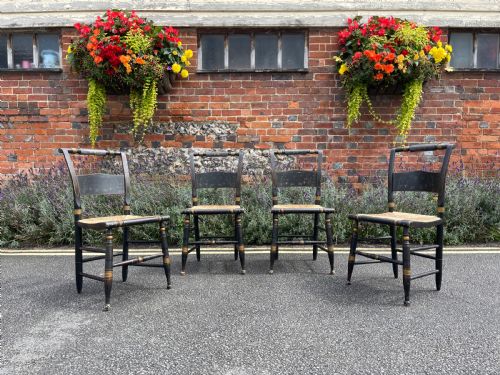
You are most likely to meet pieces finished in original paint, carrying the marks of age upon ash, beech, pine, or bamboo-turned frames. Woven rush and plaited straw seats complete these traditional forms, offering tactile contrast to the painted wood structures.
How they were made
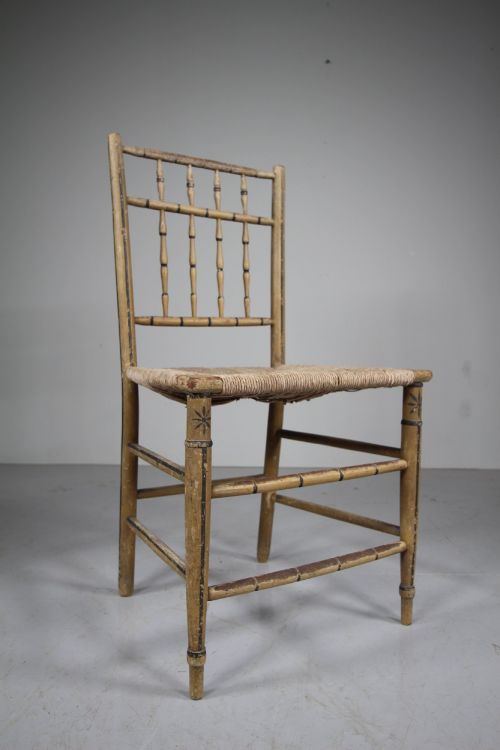
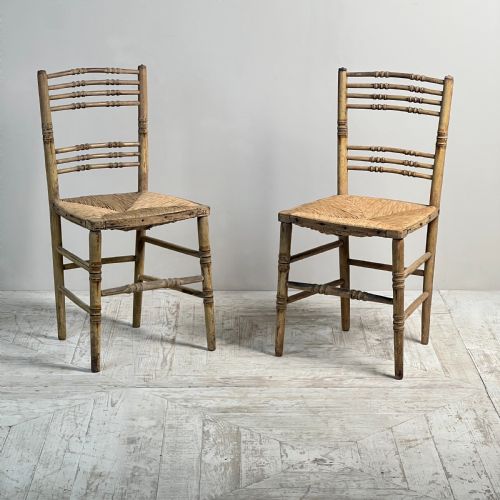
Makers shaped these chairs using native timbers such as ash and beech, often turning wood to imitate more exotic materials like bamboo. Frames were constructed using traditional joinery before receiving layers of paint, sometimes in faux finishes or later white schemes.
Seats were hand-woven using natural rush or plaited straw, creating a durable and resilient surface suspended within the wooden rails. This combination of timber framing, surface paint, and woven seating defines the physical reality of these chairs.
Painted Rush Chairs Retail Price Guide 2026
Typical asking prices for painted rush chairs among the pieces listed under this phrase on Sellingantiques today, from the lower quarter to the upper quarter. They describe what is for sale here now, not the wider market.
Several chairs embrace the illusion of the Far East by turning plain timber into convincing bamboo, proving that country makers loved a clever trick.
What varies in quality
The distinction between ordinary and exceptional examples lies in the integrity of the original paint surface and the crispness of the timber turnings. Chairs that retain their early or original decorative finish command greater interest from collectors.
Structural harmony and the tightness of the rush or straw weaving also dictate the standing of a piece. Finer proportions and untouched joinery elevate certain vernacular chairs well above standard utility seating.
Morris and Co·Hitchcock
The Painted Rush Chairs Glossary
- Rush
- A wetland plant material traditionally used to weave durable, flexible chair seats. It provides a tactile, textured surface that responds to atmospheric humidity.
- Súgán
- An Irish term for a twisted straw rope used to form traditional chair seats. This material offers a robust and rustic alternative to standard rush weaving.
- Vernacular
- Localized furniture building traditions rooted in regional needs rather than high-style metropolitan fashion. These pieces reflect the materials and skills available to local country craftsmen.
- Bamboo-turned
- Woodwork shaped and painted to imitate the segmented stalks of natural bamboo. This decorative technique enjoyed particular popularity during the Regency period.
- Ladder back
- A chair design featuring multiple horizontal wooden slats between the upright back posts. It remains a staple of vernacular country seating across Britain and Ireland.
Painted Rush Chairs: Frequently Asked Questions
How do I care for a rush seat?
Keep rush seats in stable indoor environments away from excessive moisture and direct heat sources. Natural fibres benefit from gentle dusting and occasional light cleaning with a dry brush.
Avoid soaking the woven straw or rush with water, as excess liquid can cause the natural material to rot or weaken over time.
Are these chairs suitable for daily dining?
Many of these pieces were constructed as dining chairs or domestic seating and remain functional for everyday use. Assessing the rigidity of the frame and the tension of the woven seat helps determine suitability for regular sitting.
Lighter frames, such as delicate Regency bamboo-turned examples, require more mindful placement compared to sturdier ash ladder backs.
What indicates original paint?
Original paint surfaces show natural wear, mellow patination, and subtle craquelure consistent with age and use. Traces of early pigment beneath later layers often reveal the decorative history of the piece.
Examining corners and protected undersides helps identify whether a painted finish dates to the period of manufacture or represents a later intervention.
How do I distinguish regional styles?
Regional styles often reveal themselves through timber choice, turning patterns, and local seating traditions. Irish súgán chairs utilise distinct straw plaiting techniques, while Cheshire ladder backs display specific post profiles.
Comparing structural details against documented vernacular traditions helps assign geographical origins to provincial pieces.