

Painted Porcelain Centrepiece
A painted porcelain centrepiece brings decorative weight and painted detail to a table, spanning European factories and Asian export wares.
Painted Porcelain Centrepiece
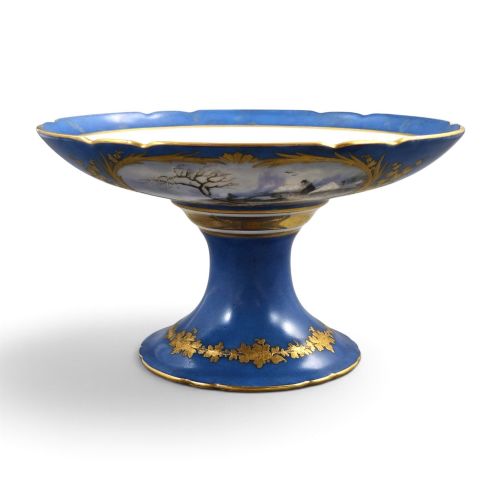
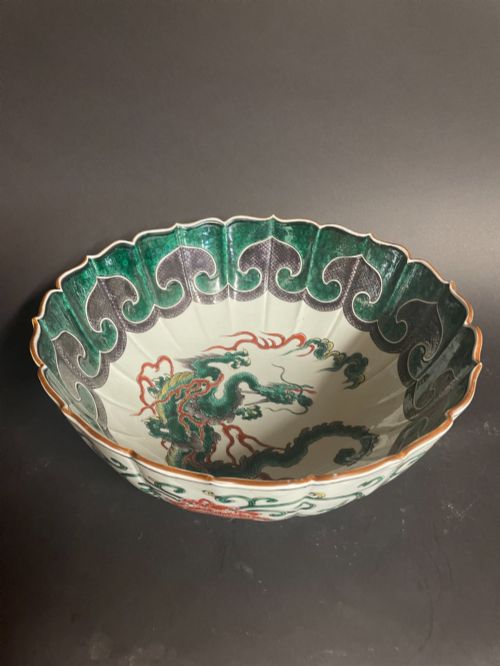
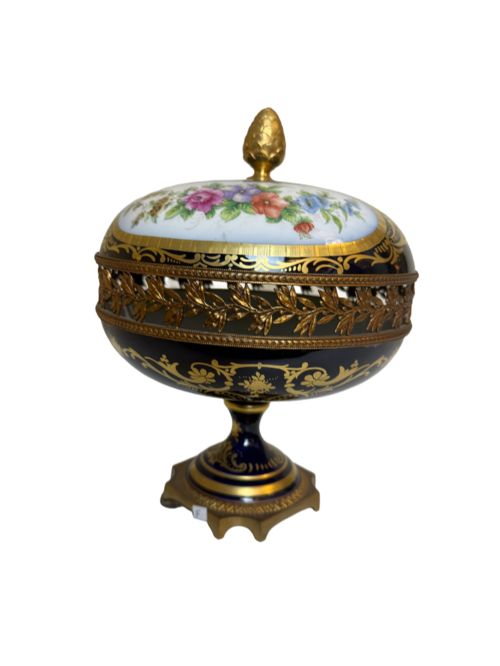
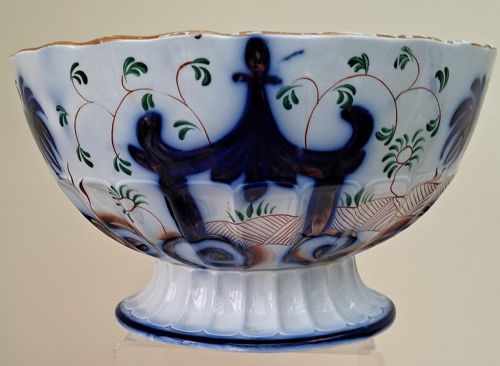
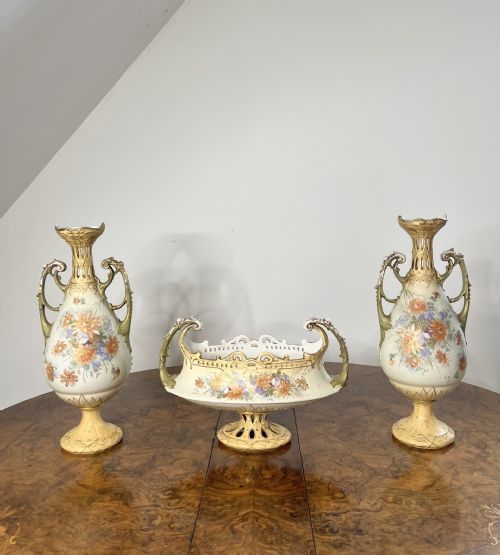
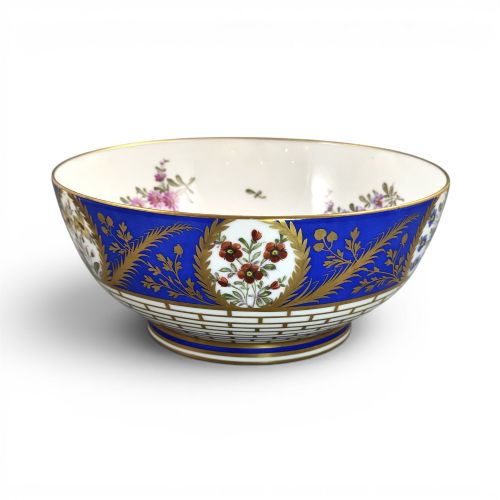
A painted porcelain centrepiece serves as a table focal point, taking forms such as large bowls, footed comports, lidded dishes, and figural arrangements. The selection draws together 18th century punch bowls, Regency porcelain baskets, Victorian decorative bowls, and 19th century French mountings.
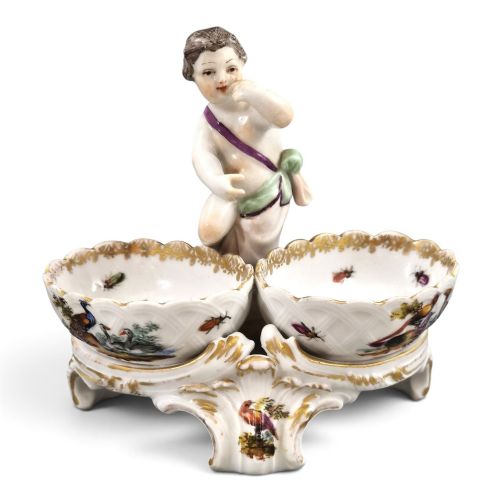
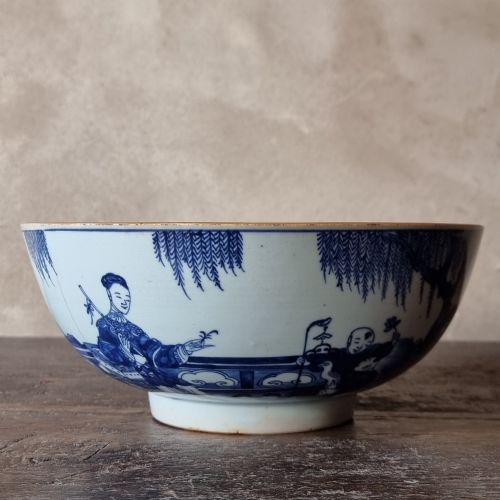
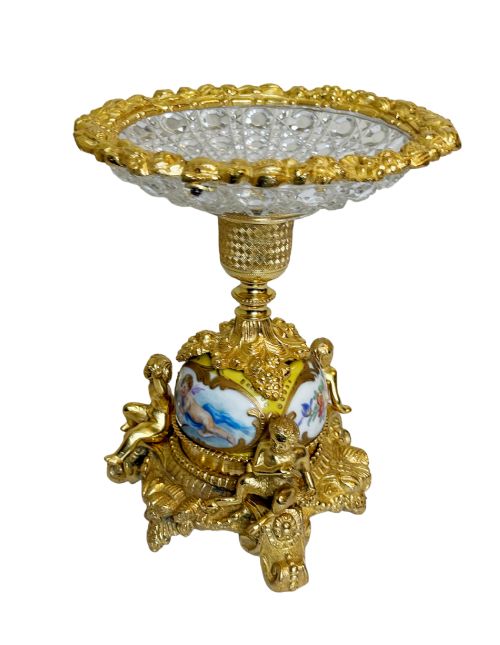
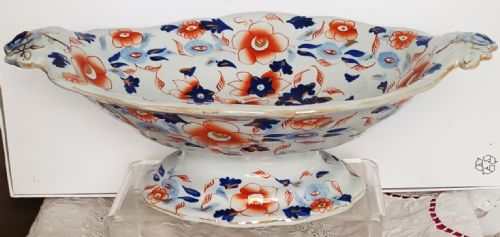
Asian export wares appear frequently in the selection, including Japanese Imari patterns, Chinese Canton bowls, and Satsuma earthenware. European factories are also represented through English porcelain, German centrepieces with cherubs, and French pieces with gilt bronze mounts.
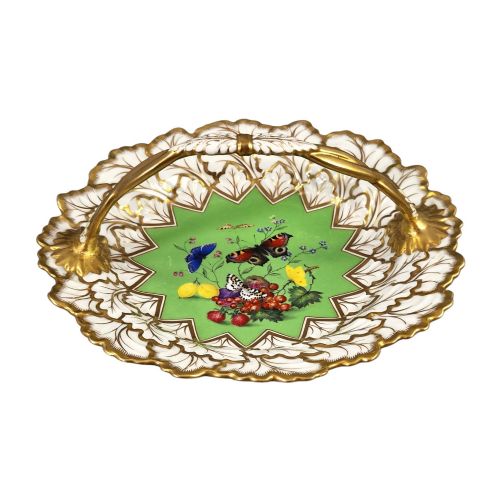
Buyers encounter everything from large scalloped edge bowls to pedestal bowls and garniture sets. These pieces reflect periods ranging from the Georgian era through to the early 20th century.
Materials and production methods
Makers shaped porcelain, earthenware, and ironstone china into bowls, baskets, and serving dishes before applying hand-painted designs, enamel work, and floral sprays. Many items incorporate gilding, gold leaf, and glaze to accentuate the painted surfaces.
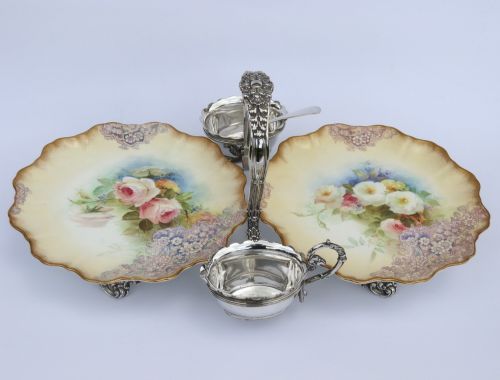
Composite pieces combine porcelain with gilt bronze mounts, champlevé enamel, cut crystal, and silver plating. Elaborate structures rely on metal fittings to support porcelain bodies, figural elements, and decorative stands.
Elephants and mischievous cherubs populate the porcelain borders, guarding punch bowls and supporting salt cellars.
Judging quality in painted porcelain
Quality rests in the precision of the hand-painted detail and the crispness of the porcelain body, whether examining floral sprays on English bowls or complex battle scenes on Japanese Satsuma ware. Finer examples show careful brushwork that remains sharp and controlled across the entire surface.
The integration of secondary materials influences the overall character of the piece. Well-cast gilt bronze mounts, intact enamel work, and balanced proportions separate standard production items from more ambitious factory commissions.
Flight Barr And Barr·KPM Berlin·Limoges·Samson Paris·Walker And Hall·Coalport·Meiji Japanese Satsuma·Royal Worcester·Minton·Kinkozan Kyoto·Royal Vienna·Rockingham·Sevres·Schierholz·Meissen·Derby·Doulton Burslem
The Painted Porcelain Centrepiece Glossary
- Imari
- A style of Japanese porcelain featuring underglaze blue and iron red, often augmented with gold leaf and additional enamel colours.
- Comport
- A shallow decorative bowl raised on a foot or pedestal, designed to hold fruit or sweetmeats on a dining table.
- Garniture
- A set of matching vases or vessels, usually numbering three or five, intended to be displayed together on a mantelpiece or sideboard.
- Famille Rose
- A palette of Chinese porcelain enamels dominated by opaque pink or rose colours, introduced during the Qing dynasty.
- Tazza
- A small shallow saucer-like dish mounted on a stem and foot, originating from Renaissance plate forms.
Painted Porcelain Centrepiece: Frequently Asked Questions
What is a painted porcelain centrepiece used for?
These pieces served as prominent table decorations, holding fruit, flowers, or punch during formal dining occasions. In domestic interiors, they functioned as display items on sideboards and dining tables to showcase painted artistry.
Over time, their role shifted from functional dining vessels to decorative cabinet pieces. Today, collectors use them to anchor a room scheme or display traditional ceramic artistry.
How do I identify Japanese Imari ware?
Japanese Imari porcelain is recognised by a distinct palette combining underglaze cobalt blue, iron red, and gilt highlights. The patterns frequently incorporate floral motifs, brocade designs, and panel layouts.
Production spans from the Edo period into the Meiji era, with 19th century examples appearing frequently in European collections. The porcelain body is typically heavier and denser than fine European paste.
What distinguishes Chinese Canton bowls?
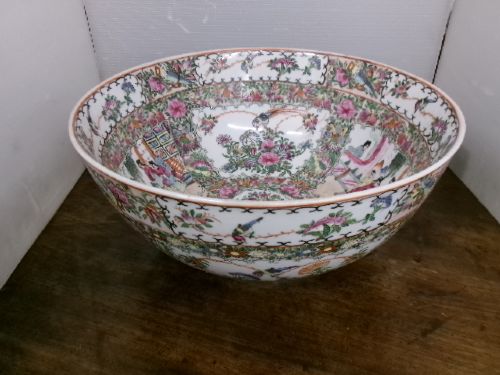
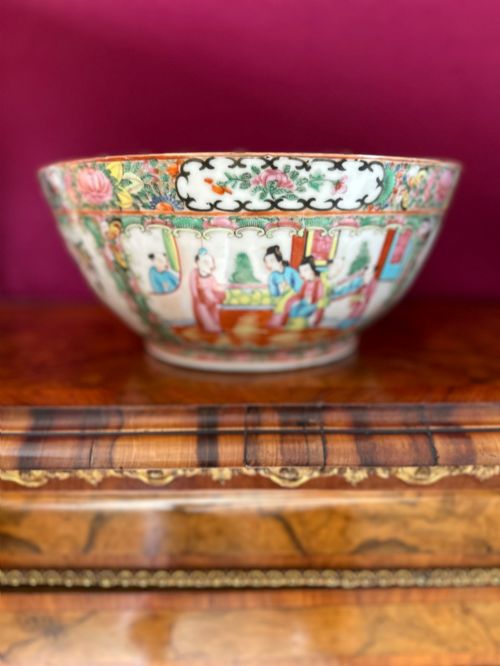
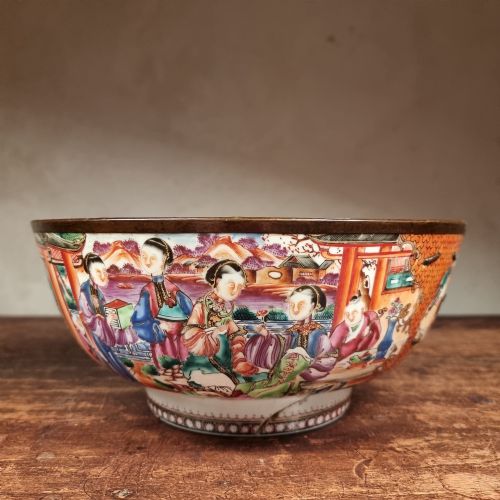
Canton bowls are characterised by hand-painted enamel decoration, often featuring figural courtyard scenes framed by dense floral and butterfly borders. The palette relies heavily on greens and pinks of the famille rose tradition.
These large punch bowls and decorative vessels were produced in China primarily for export to Western markets during the 18th and 19th centuries. Their substantial size made them ideal for serving large gatherings.
How can I care for antique porcelain?
Antique porcelain requires gentle handling, avoiding abrasive cleaning agents that can damage overglaze enamel painting and delicate gilding. Dusting with a soft, dry cloth is usually sufficient for regular maintenance.
Pieces with metal mounts, champlevé enamel, or applied flower encrustations need particular care around fragile protruding elements. Hand washing in lukewarm water with mild soap should be done only when strictly necessary, avoiding immersion for pieces with exposed ironstone or metal joins.