
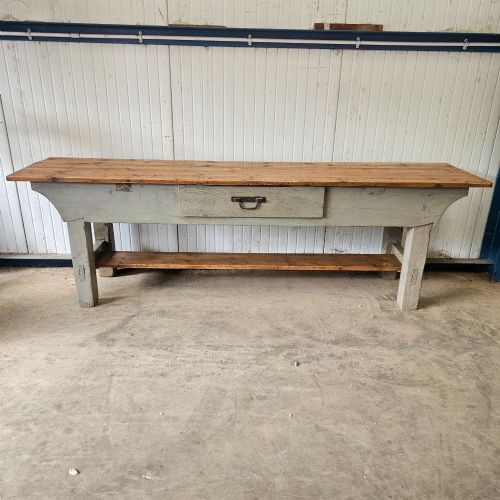
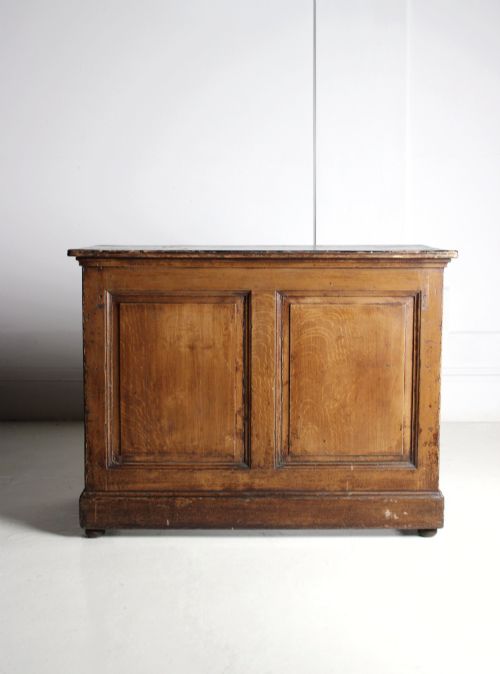
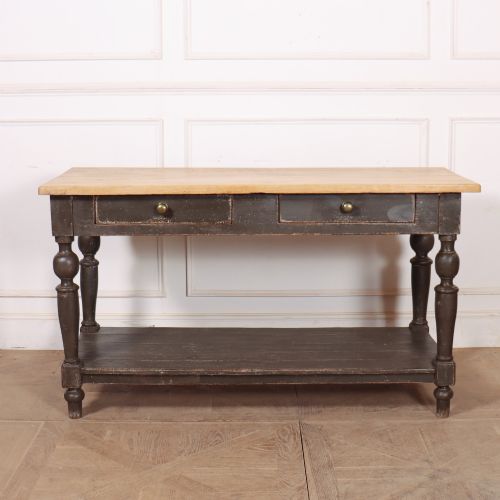
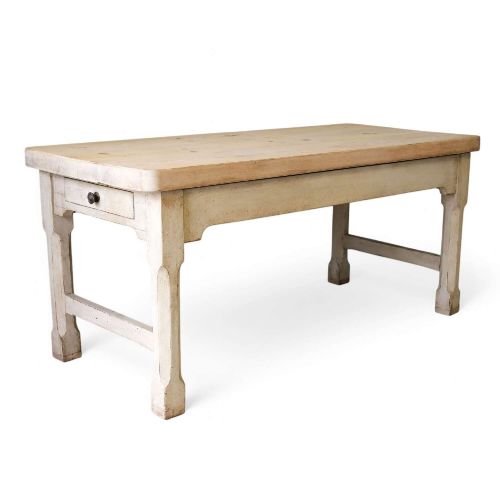
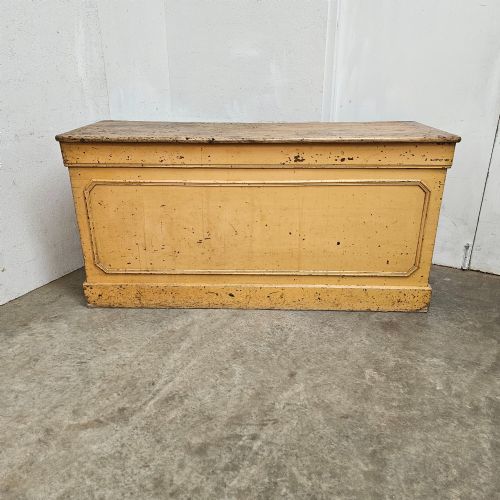


Painted Pine Island
These painted pine island tables bring working utility and character to a kitchen, offering solid timber surfaces and history.
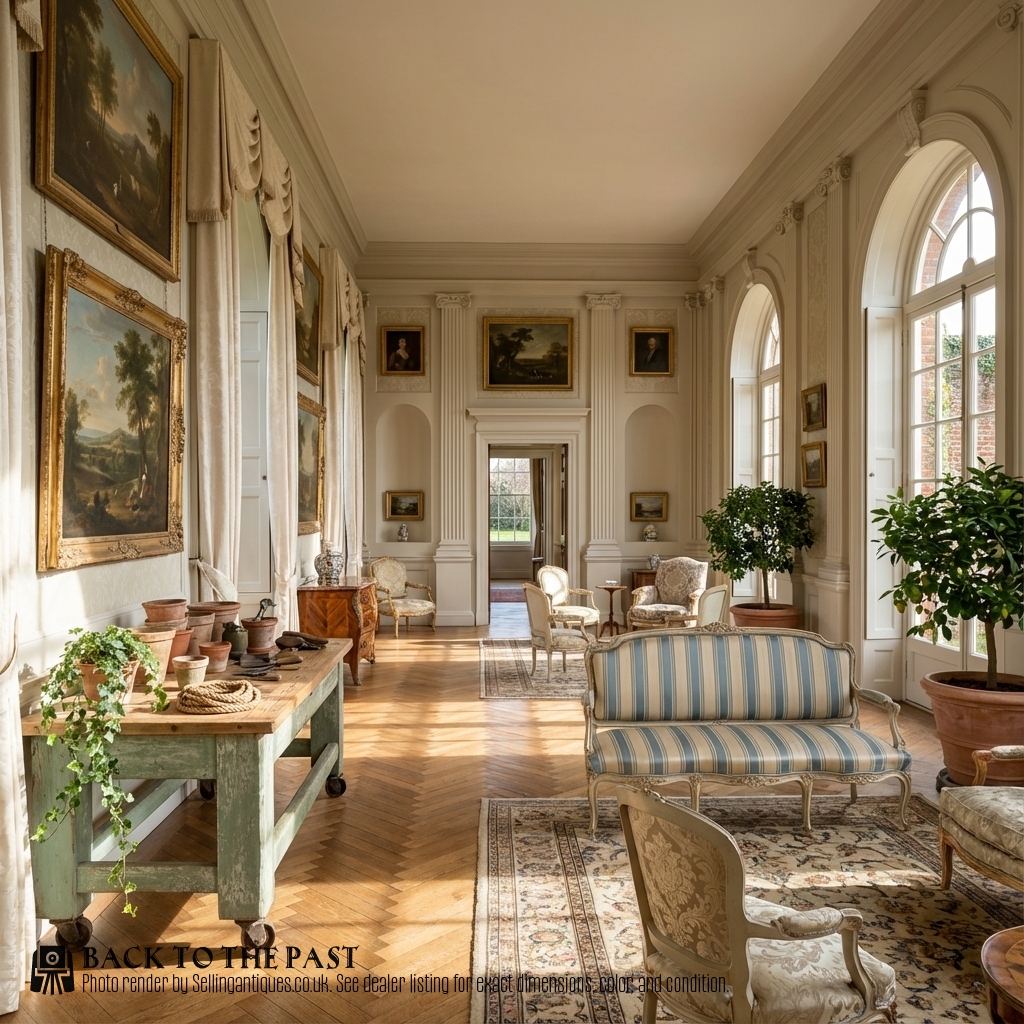
Painted Pine Island
When you search for painted pine island, you are looking at substantial utilitarian furniture originating from domestic, retail and agricultural settings. The selections here include drapers tables, shop counters, bakers tables, prep tables and dresser bases.
The version you are most likely to meet on this page is a nineteenth century French or Scandinavian work table, often associated with provincial country houses or shop fittings. These items combine practical proportions with painted surfaces developed through years of active use.
How they were made
Construction relies on solid timber frames and tops made from pine and general timber, fastened occasionally with iron or brass hardware and cast iron elements. Carpenters built these tables for endurance in demanding environments such as bakeries, drapers shops and large country kitchens.
Surfaces received layers of paint, sometimes preserved in original condition or applied later during the nineteenth and twentieth centuries. This paint interacts with the underlying timber to create varied patinas across the tables, counters and prep surfaces.
Some tables crossed from baking bread to measuring fabric before finding their way into modern kitchens.
What varies in quality
Quality rests in the integrity of the original construction and the character of the surface finish. Pieces retaining original paint or authentic early surface layers command greater attention than those with unsympathetic later treatments.
Proportion and scale also define the hierarchy of these items, from large workshop prep tables to smaller country furniture. The best examples display harmonious proportions suited to modern kitchen spaces without losing their utilitarian identity.
The Painted Pine Island Glossary
- Drapers table
- A long, narrow table traditionally used in fabric shops for measuring and displaying textiles. They typically feature deep proportions and multiple drawers or lower shelves.
- Shop counter
- A heavy-duty retail furnishing designed for customer service and merchandise display. These pieces often exhibit robust construction and significant length.
- Prep table
- A utilitarian work surface utilised in kitchens, bakeries or preparation rooms. They prioritize sturdy timber tops and stable framing over ornamental details.
- Patina
- The surface appearance developed through age, wear, cleaning and repeated painting. Collectors value this visual record of use.
Painted Pine Island: Frequently Asked Questions
How were painted pine island tables originally used?
These tables served practical roles in commercial and domestic spaces, acting as work surfaces for food preparation, baking, or retail transactions in shops.
Their sturdy construction supported heavy daily labour, while lower shelves and drawers held tools, ingredients, or stock.
How do I live with a painted pine island?
Integrating one of these tables into a modern kitchen provides a durable central workspace with significant visual character. The timber and painted surfaces adapt well to daily domestic activity.
Maintenance involves simple cleaning that respects the historical surface finish, allowing existing wear and patination to remain visible.
How can I tell the period of a table?
Dating relies on construction methods, timber characteristics, and the nature of the painted finish. Nineteenth century examples often display hand-planed boards and forged iron or brass fittings.
Later pieces from the twentieth century show different workshop practices and standardised hardware that distinguish them from earlier country furniture.
What is the difference between original and later paint?
Original paint refers to the earliest decorative or protective coatings applied when the furniture was first made or put into active service. This surface has aged naturally alongside the pine timber.
Later paint represents subsequent decorative layers applied during the nineteenth or twentieth centuries, which changes the visual texture and patina of the piece.