

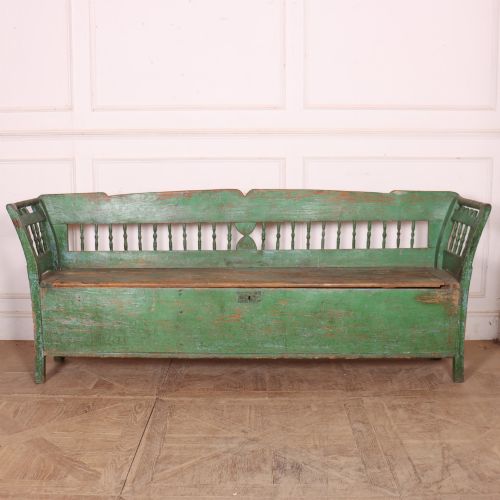
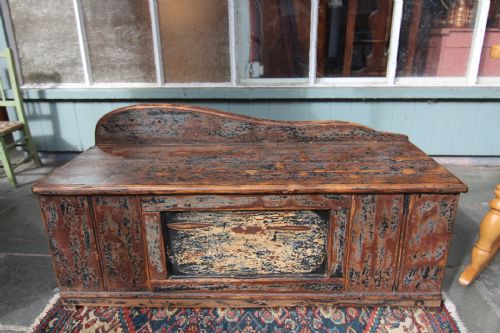


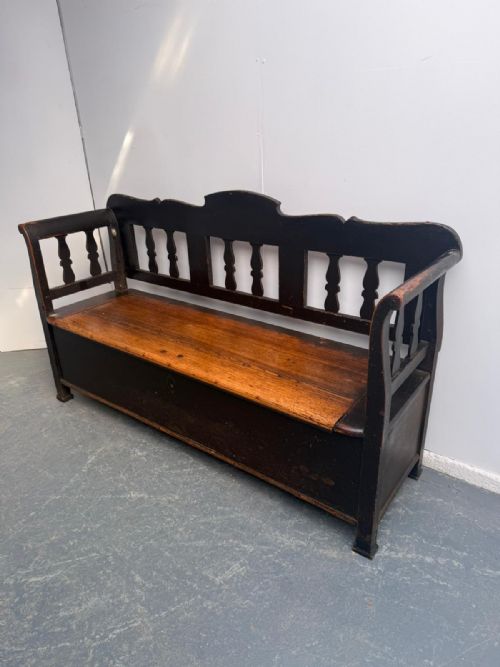
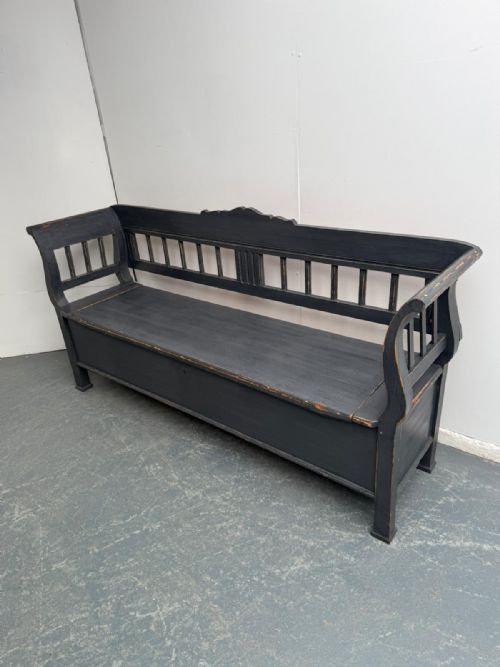

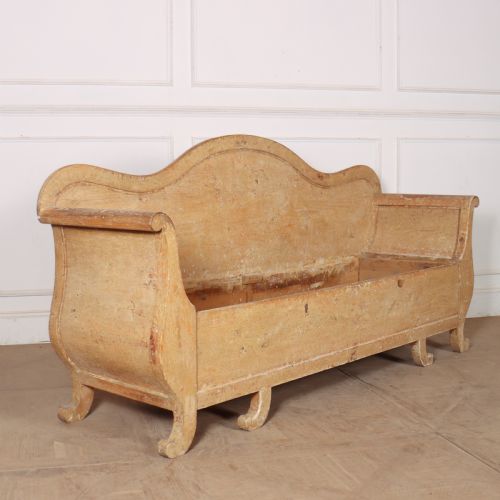


Painted Pine Box Seat
When you search for painted pine box seat, you are looking at utilitarian storage seating that brings folk art colour into domestic spaces.
Painted Pine Box Seat
A painted pine box seat combines practical lidded storage with a sturdy bench base, designed for daily domestic use in rural households. These pieces serve as both seating and chests, often positioned in kitchens, hallways or boot rooms to house household goods.
The examples available on this page span the Georgian and Victorian periods into the nineteenth century, reflecting regional traditions across Britain and continental Europe. You will most frequently encounter country house and farmhouse forms, including Hungarian, Austrian, Swedish and Welsh country styles.
Many of these box seats and settles feature panelled construction and high backs to block draughts, while others take the form of lower benches with hinged lids. The surviving pieces show diverse origins, from West Wales to Scandinavian and Hungarian workshops.
How they were made
Makers built these pieces primarily from solid pine, utilising simple timber framing and plank construction joined with iron fixings and metal elements. The underlying softwood provides a stable, light canvas for decorative surface treatments applied by regional artisans.
Surfaces were coated in original painted finishes, often employing polychrome palettes, black, grey, cream and green pigments. Some pieces incorporate ceramic or metal details alongside folk art decorative painting specific to Hungarian, Austrian and Swedish traditions.
Painted Pine Box Seat Retail Price Guide 2026
Typical asking prices for painted pine box seat among the pieces listed under this phrase on Sellingantiques today, from the lower quarter to the upper quarter. They describe what is for sale here now, not the wider market.
Several pieces double as three or four seater settees, meaning your storage chest also holds a crowd.
What varies in quality
The distinction between ordinary and superior pieces rests largely on the survival of the original painted finish and the integrity of the pine timber. Surface decoration that retains its early colour and folk art character holds greater visual strength than later overpainting.
The Painted Pine Box Seat Glossary
- Pine
- A softwood commonly used for vernacular furniture due to its widespread availability and ease of working. It accepts paint readily, making it the primary material for decorated country furniture.
- Settle
- A wooden bench with a high back, solid arms and a closed base, designed to keep out drafts in older homes. Many examples incorporate a box seat configuration for dual storage.
- Polychrome
- Painted or decorated in several colours. This surface treatment appears frequently on folk art pieces from Hungarian and continental traditions.
- Box Settle
- A traditional bench featuring a hinged seat that lifts to reveal a storage compartment underneath. It offers functional utility for concealing blankets, boots or household items.
- Vernacular
- Everyday furniture made by local cabinetmakers or carpenters for regional use rather than high-style court workshops. These pieces reflect local materials and practical domestic needs.
Painted Pine Box Seat: Frequently Asked Questions
What is a painted pine box seat?
A painted pine box seat is a utilitarian wooden bench with a hinged lid that opens to reveal storage underneath. These pieces combine practical seating with a trunk, often finished with decorative paint in regional folk art styles.
Originating in farmhouses and country homes across Britain and Europe, they served dual purposes in kitchens and halls where floor space was at a premium.
How were these box seats used?
Households used them primarily for seating by the hearth and for storing bulky items like blankets, textiles or firewood inside the base compartment. The high back versions also helped block cold drafts in unheated rooms.
They functioned as central pieces of furniture in busy domestic spaces, accommodating multiple people on the bench while keeping everyday clutter hidden away.
How do I identify the period?
Dating relies on construction methods, timber characteristics, and the nature of the painted finish. Georgian examples often display earlier vernacular joinery, while nineteenth-century pieces frequently show continental folk art painting styles.
Examining the hinges, nail types and wear patterns helps distinguish between eighteenth-century workshop production and later nineteenth-century country furniture.
How do I live with painted pine?
Living with these pieces involves placing them away from direct heat sources and strong sunlight to protect the fragile antique paint surfaces. Regular dusting with a dry cloth keeps the pine and pigment safe without risking moisture damage.
Their robust construction makes them practical for modern hallways or living rooms, where the storage box remains as useful today as it was in a nineteenth-century farmhouse.