







Folk Art Settle Bench
A folk art settle bench brings regional colour and solid timber seating into a room, offering both storage and shelter from draughts.
Folk Art Settle Bench
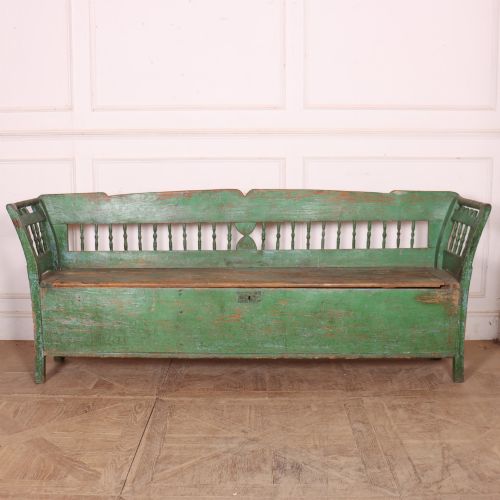
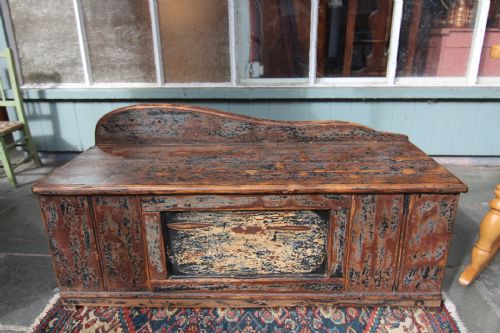
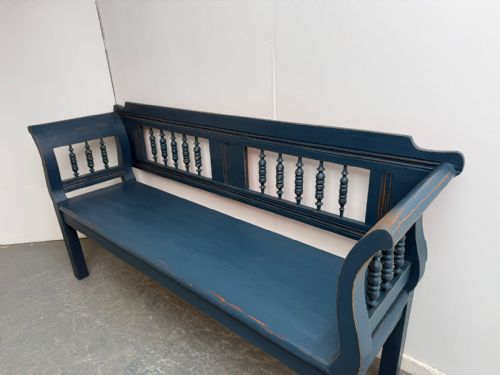
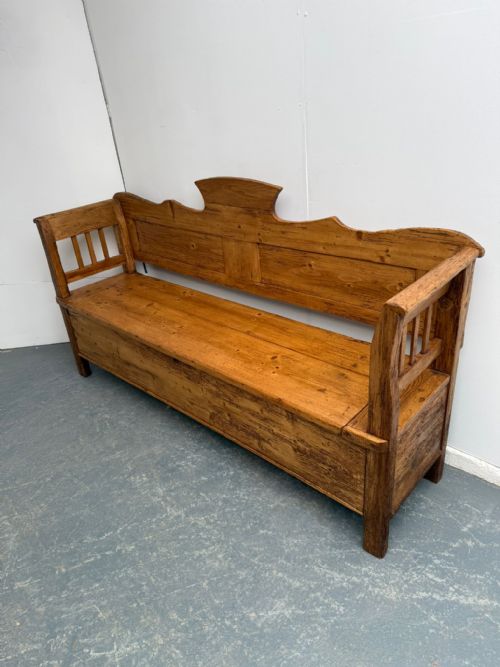
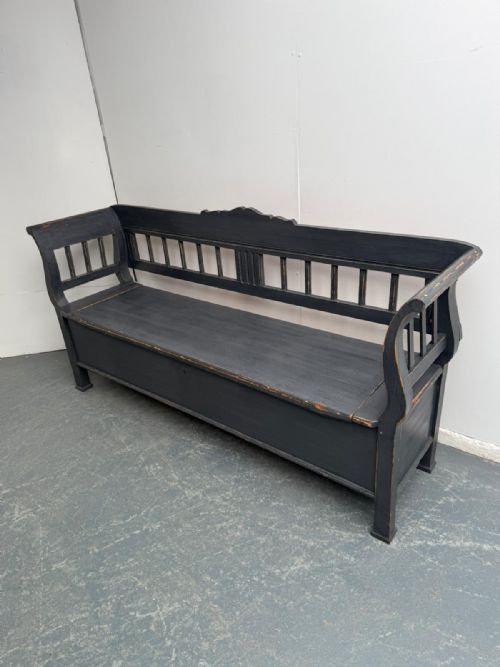
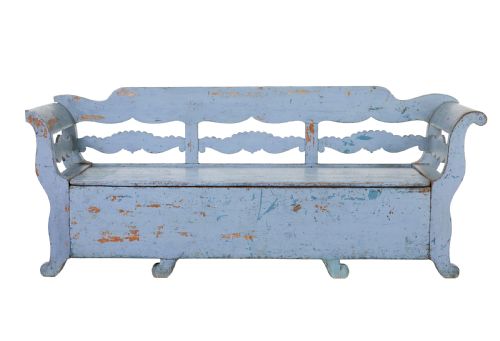
A folk art settle bench is a sturdy wooden seat designed to keep out cold draughts, frequently incorporating a high back and integrated box storage beneath the cushion or seat board. When you search for folk art settle bench, you encounter regional seating forms originating from various European countries, including Hungary, Spain, Sweden, and Austria.
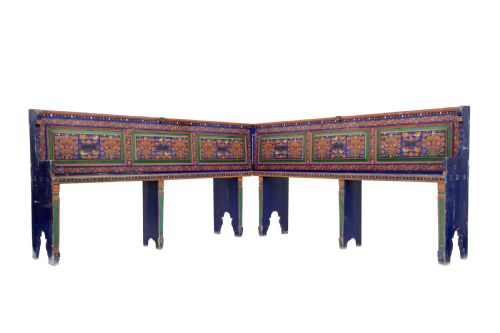
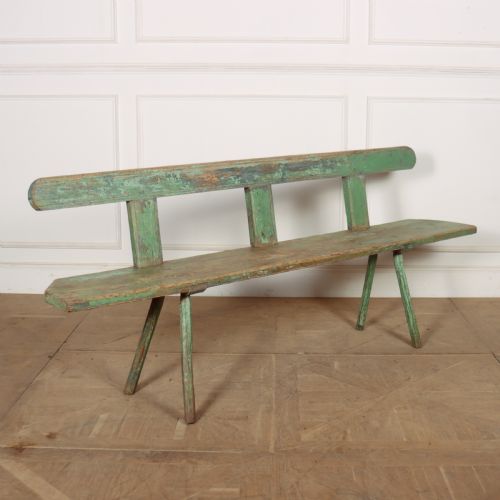
The pieces appearing on this page span several eras, reaching from the eighteenth century through the Victorian period and into the late nineteenth century around eighteen eighty. You will find both long three-seater box settles and compact corner seats or children's benches, usually constructed for domestic use in farmhouse or rural settings.
Materials and construction
Makers relied primarily on native timbers such as pine, beechwood, chestnut, and general painted wood or timber, shaping sturdy boards with simple hand tools. Iron fixings occasionally reinforced the structural joints of these heavy box seats and canopied frames.
Surfaces frequently display applied layers of paint, with examples showing polychrome decoration, hand-painted motifs, scumble glazes, or simple waxed finishes. This painted timber tradition protected the softwood underneath while expressing distinct local folk art styles.
Folk Art Settle Bench Retail Price Guide 2026
Typical asking prices for folk art settle bench among the pieces listed under this phrase on Sellingantiques today, from the lower quarter to the upper quarter. They describe what is for sale here now, not the wider market.
The selection includes regional styles from Austria, Hungary, Sweden, and Spain, spanning the eighteenth and nineteenth centuries.
Assessing quality and character
Quality in these benches rests upon the survival of original painted surfaces, whether a blue, grey, cream and green, or polychrome finish. Untouched paint schemes retain historical value far above stripped or later repainted timber.
Proportions and unusual forms also separate standard examples from finer pieces, such as neat scumble pine proportions or deep canopied structures. The integrity of the integrated box seat and the depth of regional folk art detailing dictate the standing of each settle.
The Folk Art Settle Bench Glossary
- Settle bench
- A wooden seat with a high back and solid wooden sides designed to block cold air. They often include enclosed storage space beneath the seat.
- Box settle
- A variation of the bench featuring a hinged seat lifting to reveal a storage chest underneath. This form doubled as a blanket chest or general household container.
- Scumble
- A decorative painting technique where a translucent glaze is dragged or manipulated over a lighter base coat to imitate wood grain or texture. It appears on primitive pine furniture.
- Polychrome
- Decorated or printed in several colours. On these pieces, it describes multi-coloured folk art hand-painting.
- Canopy
- A projecting hood or overhead shelter attached to the top of the bench back. This feature trapped heat from a hearth.
Folk Art Settle Bench: Frequently Asked Questions
What is a folk art settle bench?
A folk art settle bench is a traditional wooden seat featuring a high back, solid sides, and often a built-in box storage compartment beneath the seat. These pieces originate from various European rural traditions and display hand-painted finishes.
They served practical purposes in farmhouses and cottages, providing communal seating while shielding occupants from cold draughts coming across stone floors.
Where were these benches made?
The pieces originate from diverse European regions, including Hungary, Spain, Sweden, and Austria. Each area developed distinct regional painting styles and structural proportions.
Makers utilised locally available timbers, predominantly pine and beechwood, applying local decorative techniques such as scumble glazes or polychrome folk motifs.
How do I style a settle bench?
A settle bench works well in a hallway, kitchen, or living space where its high back can anchor a wall and provide a distinct focal point. Placing cushions or sheepskins on the seat softens the solid wood construction for everyday sitting.
The enclosed box beneath the seat offers hidden storage for bulky items like blankets, shoes, or seasonal accessories.
How do I date an antique settle?
Dating relies on examining the timber construction methods, tool marks, and the age of the paint surface. Pieces from the eighteenth and early nineteenth centuries often show hand-planed boards and pegged joints.
Comparing the decorative motifs and regional styles against documented examples helps narrow down the period, whether Georgian, Victorian, or late nineteenth century.