



Painted Milk Glass
Painted milk glass brings cheerful colour and soft light to a room through hand-painted floral panels and opaque white opaline surfaces.
Painted Milk Glass
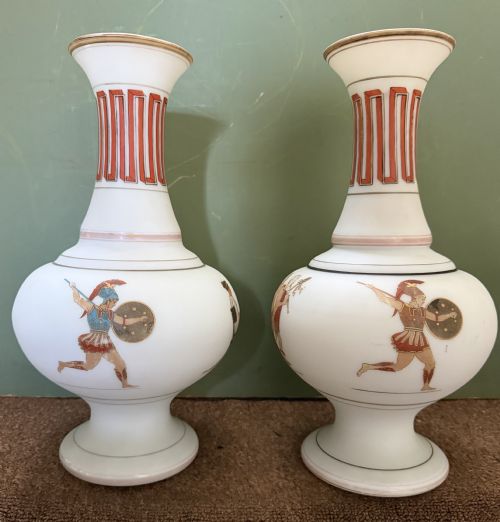
Painted milk glass comprises opaque white glass objects, often catalogued as opaline glass, decorated with enamel and gilding. When collectors search for painted milk glass, they find lighting and display pieces originating from nineteenth-century Britain and continental Europe.
Table lamps, oil lamps, lamp shades, vases, decanters and tankards form the primary types available on this page. Pieces date from the eighteenth century through to the early twentieth century, spanning Georgian, Victorian and Biedermeier periods.
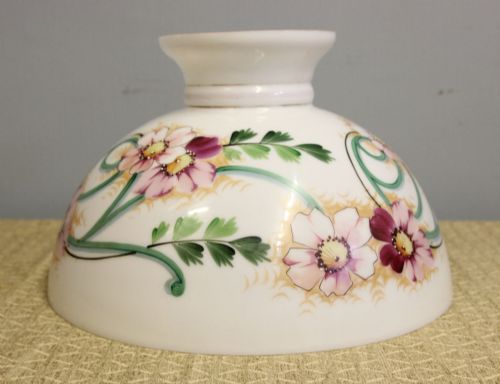
Victorian oil lamps and French opaline vases dominate the selection, frequently featuring floral enamel work applied over white glass bodies. Workshops in Bohemia and France produced much of this ware, utilising brass mounts and ceramic elements where functional parts required them.
How painted milk glass was made
Makers formed these items using opaline glass, an opaque white material that mimics porcelain while retaining the translucent quality of glass. Artisans then applied enamel colours and gilt details directly to the surface by hand.
Functional lighting objects incorporate brass components to secure burners, shades and reservoirs. Wood and ceramic elements appear occasionally in related structural fittings, while gilding accents the enamel panels on vases and decanters.
Painted Milk Glass Retail Price Guide 2026
Typical asking prices for painted milk glass among the pieces listed under this phrase on Sellingantiques today, from the lower quarter to the upper quarter. They describe what is for sale here now, not the wider market.
Some nineteenth-century oil lamps survive complete with their original burners, ready to cast a Victorian glow.
What varies in quality
Quality rests upon the execution of the hand-painted enamel and the crispness of the gilt detail applied to the white glass. Finer examples show precise brushwork in floral panels, whereas simpler pieces rely on heavier, less detailed decoration.
The sophistication of the glassblowing and the integration of brass mounts distinguish standard production items from distinguished continental pieces. Maker attribution, such as work associated with Jean Francois Robert at Baccarat, elevates certain nineteenth-century vases above unsigned domestic lighting.
Jean Francois Robert·Baccarat
The Painted Milk Glass Glossary
- Opaline glass
- An opaque or translucent white glass popular in the nineteenth century for decorative wares and lighting. It serves as the primary canvas for hand-painted enamel decoration.
- Enamel
- A durable coloured glass paste fired onto the surface of the glass to create decorative patterns and floral scenes. This medium provides the vibrant hues found on nineteenth-century vases and lamp shades.
- Biedermeier
- A Central European style spanning the early to mid nineteenth century characterised by utilitarian comfort and clean forms. Pieces from this era often feature restrained painted panels.
- Gilding
- The application of gold leaf or powdered gold paint to highlight rims, handles and painted scenes. It adds a metallic contrast to the opaque white glass ground.
Painted Milk Glass: Frequently Asked Questions
What is painted milk glass?
Painted milk glass refers to opaque white opaline glass objects decorated with hand-painted enamel and gilt details. These pieces include lighting items like oil lamps and lamp shades, alongside decorative vessels such as vases and decanters.
The style gained popularity during the nineteenth century, with French and Bohemian makers producing much of the surviving ware. The combination of opaque white glass and colourful floral enamel creates a distinctive decorative appearance.
How do I date painted milk glass?
Dating relies on identifying the manufacturing style, form and specific decorative techniques used on the piece. Eighteenth-century Bohemian decanters display different enamel palettes and glass weights compared to Victorian oil lamps from the 1880s.
Examining the brass mounts and burner mechanisms on lamps also helps narrow down the period. Pieces attributed to specific nineteenth-century factories often carry stylistic markers typical of their decade of production.
How were these lamps used?
Oil lamps and paraffin lamps provided domestic interior illumination before widespread electric lighting. Hanging lamp shades and table lamps diffused light through opaque opaline glass to create a softer glow in Victorian rooms.
Many of these lighting fixtures served as both functional household objects and decorative parlour ornaments. They required regular cleaning and trimming of wicks to maintain proper operation.
How do I care for painted milk glass?
Care requires gentle cleaning with a soft, damp cloth to avoid damaging the hand-painted enamel and gilt surface details. Abrasive cleaners and harsh scrubbing will scratch the opaque glass and remove the painted decoration.
Displaying pieces away from direct sunlight protects the enamel colours from fading over time. Handling items with care prevents chipping the rims of delicate opaline vases and lamp shades.