





Painted Marble Column
These painted marble column pieces bring architectural presence and classical weight to a room through clever surface illusion.
Painted Marble Column
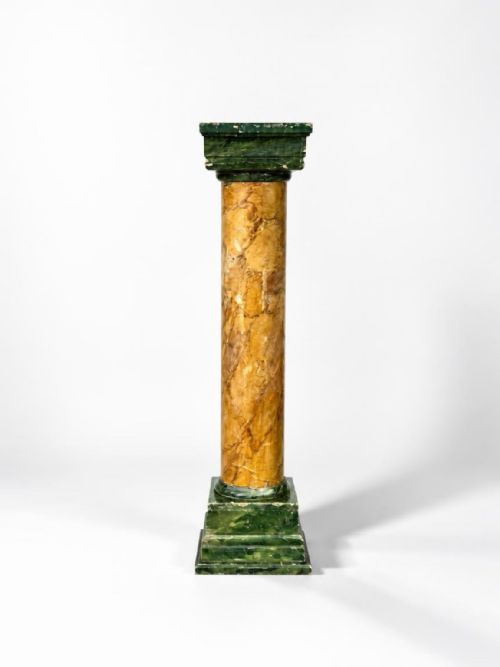
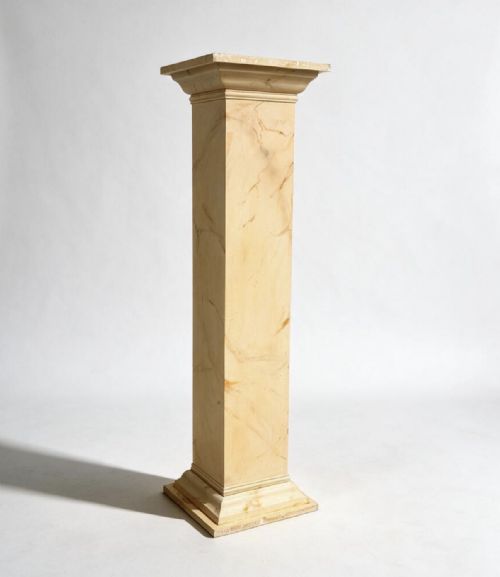
A painted marble column gives the visual grandeur of solid stone while utilising a lighter wooden or plaster core. When you search for a painted marble column, you encounter structural supports, display stands, and architectural elements originating from the Regency, Victorian, and early twentieth century periods.
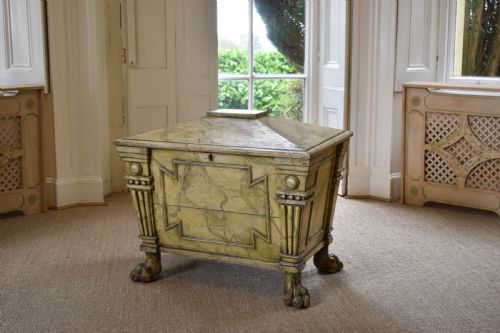
Most examples date from the nineteenth century, ranging from grand Regency floor pieces to Victorian stands. Alongside these stand occasional twentieth century fairground and theatrical items, showing how the tradition of faux finishing persisted across different settings.
How they were made
Carpenters typically shaped timber bases from pine, oak, or kingwood, while other pieces utilised carved wood, painted timber, or plaster. Artisans then applied preparatory grounds to these core materials before building up the decorative scheme.
Painters layered pigments to simulate the complex veining of real stone, such as verde antico, using oil paints or varnishes. Brass mounts and marble tops frequently completed the construction, adding tactile contrast to the painted shafts.
Painted Marble Column Retail Price Guide 2026
Typical asking prices for painted marble column among the pieces listed under this phrase on Sellingantiques today, from the lower quarter to the upper quarter. They describe what is for sale here now, not the wider market.
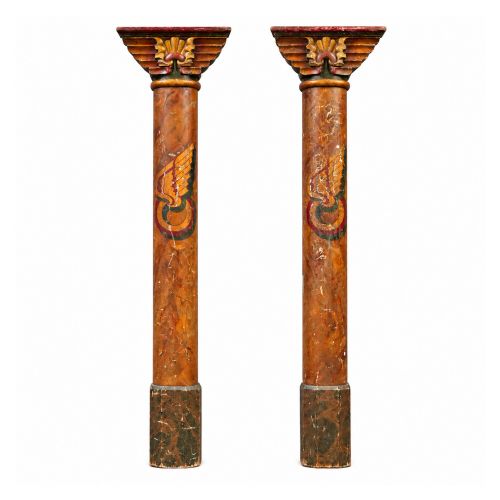
Even fairground carousels needed a touch of classical dignity, as proven by early twentieth century amusement park columns.
What varies in quality
Skill in the brushwork dictates the visual success of the piece, distinguishing convincing mineral depth from flat, unconvincing pattern work. The complexity of the simulated marble graining reveals the painter's training and patience.
The underlying carpentry and the choice of primary materials establish the structural integrity of the stand or column. Pieces that retain their original surface patination without later overpainting hold greater visual honesty.
The Painted Marble Column Glossary
- Faux marble
- A decorative paint technique designed to imitate the appearance of genuine stone. Artisans apply translucent layers of pigment to replicate natural geological veining.
- Verde antico
- A dark green serpentine marble with white calcite veining, frequently simulated by nineteenth century painters. Pieces mimicking this stone display deep, mottled green tones.
- Pedestal
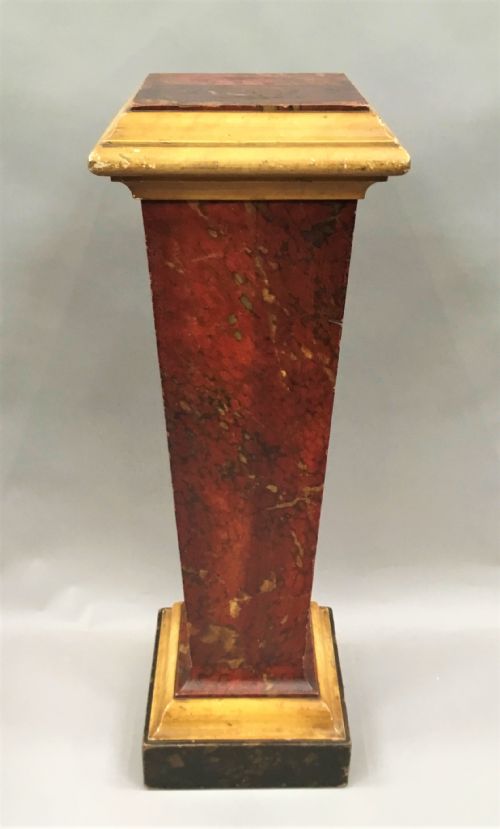
- A freestanding upright support used to elevate busts, vases, or lamps. These vertical supports range from simple cylindrical forms to fluted classical columns.
- Console table
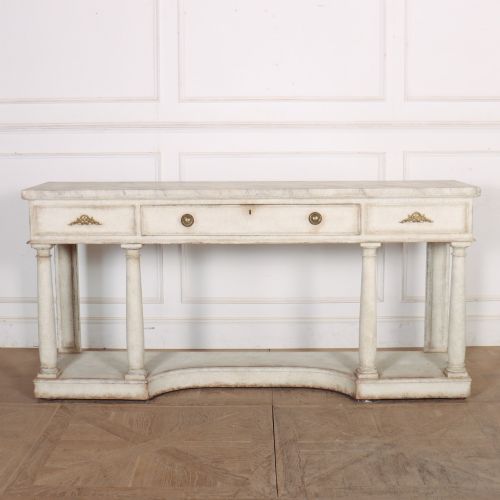
- A wall-mounted or bracket-supported table designed to stand against a vertical surface. Many examples feature painted wooden frames paired with inset marble tops.
- Vernis Martin
- A type of polished varnish finish developed in eighteenth century France and emulated later. This glossy coating protects the painted surface while adding depth to the decoration.
Painted Marble Column: Frequently Asked Questions
How were these columns originally used?
Makers designed these pieces primarily as architectural display supports or decorative furniture within grand interiors. They served to elevate sculptures, urns, or lighting fixtures in hallways and reception rooms.
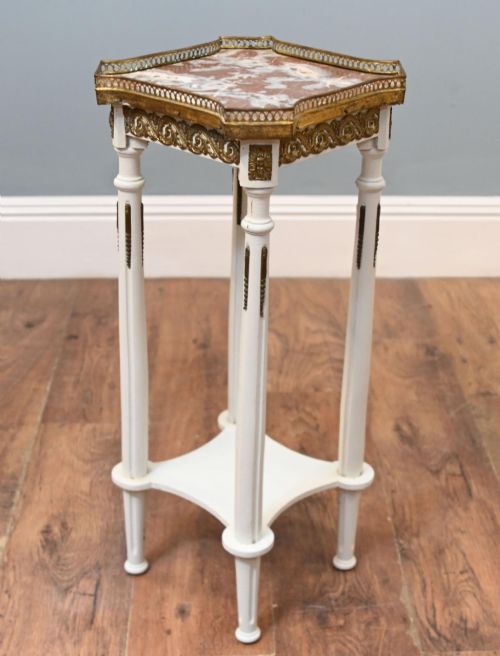
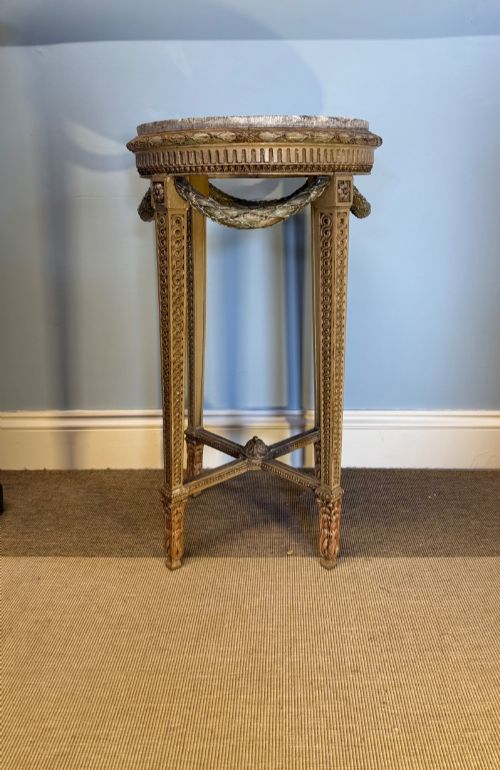
Console tables and bedside cabinets also functioned as practical surface furniture while maintaining a classical architectural aesthetic. Their solid yet portable construction allowed owners to reposition them within a room to suit changing decorative schemes.
What materials lie beneath the paint?
Carpenters primarily constructed the structural cores from pine, oak, and other native timbers. Some lighter or more sculptural examples utilised moulded plaster or turned wooden shafts.
Many pieces incorporated inset marble tops or brass decorative mounts to enhance their utility and appearance. The combination of a lighter timber base with a dense stone top provided stability without excessive weight.
How do I care for a painted surface?
Dust the surface regularly with a soft, dry cloth to prevent abrasive particles from settling on the paint. Avoid using chemical cleaners, moisture, or polish, which can lift or damage historic oil finishes.
Keep the piece away from direct sunlight and strong heat sources to prevent the wood beneath from expanding and cracking the paint layer. Stable indoor humidity ensures the historic surface remains secure.
How can I tell the period?
Regency and early nineteenth century examples often feature heavier pine construction with bold, dramatic marbling styles. Victorian pieces frequently display refined turning and varied timber selections, alongside theatrical or fairground items from the twentieth century.
Examine the construction joints, the type of screws or nails used, and the wear patterns on the base. These physical clues reveal the manufacturing methods and age of the wooden core.