



Painted Mahogany Vitrine
A painted mahogany vitrine brings together glass display and delicate painted panels, offering a refined stage for small collections.
Painted Mahogany Vitrine
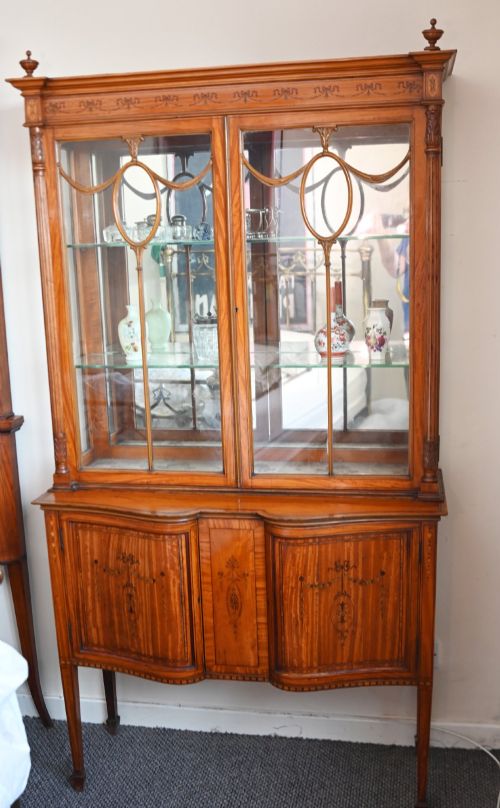
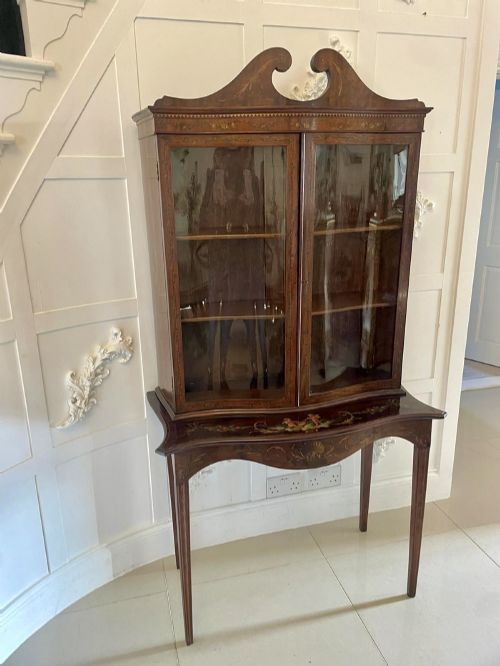
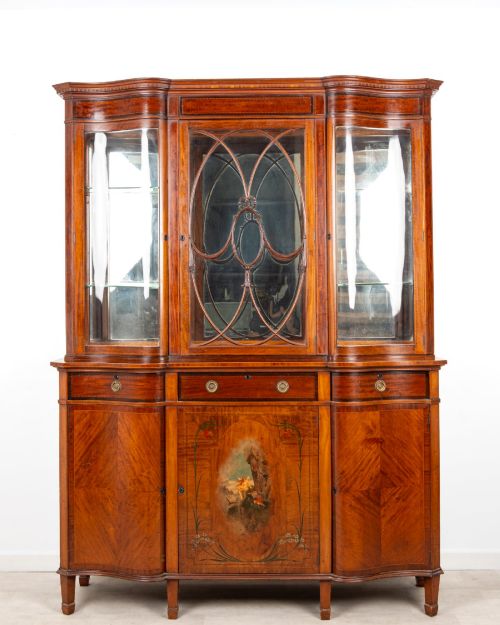
A painted mahogany vitrine combines rich timber frames with glazed panels and hand-painted decoration, designed primarily to exhibit precious objects. These pieces trace their origins largely through the nineteenth century and into the Edwardian period, spanning revival movements such as French Rococo, Louis XV, and Sheraton styles.
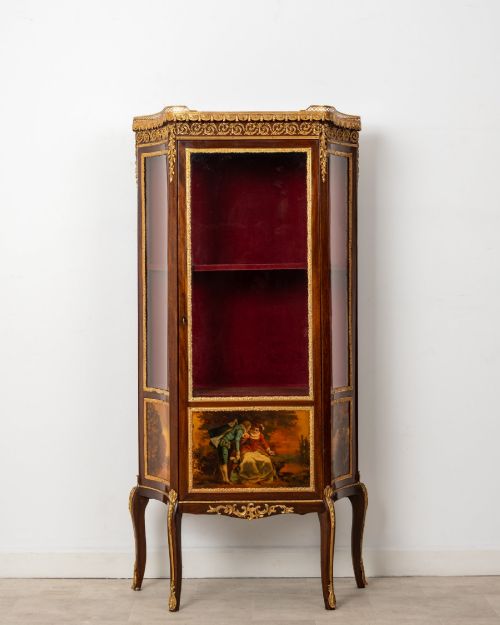
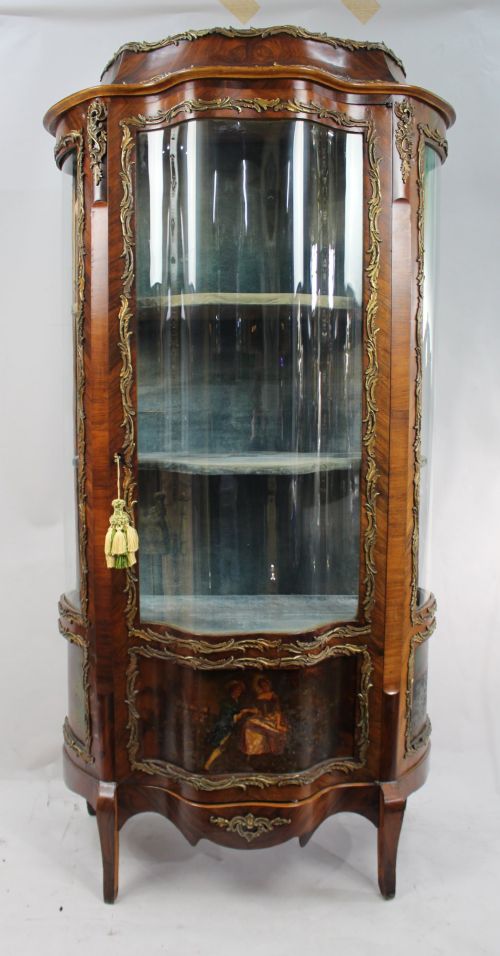
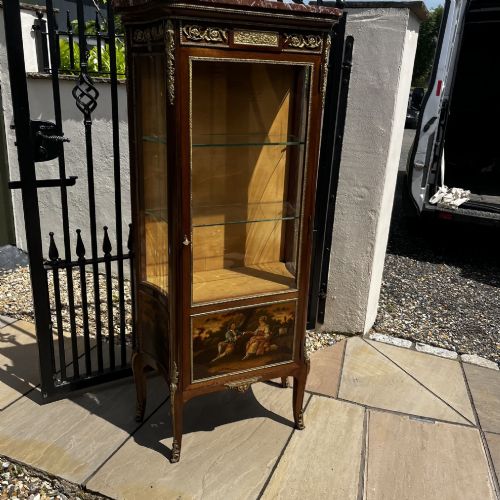
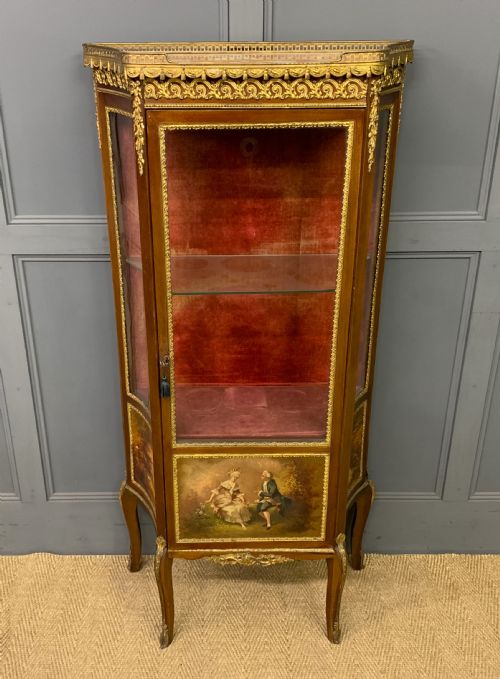
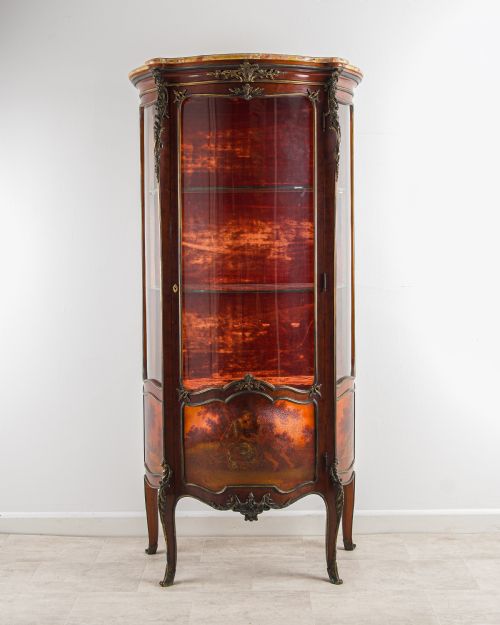
The version most frequently encountered on this page is the freestanding French or Edwardian cabinet, often incorporating curved serpentine glass and lower painted panels in the Vernis Martin manner. Alongside tall display cabinets, the selection includes compact bijouterie tables and cabinets on stands designed for tabletop viewing.
What varies in quality
The standard of the hand-painted panels defines the upper tier of these pieces, distinguishing mass production from accomplished artistic execution. Finer cabinets feature delicate, expressive brushwork on the painted scenes rather than flat or stencilled decoration.
Integration of the metalwork also separates examples, where heavy, crisply cast ormolu mounts fitted flush to the timber contrast with simpler, less detailed brass fittings.
Listings feature pieces spanning from the 1880s through the Edwardian period up to 1920, predominantly constructed from mahogany with glass, ormolu, and painted details.
Jewell of Holborn·François Linke·Angela Kaufman
The Painted Mahogany Vitrine Glossary
- Vitrine
- A glass-fronted display cabinet intended for showing porcelain, silver, and other cabinet objects. The term derives from the French word for glass.
- Vernis Martin
- A type of simulated Japanese lacquer developed by the Martin brothers in eighteenth-century France, later revived on nineteenth-century furniture. It relies on multiple translucent layers of varnish over painted scenes.
- Ormolu
- Gilt bronze mounts used as decorative enrichment on furniture. The technique involves applying a finely ground gold-mercury amalgam to cast bronze.
- Bijouterie table
- A specialised display table with a glazed top and shallow compartment for holding small trinkets and jewellery. They typically stand on slender legs.
- Serpentine
- A curved line of furniture shaping that undulates inward and outward in a continuous wave. It requires considerable skill in cabinetmaking to follow the glass and wood contours.
Painted Mahogany Vitrine: Frequently Asked Questions
What is a painted mahogany vitrine used for?
These cabinets were designed to display prized possessions such as porcelain figurines, fine glassware, and small curiosities. The glass panels protected delicate items from dust while keeping them visible from multiple angles.
In modern rooms, they continue to serve their original purpose as focal display points for collections. The enclosed glass shelves keep items secure while adding architectural interest to a living space.
How do I date an antique vitrine?
Dating relies on observing stylistic markers, construction methods, and materials recorded across the nineteenth and early twentieth centuries. Pieces from the Edwardian era often display lighter satinwood inlay and Sheraton Revival influences, whereas mid-nineteenth-century examples tend toward heavier French Rococo or Louis XV revival forms with extensive ormolu.
The integration of specific decorative styles, such as Vernis Martin panels or marble tops, helps narrow the period of manufacture. Examining the interior linings and the patination of the mahogany timber further clarifies the age of the piece.
Where should I place a vitrine in my home?
A vitrine requires a stable location away from direct sunlight to protect interior fabrics and delicate painted panels from fading. Because many examples feature curved serpentine glass or delicate ormolu mounts, they benefit from placement where heavy foot traffic will not risk accidental knocks.
Placing the cabinet against a solid wall allows the timber and glass to stand out as a primary decorative feature. Pairing them with adequate ambient lighting helps illuminate the enclosed shelves and the objects displayed within.
What is the difference between a vitrine and a display cabinet?
While the terms are often used interchangeably, a vitrine traditionally emphasises glass on multiple sides to maximise light penetration around delicate objects. Display cabinets may incorporate more timber structure, solid side panels, or built-in lower storage cupboards alongside glass doors.
Both forms share the primary function of exhibition, but a vitrine typically leans toward lighter, more decorative French or revival aesthetics. Bijouterie tables represent a specialised horizontal variant of the same display tradition.