




Painted Lacquered Snuff Box
A painted lacquered snuff box is a pocket-sized handheld container designed for tobacco, bringing together miniature artistry and functional craft.
Painted Lacquered Snuff Box
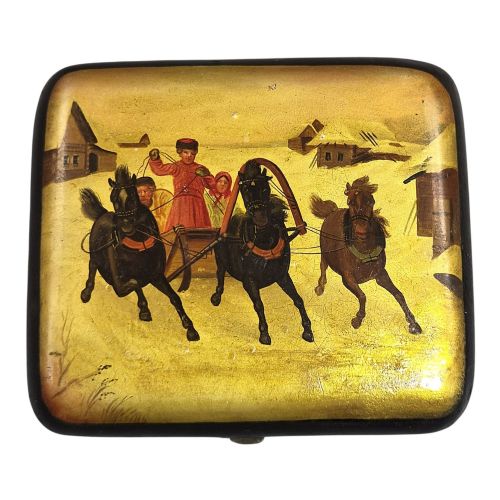
A painted lacquered snuff box represents a portable vessel used in past centuries for carrying ground tobacco, commonly encountered in forms such as table snuff boxes, cigarette cases, and tobacco tins. The pieces span periods including the Georgian era and the nineteenth century, reflecting varied regional origins from French Empire to Imperial Russian workshops.
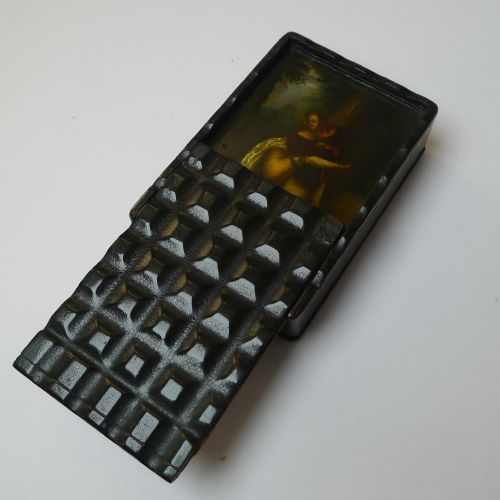
The selection on this page centres primarily on papier-mâché and tin constructions, often fashioned with hinged lids and decorated surfaces. Buyers frequently encounter rectangular or dome-shaped variations ranging from standard pocket sizes to larger table pieces.
Construction and materials
Papier-mâché serves as the primary structural foundation for many examples, built up from layers of paper pulp or sheets bound together, dried, and shaped into rigid boxes. Artisans then applied multiple coats of lacquer and varnish to create a smooth, durable base capable of accepting detailed decoration.
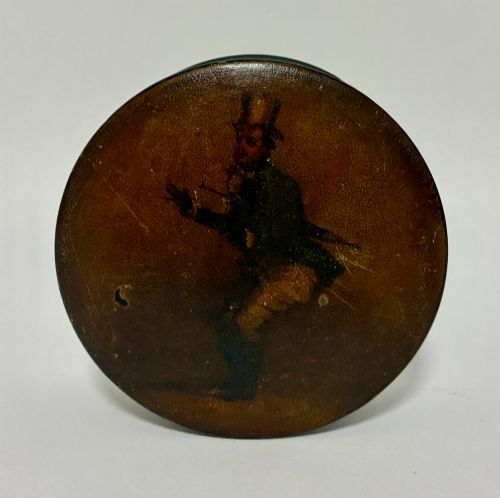
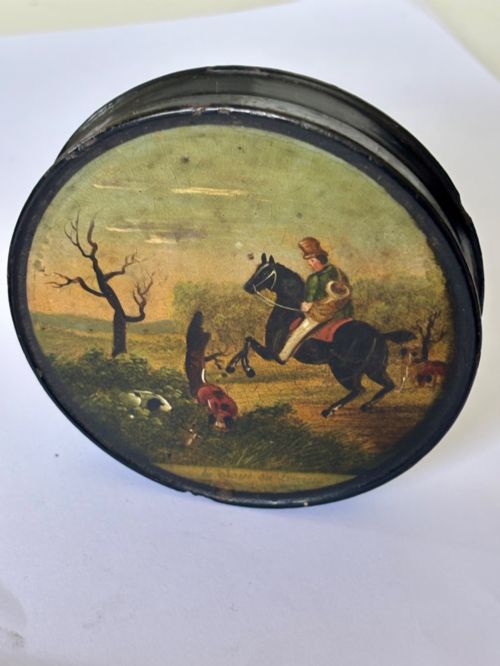
Surface ornament relies on oil paint and gold leaf, frequently applied by hand to render miniature scenes, hunting motifs, or figurative subjects. Tin serves as an alternative metal base material for specific tobacco tins within the period.
Materials across these listings include papier-mâché, lacquer, oil paint, gold leaf, and tin, spanning the Georgian period and the nineteenth century.
Distinctions in craftsmanship
Quality rests significantly upon the execution of the miniature painting and the delicacy of the brushwork on the lid. Fine examples display crisp detail in figurative scenes and careful handling of oil paint and gold leaf, whereas lesser pieces show rushed or simplified decoration.
The integrity of the lacquered surface and the precise fit of the hinged lid further separate standard examples from superior works. Finer boxes maintain smooth, even layers of varnish without heavy crazing, preserving the underlying papier-mâché structure effectively.
Vishnyakov Workshop·Stobwasser
The Painted Lacquered Snuff Box Glossary
- Papier-mâché
- A composite material made from paper pulp or reinforced paper layers mixed with glue or resin, pressed into moulds and dried to form a rigid body. This medium provided a lightweight and stable surface for lacquer and paint.
- Lacquer
- A clear or pigmented varnish applied in successive thin coats and polished to a hard, durable finish. It protects the painted decoration beneath while adding depth to the surface.
- Stobwasser
- A celebrated German manufacturing family and workshop known for producing high-quality papier-mâché snuff boxes with detailed miniature painting. Their output set a standard for lacquered wares across Europe.
- Table snuff box
- A larger variety of snuff container designed to sit upon a table or desk rather than fit into a waistcoat pocket. These pieces often feature more elaborate painted scenes.
- Gold leaf
- Gold beaten into extremely thin sheets and applied to the decorated surface as an accent. It highlights specific areas of the miniature painting.
Painted Lacquered Snuff Box: Frequently Asked Questions
What is a painted lacquered snuff box?
A painted lacquered snuff box is a small lidded container made primarily from papier-mâché or tin, finished with protective lacquer and detailed hand-painted artwork. These objects were originally designed to hold dry snuff for personal consumption.
Today, they function as decorative small antiques appreciated for their miniature paintings and historical craftsmanship.
How were these boxes used?
Owners carried them in pockets or placed them on tables for dispensing pinches of powdered tobacco during social gatherings. The tight-fitting lids kept the contents dry and prevented the aromatic snuff from losing its quality.
They also served as fashionable accessories that displayed the owner's taste through the miniature scenes painted on the covers.
How do I care for papier-mâché?
Keep papier-mâché and lacquered surfaces away from direct sunlight, excessive moisture, and high heat to prevent the lacquer from cracking or warping. Dust them gently with a dry, soft cloth without using liquid cleaners.
Stable indoor humidity helps preserve both the painted finish and the structural integrity of the box.
How do I distinguish periods?
Georgian and nineteenth-century pieces often display stylistic clues within their painted scenes, ranging from neoclassical motifs to romantic hunting subjects. Material choices, such as specific types of papier-mâché or tin construction, also indicate the era of production.
Attributions to known workshops like Stobwasser or Vishnyakov provide further chronological markers for dating.