
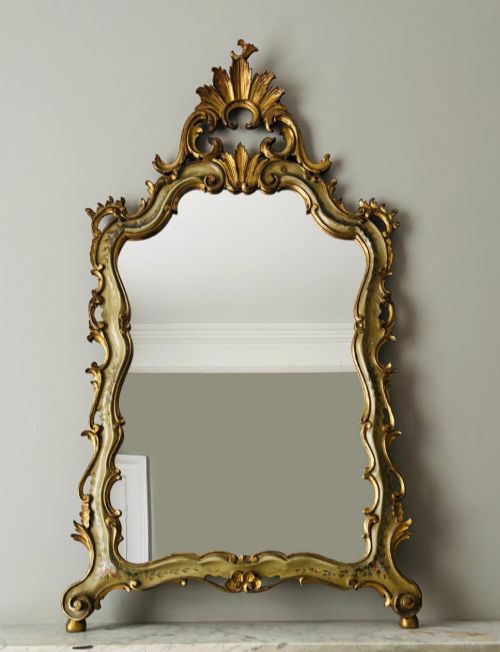
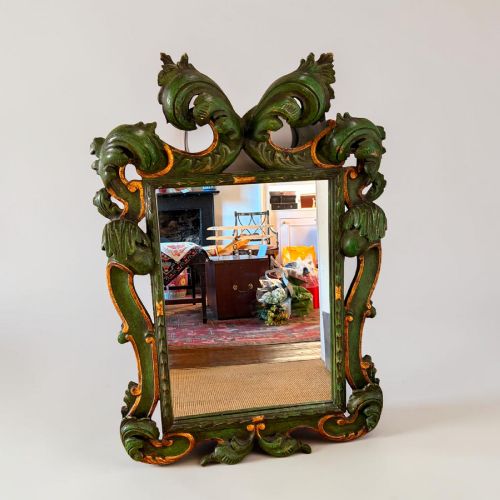
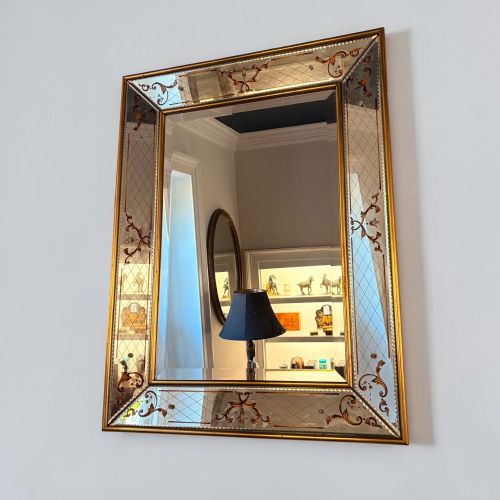
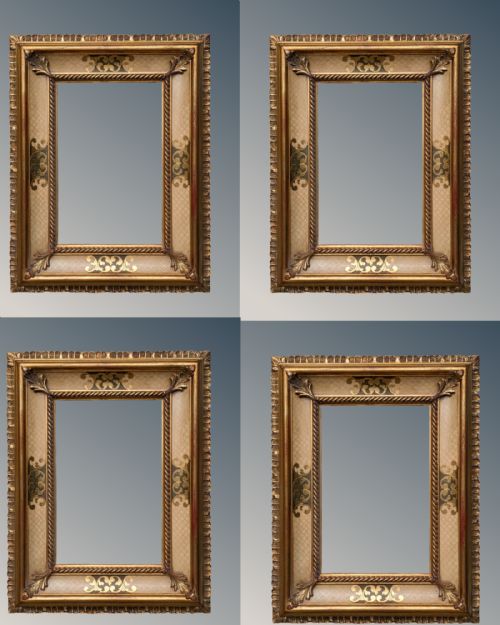


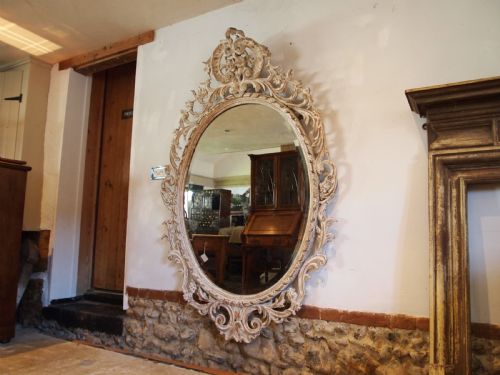


Painted Italian Wall Mirror
A painted italian wall mirror brings architectural depth and hand-finished colour to a room, combining carved woodwork with decorative pigments.
Painted Italian Wall Mirror
Pieces from the eighteenth century appear alongside nineteenth-century iterations and twentieth-century examples dated from nineteen-ten to nineteen-thirty. The selection includes items finished with hand-painted surfaces, giltwood accents, and carved wood structures. The variety encompasses both grand decorative pier glasses and simpler painted frames.
Venetian and Italianate interpretations dominate the offerings, showing regional variations in carving and pigment application. The fundamental form serves as either a functional looking glass or a decorative wall focal point depending on the scale and frame depth.
How they were made
Makers shaped these frames from carved wood, applying gesso to prepare the surface for gilding and paint. Artisans laid gold leaf over prepared grounds to create luminous highlights alongside polychrome pigments.
Mirror glass was set into hand-carved wooden structures, often utilising marginal plates or original historic glass plates. Paint was applied directly to wood or gesso surfaces, sometimes combining with giltwood details to achieve regional Italian styles.
The inventory records painted italian wall mirror examples utilising glass, gesso, giltwood, paint, carved wood, gold leaf, and mirror glass.
What varies in quality
The sophistication of the hand carving distinguishes finer examples from simpler workshops. Depth and relief in the carved wood and gesso ornament indicate the skill of the original maker.
The integrity of the painted surface and the retention of original gold leaf affect the character of the piece. Surviving original mirror glass plates add historical depth compared to later replacements.
The Painted Italian Wall Mirror Glossary
- Gesso
- A plaster-like mixture applied to wood frames to create a smooth surface for gilding or painting. It provides the base for fine relief work.
- Giltwood
- Wood that has been coated with gold leaf or gold paint. This technique adds a reflective metallic quality to the carved frame.
- Pier glass
- A tall mirror designed to hang on the wall between windows, often placed above a pier table. These tall glasses amplify natural light in a room.
- Marginal mirror
- A style featuring a central glass plate surrounded by smaller angled border pieces of mirror glass. The individual bevelled edges catch the light from multiple angles.
- Polychrome
- The practice of decorating architectural elements or furniture in a variety of colours. Painted Italian mirrors frequently utilise this multi-coloured surface treatment.
Painted Italian Wall Mirror: Frequently Asked Questions
How do I hang a heavy antique mirror safely?
Heavy frames require fixings suited to the wall material, whether brick, lath, or plasterboard. Professional wall anchors and substantial brackets distribute the weight of the carved wood and glass.
Ensure the hanging wire or D-rings on the reverse are securely fastened to the structural timber of the frame itself rather than decorative trim.
How do I clean painted and gilt frames?
Dust surfaces gently with a soft, dry brush to prevent abrasive particles from scratching the fragile paint or gold leaf. Avoid liquid cleaners and chemical solvents entirely.
Moisture can damage nineteenth-century gesso and eighteenth-century painted finishes, so conservation requires minimal intervention and dry methods only.
Are eighteenth and nineteenth century mirrors fragile?
Historic gesso, carved wood, and painted surfaces require careful handling during placement and relocation. Changes in humidity can cause wood to expand and gesso to crack over time.
Positioning pieces away from direct heat sources and strong sunlight protects the integrity of the original materials and pigments.
How do I identify a Venetian mirror?
Venetian examples often incorporate delicate engraved floral motifs directly onto the mirror glass plates. The frames frequently display intricate glass elements and specialised border treatments.
Regional Italian styles from Venice emphasise luminous glasswork and distinctive silhouette shapes compared to mainland carved wood designs.