

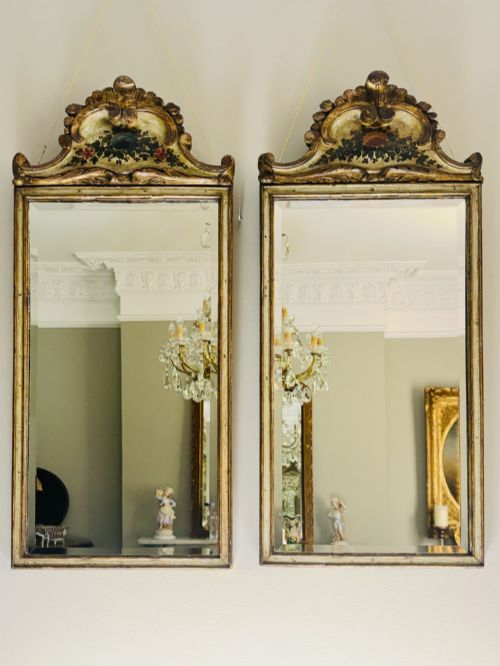
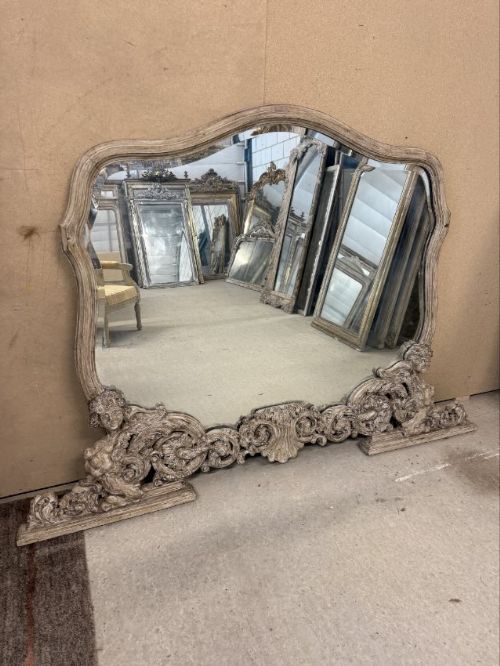
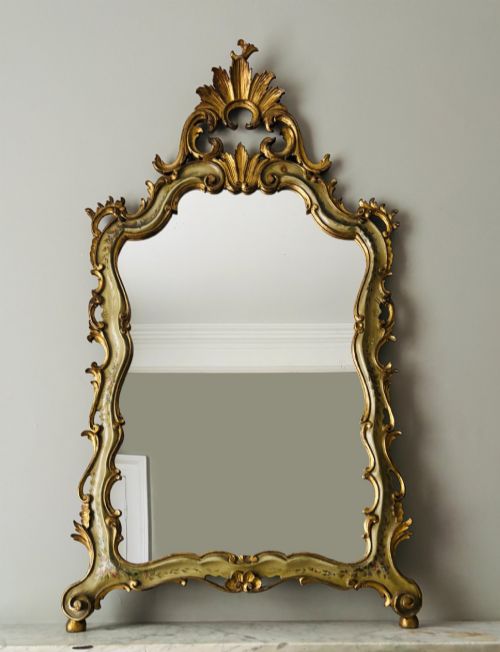

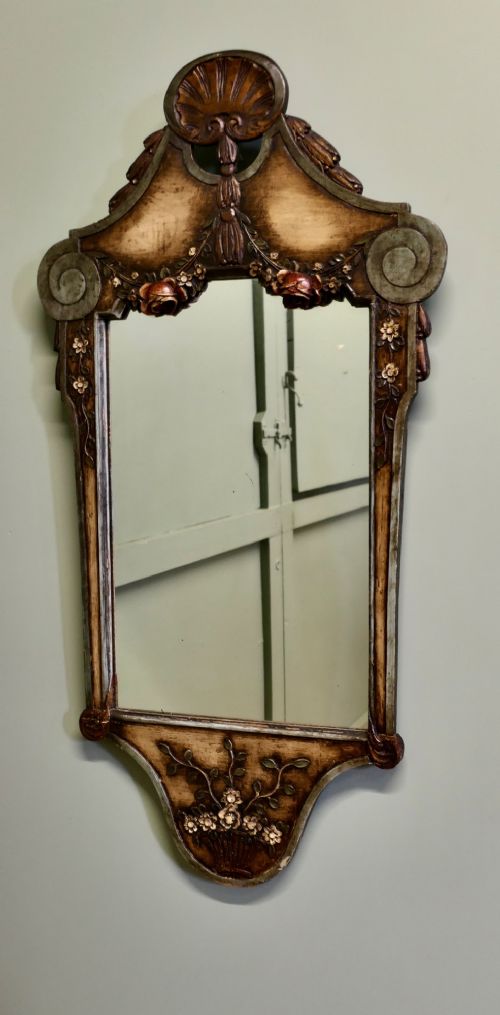



Painted Italian Mirror
A painted italian mirror brings dramatic southern European colour and carved presence to a room, spanning centuries of Venetian and Florentine design.
Painted Italian Mirror
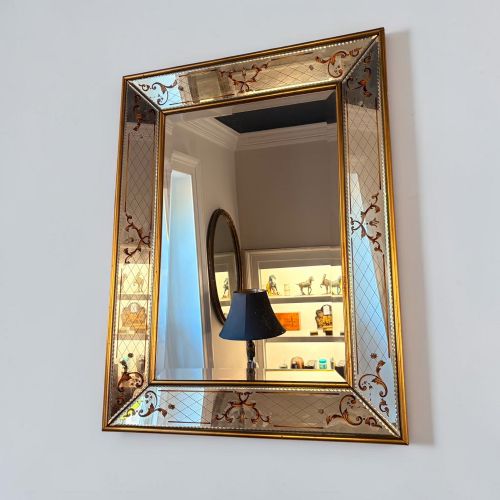
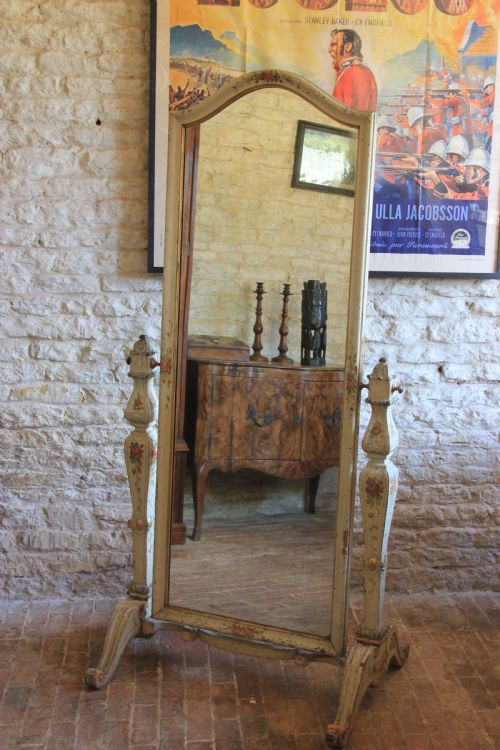
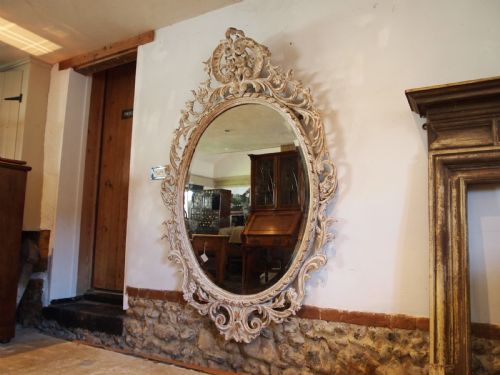
A painted italian mirror encompasses decorative wall hangings, pier glasses, and cheval mirrors originating from Italian workshops across the eighteenth and nineteenth centuries. Buyers searching for a painted italian mirror encounter diverse regional expressions, from grand Venetian Rococo wall pieces to rustic Italian Country forms.
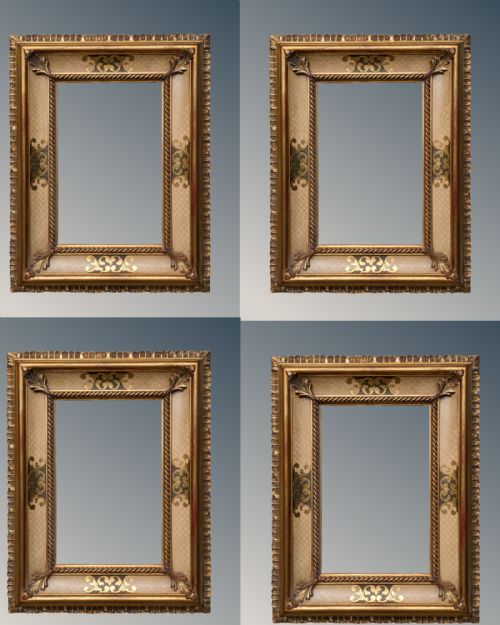
The selection frequently includes marginal mirrors, intricate giltwood frames, and pieces featuring polychrome decoration or eglomise glass panels. Pieces range from elaborate eighteenth-century carved plates to early twentieth-century Italianate revivals and mid-century designs.
How they were made
Craftsmen built structural elements from carved wood, applying layers of gesso to create smooth surfaces for intricate detail and paint adhesion. Artisans then decorated the timber frames using hand-mixed paint, polychrome pigments, and applied gold leaf or giltwood finishes.
Original mirror glass plates, including eglomise panels with reverse-painted glass details, were set into the prepared wooden carcasses. Workshops utilised traditional joinery and carving techniques appropriate to the period, whether producing rustic country furnishings or high-status Venetian pier glasses.
Painted Italian Mirror Retail Price Guide 2026
Typical asking prices for painted italian mirror among the pieces listed under this phrase on Sellingantiques today, from the lower quarter to the upper quarter. They describe what is for sale here now, not the wider market.
One pocket-sized survivor from Florence proves that seventeenth-century craftsmanship could occasionally be shrunk down into an 800 silver and enamel compact.
What varies in quality
Quality separates through the depth and articulation of the wood carving, distinguishing fluid hand-carved acanthus and rocaille scrolls from simpler moulded decoration. The finesse of the polychrome paintwork and the purity of the gilding further divide standard production from exceptional artisan output.
The integrity of the physical components also defines the tier of a piece, particularly the presence of original mirror glass plates rather than later replacements. Finer examples retain their historic surface patination intact, showing the natural ageing of paint and metal leaf over centuries.
Pauly et Cie·Giuliano Spinelli Florence
The Painted Italian Mirror Glossary
- Gesso
- A plaster-like mixture applied to wood surfaces as a base for paint and gilding. This preparation allows artisans to achieve crisp relief details before applying colour or gold leaf.
- Eglomise
- A technique involving cold painting and gilding on the rear face of glass. It produces a reflective, decorative panel often seen in specialised Venetian mirrors.
- Polychrome
- The practice of decorating surfaces in multiple colours. In these mirrors, it describes hand-painted floral or figural motifs applied over a prepared ground.
- Giltwood
- Timber coated with gold leaf or gold powder. This luxurious finish reflects candlelight and brightens interiors.
- Pier glass
- A tall, narrow mirror designed to hang on the wall between windows. These pieces often coordinate with console tables placed below them.
Painted Italian Mirror: Frequently Asked Questions
How do I clean a painted italian mirror?
Dust the carved frame gently with a soft, dry brush to protect the historic paint and gold leaf layers. Avoid using chemical sprays or excess water near the painted timber and original mirror plate.
Clean the glass surface sparingly using a microfiber cloth slightly dampened with distilled water. Take care not to let moisture seep behind the mirror plate where silvering or eglomise work might be vulnerable.
Where should I hang a pier glass?
Pier glasses are traditionally proportioned to hang on the narrow wall space between two windows. This placement maximises natural light reflection and creates a balanced architectural symmetry in a formal room.
Alternatively, position one above a console table or mantelpiece to anchor a central living space. Ensure the wall fixings are robust enough to support the substantial weight of carved wood and glass.
How can I tell an 18th-century mirror from a later copy?
Examine the construction of the wooden frame, looking for hand-cut joinery, period tool marks, and dense timber species typical of earlier eras. The gesso and paint layers should show natural craquelure and organic wear consistent with age.
Inspect the mirror plate itself for subtle distortions, inclusions, and the mellow oxidation patterns associated with historic glass. Later replacement plates often appear unusually flat and lack the depth of antique mercury or early silvered glass.
What is the difference between Venetian and Florentine styles?
Venetian mirrors frequently feature dramatic Rococo curves, etched floral glass elements, and bright polychrome decoration. They often incorporate marginal mirror plates bordered by decorative glass slips and delicate crestings.
Florentine styles tend to emphasise rich giltwood frames with deep, sculptural carvings of acanthus leaves and scrolls. These pieces lean towards architectural grandeur rather than the lighter, whimsical forms of Venice.