


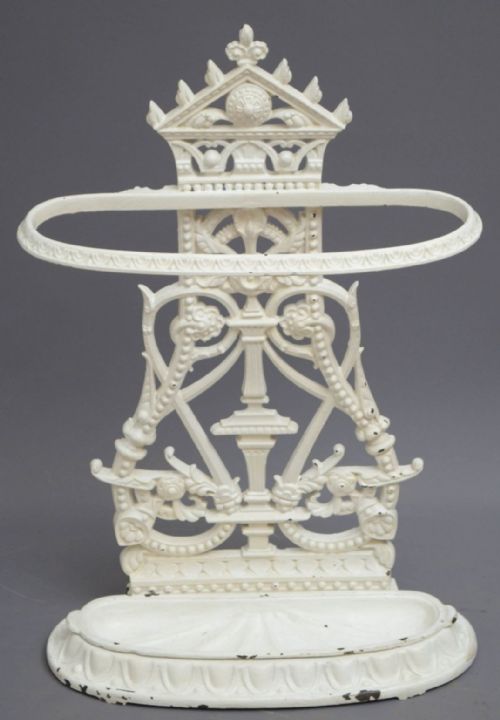


Painted Iron Umbrella Rack
These painted iron umbrella rack examples are robust hallway essentials offering enduring practicality alongside distinctive period character.
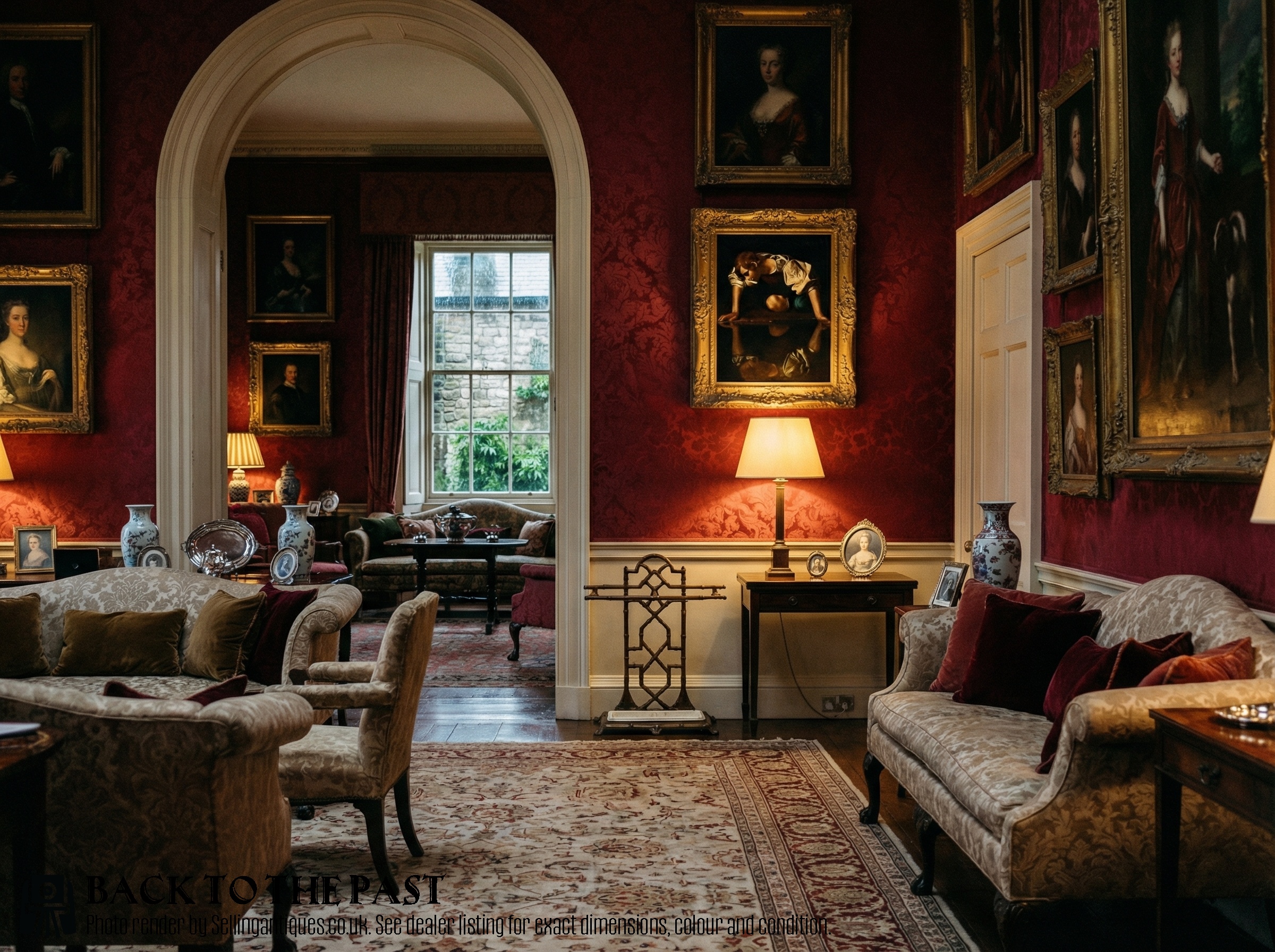
Painted Iron Umbrella Rack
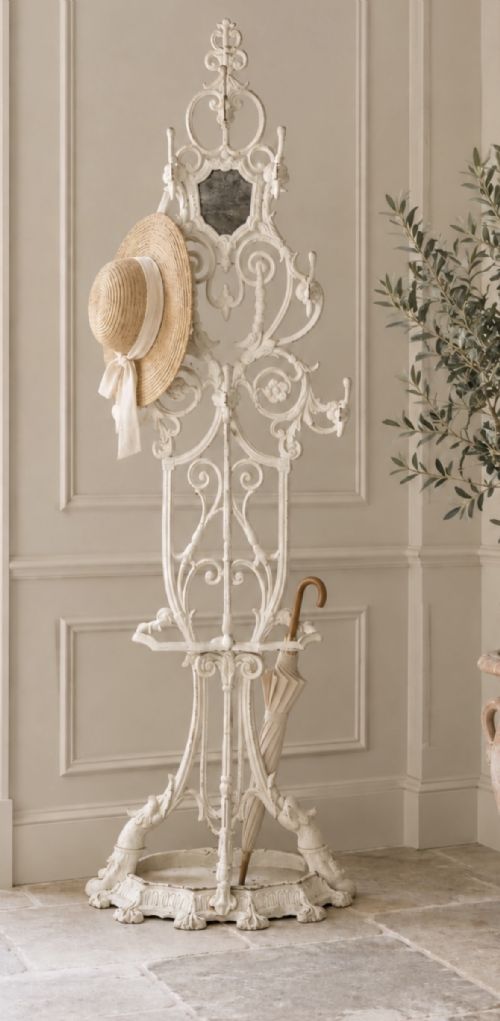
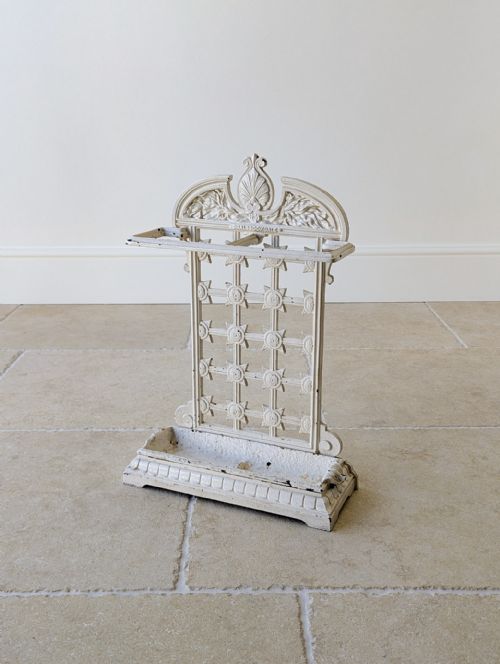
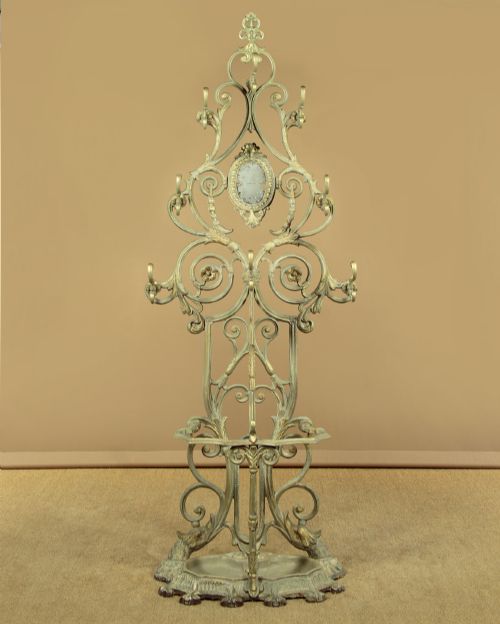
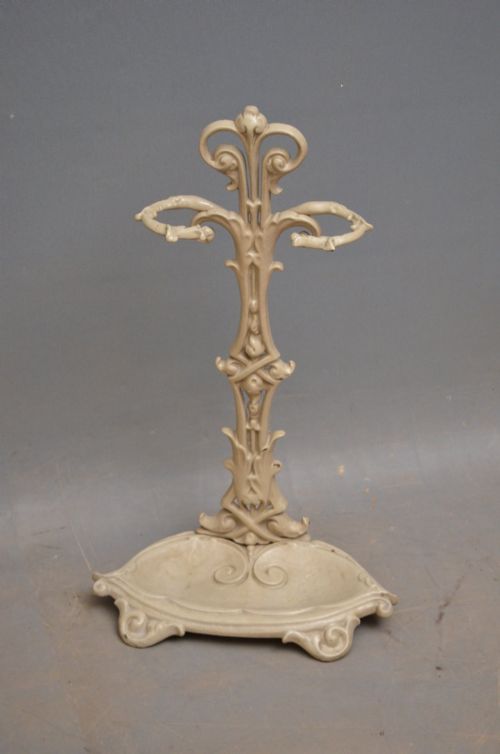
When you search for a painted iron umbrella rack, you encounter a variety of sturdy Victorian hallway furnishings designed to hold walking sticks, canes, and wet umbrellas. These objects frequently appear as dedicated stick stands, broader hall stands, and tall coat stands incorporating umbrella holders.
You are most likely to meet nineteenth-century examples fashioned from cast iron, often retaining their original or subsequent painted finishes. The forms range from compact domestic racks to imposing architectural hall stands suited to substantial entryways.
How they were made
Foundry workers utilised cast iron to create these robust umbrella racks, pouring molten metal into detailed moulds to achieve intricate surface patterns and structural forms. This technique allowed makers to produce ornate grilles, drip pans, and flanking uprights in styles such as Rococo Revival, Gothic Revival, and Art Nouveau.
Following the casting process, artisans applied protective painted finishes to the iron, sometimes incorporating enamel elements or faux bamboo detailing. These painted surfaces defended the metal against moisture from wet umbrellas while enhancing the decorative appeal of the hallway furniture.
Painted Iron Umbrella Rack Retail Price Guide 2026
Typical asking prices for painted iron umbrella rack among the pieces listed under this phrase on Sellingantiques today, from the lower quarter to the upper quarter. They describe what is for sale here now, not the wider market.
What varies in quality
The sophistication of the casting work dictates much of the distinction across these pieces, separating sharply detailed ornamentation from softer, more generic production. Makers such as Coalbrookdale achieved notable depth and crispness in their cast iron designs, which remains evident in the retained contours of the framework.
The integrity of the original structure and the survival of early painted surfaces also influence the character of an individual rack. Pieces that retain their accompanying drip trays and display harmonious proportions demonstrate superior original design and thoughtful domestic utility.
Coalbrookdale
The Painted Iron Umbrella Rack Glossary
- Cast iron
- A strong, hard iron-carbon alloy produced by pouring molten metal into a mould. It served as the primary material for shaping heavy Victorian umbrella stands and hall furniture.
- Drip pan
- A shallow tray positioned at the base of a stick stand to catch moisture from wet umbrellas. These components protected hallway floors from water damage.
- Hall stand
- A multifaceted piece of entrance furniture combining a mirror, coat hooks, glove boxes, and an umbrella rack. They anchored grand nineteenth-century domestic entryways.
- Coalbrookdale
- A famous English ironfoundry known for producing elaborate decorative cast ironwork during the Victorian era. Their output included distinctive stick stands and garden furniture.
- Stick stand
- A compact domestic furnishing specifically constructed to store walking sticks and umbrellas upright. They represent the most common configuration found within this category.
Painted Iron Umbrella Rack: Frequently Asked Questions
What is a painted iron umbrella rack?
A painted iron umbrella rack is a heavy nineteenth-century hallway furnishing designed to store wet umbrellas and walking sticks upright.
These pieces utilise durable cast iron construction finished with protective paint, frequently featuring decorative styles ranging from Gothic Revival to Art Nouveau.
How were these umbrella stands used?
Victorian households positioned these racks in hallways and entranceways to keep wet umbrellas and walking canes organised and accessible.
Integrated drip pans at the base successfully collected rainwater to prevent damage to indoor flooring.
How do I date a cast iron stick stand?
Dating relies on identifying stylistic markers, construction techniques, and factory patterns associated with the nineteenth century.
Victorian examples often display registration marks, specific foundry attributions like Coalbrookdale, or architectural motifs popular during the eighteen-seventies and eighties.
Where should I place a hall stand?
These tall iron racks suit spacious entryways, hallways, and boot rooms where their sturdy weight and upright profile remain stable.
Adequate clearance allows easy access to the coat hooks, umbrella rings, and lower drip trays during daily use.