





Painted Iron Jardiniere
A painted iron jardiniere brings heavy architectural structure and enduring plant display to a terrace or interior room.
Painted Iron Jardiniere
A painted iron jardiniere sits at the intersection of practical garden utility and formal decorative art, designed specifically to house large plants inside the home or out on the grounds. When you search for a painted iron jardiniere, you encounter sturdy vessels shaped as planters, plant stands, and tiered baskets constructed to hold heavy pots and earth.
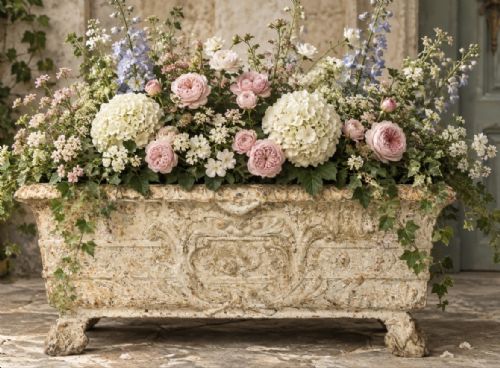
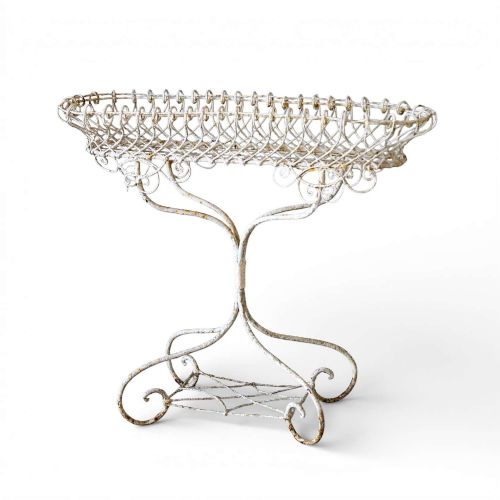
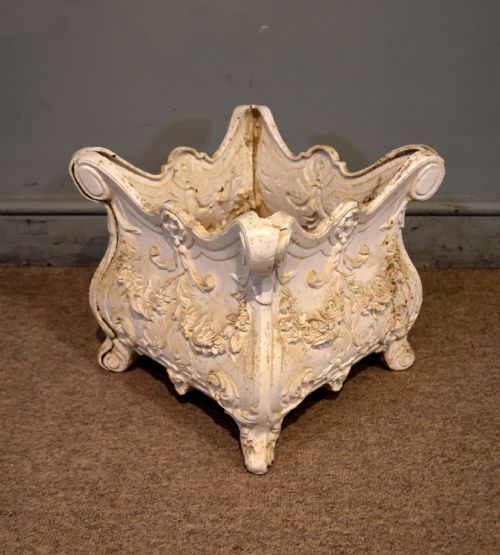
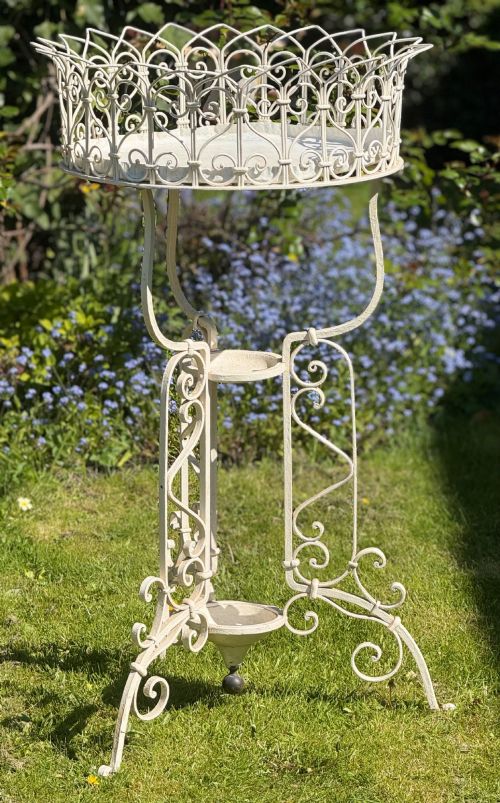
The pieces appearing in these collections span the nineteenth century, the Victorian era, the Georgian period, and into the early twentieth century, with distinct French and English origins. You meet everything from simple wirework plant stands with lattice basket tops to heavy cast iron forms bearing neoclassical or French chateau styling.
Construction and materials
Makers utilised cast iron and wrought iron as the foundational structure for these planters, often shaping wire into intricate lattice baskets and tiered frames. Cast iron allows for heavy, durable forms with decorative relief, whilst wrought iron and wirework provide lighter, linear frameworks that support climbing plants or display pots.
Surface finish is integral to the piece, involving traditional paint applied over metal to prevent oxidation and to provide colour. Some items incorporate porcelain or enamel elements, combining glazed ceramics with rigid iron framing to create contrast in texture and tone.
Painted Iron Jardiniere Retail Price Guide 2026
Typical asking prices for painted iron jardiniere among the pieces listed under this phrase on Sellingantiques today, from the lower quarter to the upper quarter. They describe what is for sale here now, not the wider market.
Object types seen across the inventory include plant stands, garden planters, wirework tiered planters, and Japanese Imari jardinieres.
Assessing quality and character
Quality in a painted iron jardiniere lies in the crispness of the casting and the skill of the metalwork, distinguishing refined foundry production from utilitarian output. Pieces bearing clear attribution to makers like Coalbrookdale demonstrate superior artistry in their ornamentation and structural balance.
The integrity of the original metalwork and the depth of the surviving paint layers dictate the character of the piece. Fine examples show harmonious proportions in scrollwork and lattice details, maintaining their stability despite decades of exposure to soil and moisture.
Coalbrookdale
The Painted Iron Jardiniere Glossary
- Jardiniere
- An ornamental pot or stand for holding plants or flowers. These vessels range from heavy cast iron bowls to delicate wirework plant holders.
- Coalbrookdale
- A prominent nineteenth-century ironfoundry known for producing high-quality decorative cast iron garden furniture and planters. Their work is celebrated for fine detail and robust construction.
- Wirework
- A technique of bending and joining metal wire into open lattices and structured frames. Victorian gardeners favoured this method for lightweight plant stands and tiered displays.
- Wrought iron
- Iron that has been heated and hammered into shape by hand, resulting in tough, fibrous metal. It provides strong, flexible support for garden planters and scrollwork stands.
- Neoclassical
- A style drawing inspiration from classical antiquity, featuring symmetrical forms and restrained ornamentation. This aesthetic appears on nineteenth-century cast iron planters and stands.
Painted Iron Jardiniere: Frequently Asked Questions
What is a painted iron jardiniere used for?
These vessels serve as decorative containers to house potted plants and flowers, functioning both indoors in conservatories and outdoors in gardens. Their sturdy construction safely supports heavy soil and large foliage.
Historically, they allowed gardeners to display prized plants on terraces or bring delicate flora inside during colder months. Today, they remain functional planters that add architectural weight to a space.
How do I care for antique iron planters?
Protect the metal from standing moisture and inspect the painted surface regularly for signs of wear or flaking. Applying appropriate protective coatings helps preserve the underlying iron.
Keep the planters in sheltered outdoor spots or indoor environments during harsh weather to prevent rust formation. Gentle cleaning with mild soap maintains the aged paint finish without stripping the surface.
How do I distinguish Victorian from Georgian pieces?
Georgian pieces, such as those from the early nineteenth century around 1820, often feature lighter wirework and simpler structural geometry. They rely on delicate framing and restrained decorative lines.
Victorian items tend towards heavier cast iron forms with ornate neoclassical styling, botanical motifs, or French chateau influences. The foundry work becomes more pronounced and elaborate as the nineteenth century progresses.
Can these jardinieres stay outside year-round?
Cast iron and wrought iron withstand outdoor elements well, but prolonged exposure to damp soil and freezing temperatures tests the painted surface. Many pieces survive outdoors for generations with proper maintenance.
Moving lighter wirework or sheet metal pieces indoors during winter safeguards delicate joints and painted finishes. Assessing the metal thickness helps determine how the jardiniere handles seasonal weather.