


Painted Georgian Bureau
These painted georgian bureau pieces bring surface pattern and drop-front writing storage into a room.
Painted Georgian Bureau
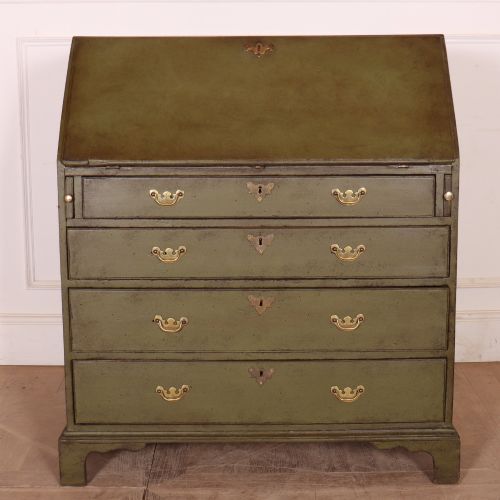
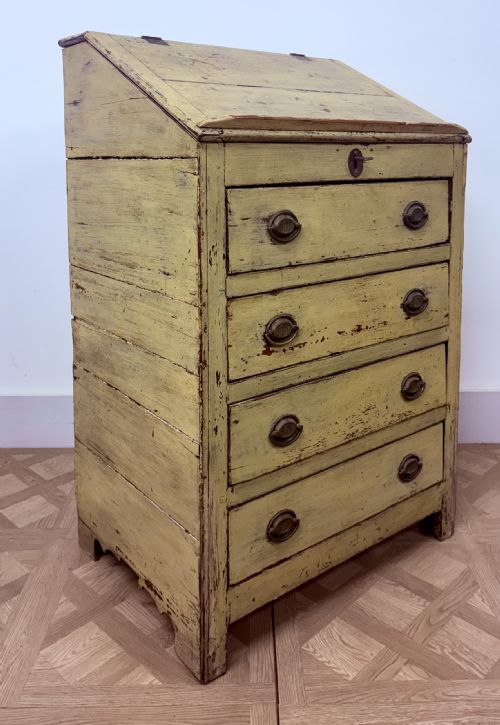
A painted georgian bureau combines a slanted writing flap that opens to reveal internal compartments with drawer storage below, rooted primarily in the eighteenth century and the Georgian and Regency periods. You will encounter English country examples alongside pieces bearing later painted finishes applied over older pine or wood.
The forms extend beyond standard writing desks to include bureau bookcases, secretaire tallboys, and chests of drawers fitted with writing slopes. These items serve as both practical writing furniture and decorative storage cabinets within domestic interiors.
How they were made
Carpenters constructed the carcasses using pine, satinwood, and general wood timbers, employing traditional joinery to build structural drawers and writing compartments. Brass hardware such as handles and escutcheons provided functional accents.
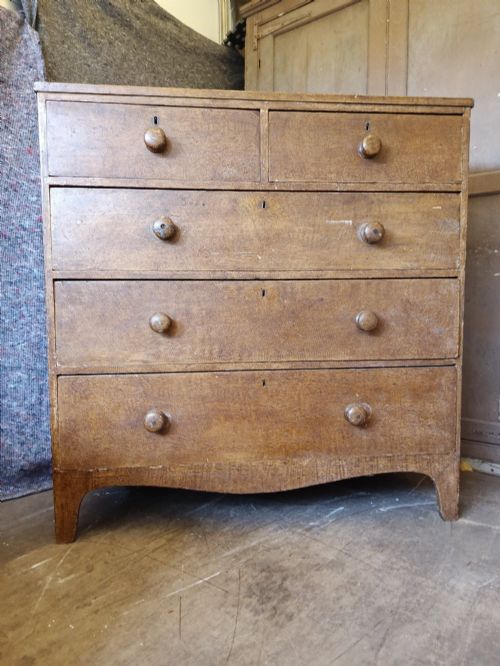
Surfaces received decorative treatments ranging from hand-painted details and geometric designs to later painted blue finishes and faux mahogany graining. Chinoiserie motifs also appear on eighteenth-century examples, applied over the wooden base.
The listings combine pine, satinwood, and painted wood with brass hardware across Georgian, Regency, and Sheraton styles.
What varies in quality
The sophistication of the painted finish separates simpler provincial items from more ambitious decorative pieces. Original or early surface decoration holds distinct character compared to later applied paint layers.
Timber selection and the crispness of internal pigeonholes and small drawers dictate the standard of construction. Pieces retaining their original brass fittings and structurally sound writing flaps demonstrate superior execution.
The Painted Georgian Bureau Glossary
- Bureau
- A writing desk featuring a sloping hinged lid that drops to form a writing surface over a set of drawers. It typically conceals a collection of small pigeonholes and secret compartments inside.
- Secretaire
- A piece of furniture containing a drawer or compartment that pulls out or folds down to provide a writing surface. These often form the upper section of tallboys or chests.
- Bureau bookcase
- A combination piece consisting of a bureau base with a glazed or panelled shelving cabinet mounted on top. This form provided integrated storage for both books and writing materials.
- Chinoiserie
- European decorative style inspired by Chinese artistic traditions, featuring motifs like landscapes, figures, and pavilions. It was frequently applied as hand-painted decoration on eighteenth-century furniture.
Painted Georgian Bureau: Frequently Asked Questions
What is a painted georgian bureau?
It is a writing desk with a hinged sloping front that covers small drawers and pigeonholes, supported by a chest of drawers below and finished with paint.
These pieces date largely from the eighteenth and nineteenth centuries, spanning Georgian and Regency styles.
How were these desks used?
Owners dropped the front flap to write letters and stored correspondence, paper, and ink within the internal compartments.
The drawers underneath held household papers, textiles, and personal items, making the piece a central workstation.
Are the painted finishes original?
Some pieces retain their eighteenth-century or Regency painted decoration, while others feature later decorative paint applied over older wood.
Examining the relationship between the paint surface and the underlying pine or satinwood helps determine the history of the finish.
Where do these pieces fit at home?
They function effectively in studies, living rooms, or hallways as both a working surface and a decorative storage cabinet.
The combination of patterned paint and practical drawer space allows them to anchor a room visually.