


Painted Earthenware Ornaments
Painted earthenware ornaments bring shelf and mantel alive with figures, dogs and pairs from the Victorian years and beyond.
Painted Earthenware Ornaments
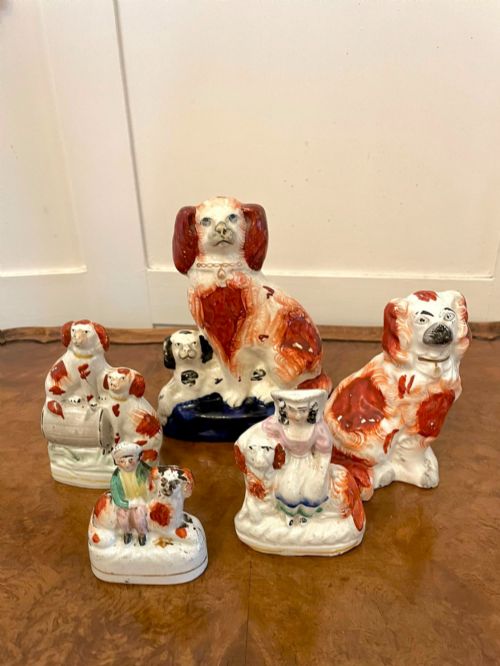
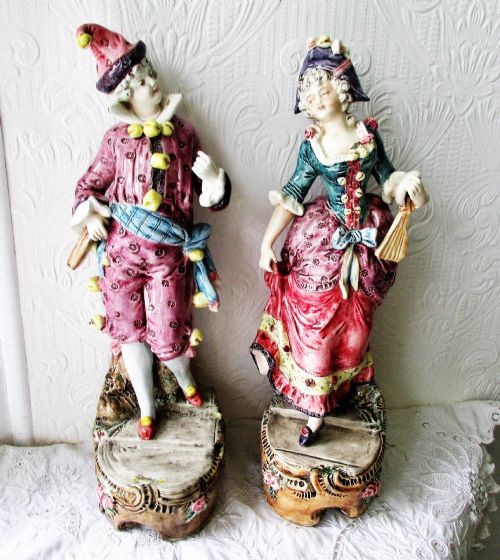
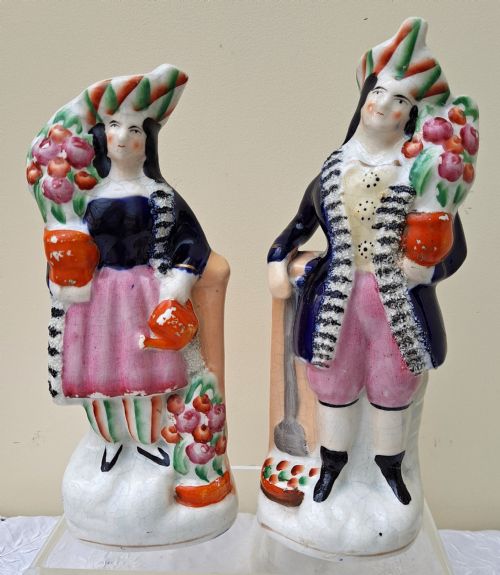
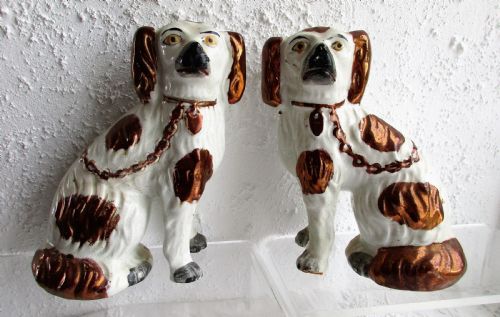
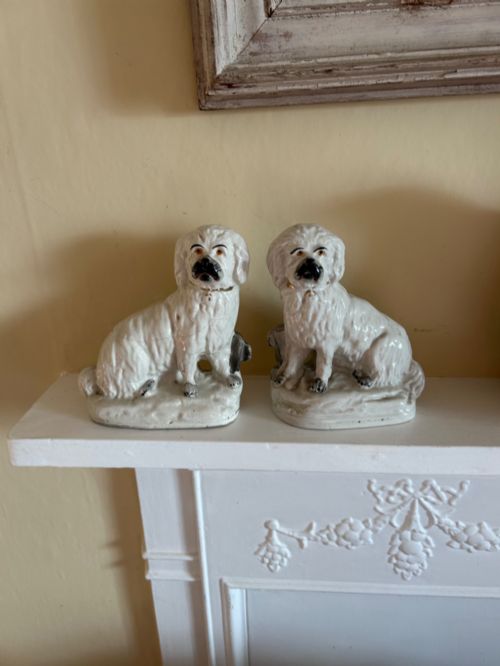
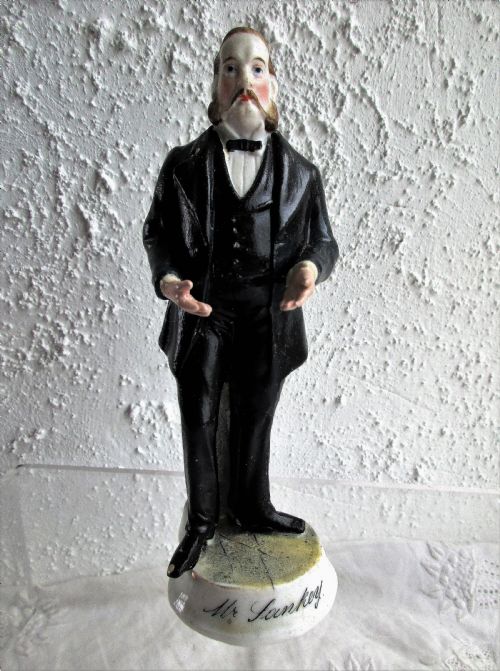
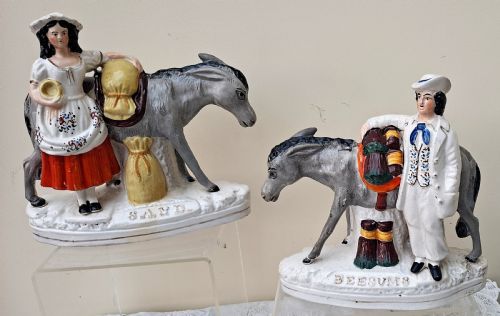
When you search for painted earthenware ornaments, you encounter a selection dominated by nineteenth-century Victorian figures, spaniels and flatbacks from English potteries. These pieces served primarily as chimney-piece decoration in parlours, capturing domestic animals, historical personages, literary subjects and rural couples.
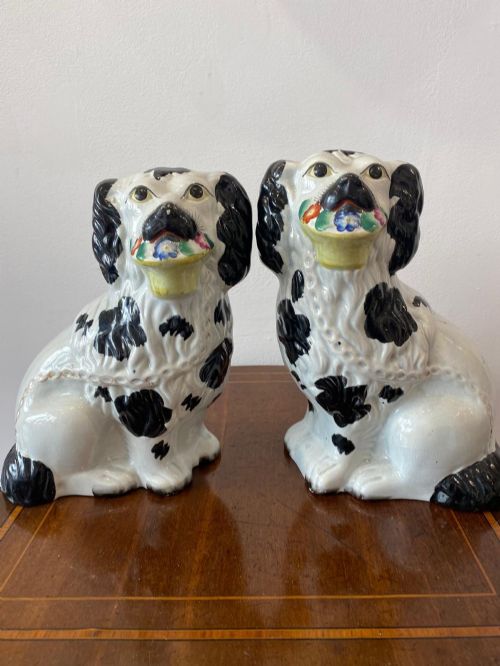
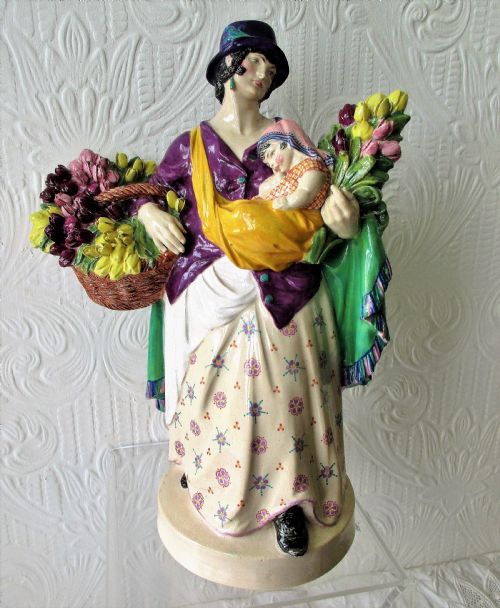
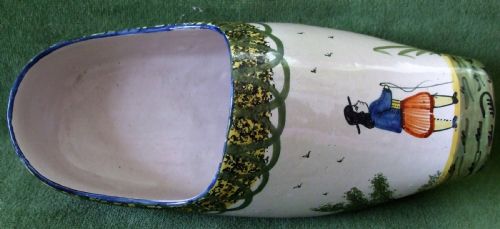
Beyond Staffordshire animals and portrait groups, the selection includes French Quimper faience, Dutch Delft miniature furniture and English studio pottery figurines from the early twentieth century. Pairs form a substantial portion of the objects, intended originally for symmetrical placement on mantelpieces.
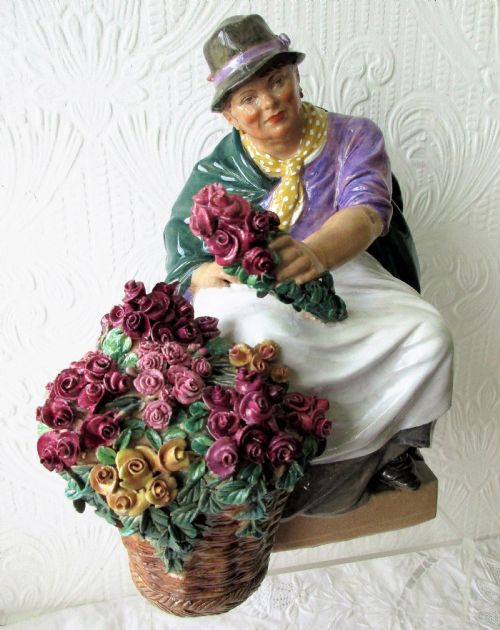
The dates stretch from mid-nineteenth-century earthenware models to later studio pieces, unified by fired clay and hand-applied colour. Figural subjects dominate the inventory, ranging from single decorative figurines to multi-figure groups recording contemporary events or theatrical scenes.
Materials and methods
Potters shaped these earthenware bodies using press-moulding or slip-casting techniques, building up hollow forms that could dry and fire evenly in kilns. The resulting porous ceramic biscuit was then ready to receive surface decoration.
Makers applied lead glazes, enamel colours and occasionally gold leaf highlights by hand, fixing the pigments in a subsequent low-temperature firing. This pigment application varied from simple brushwork on spaniel coats to detailed polychrome painting on studio pottery figurines.
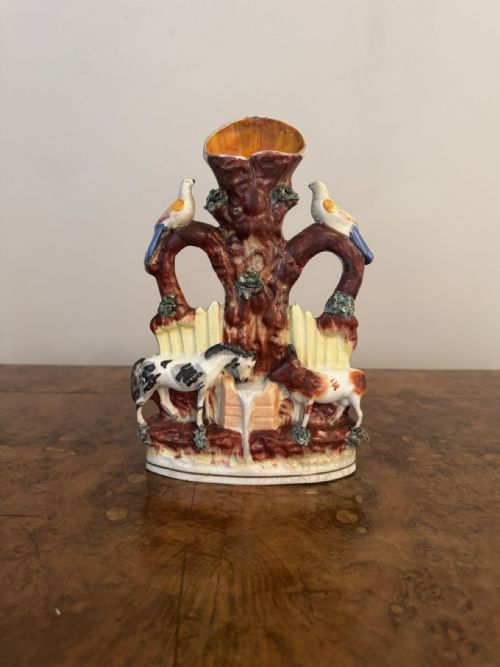
Listings feature earthenware, glaze, enamel and gold leaf applied to decorative figurines, spill vases and pottery groups.
Judging quality in painted earthenware
The standard of modelling defines the upper tier of these pieces, separating crisp facial expressions and well-defined drapery from soft, blurred outlines. Superior examples display confident, individual brushwork in the enamel colours rather than hasty, mechanical dabbling.
Completeness of pairs and retention of original glaze surfaces also dictate desirability, particularly where gold leaf or delicate lead glazes survive intact. Earlier nineteenth-century models often exhibit sharper mould definition than mass-produced later variants.
Charles Vyse·Wedgwood and Co. Ltd
The Painted Earthenware Ornaments Glossary
- Earthenware
- Porous pottery fired at lower temperatures than stoneware or porcelain, requiring a glaze to render it waterproof. It forms the base material for the vast majority of nineteenth-century Staffordshire figures.
- Flatback
- A figure moulded with a finished front and a largely unpainted, flat or semi-flat back designed to stand directly against a wall or mantelpiece. This construction saved clay and production time.
- Lead glaze
- A glossy coating containing lead oxide applied to earthenware before firing to seal the porous body and enrich the colours. It gives older pieces their characteristic soft sheen.
- Faience
- European tin-glazed earthenware, often associated with French production such as Quimper. The opaque white glaze provides a smooth ground for painted decoration.
- Spill vase
- A hollow figural or cylindrical ornament incorporating a small holder designed to contain wooden spills used for lighting candles or fires. They combine domestic utility with decorative modelling.
Painted Earthenware Ornaments: Frequently Asked Questions
What are Staffordshire flatbacks?
Staffordshire flatbacks are earthenware figures designed with unadorned flat backs so they could sit flush against a wall on a mantelpiece.
Potters produced these pieces in large quantities during the nineteenth century to depict royalty, military heroes, domestic animals and pastoral scenes.
Why were spaniel figures made in pairs?
Spaniel figures were modelled as facing pairs to sit symmetrically on either side of a fireplace clock or ornament.
This arrangement reflected Victorian ideas of domestic order and balanced interior decoration.
How do I care for antique earthenware?
Antique earthenware requires gentle dusting with a dry cloth and protection from direct sunlight and moisture.
The porous clay body and hand-painted enamel glazes can be vulnerable to damp conditions and aggressive cleaning agents.
Are all these pieces from the nineteenth century?
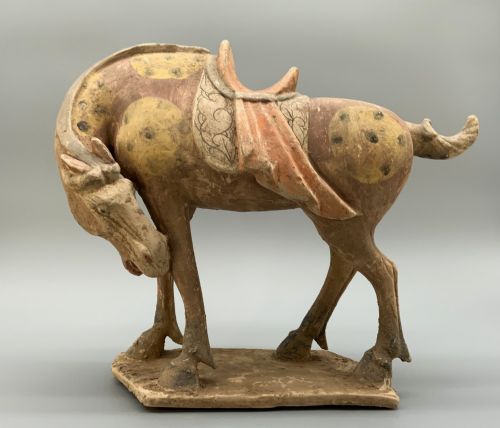
While nineteenth-century Victorian pieces form the core of the selection, the inventory also spans earlier pearlware and later studio pottery from the twentieth century.
Dates range from mid-century figures to 1930s French earthenware and studio pieces.