


Painted Dressing Table Mirror
A painted dressing table mirror sits on a chest or dressing table to reflect light and capture the character of a bedroom.
Painted Dressing Table Mirror
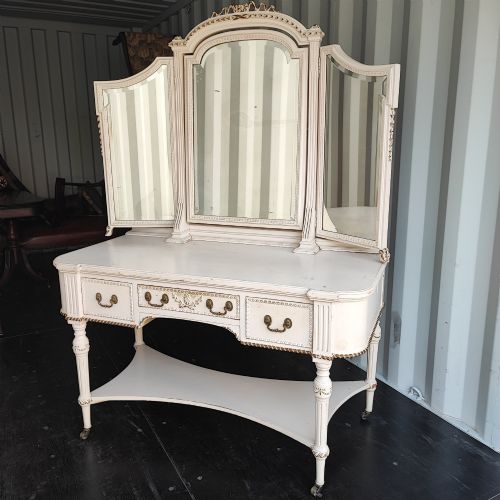
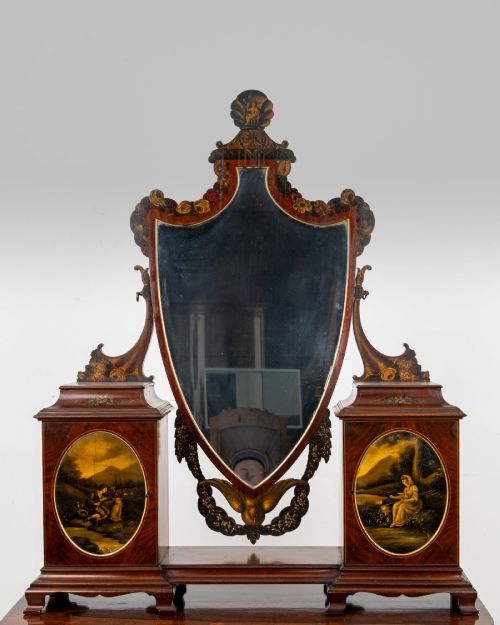
A painted dressing table mirror brings surface pattern and adjustable glass to a bedroom scheme. These pieces range from simple nineteenth century pine and mahogany toilet mirrors to more elaborate Edwardian satinwood and Chinoiserie triptych designs.
The inventory on this page spans several decades, taking in Victorian and Edwardian examples alongside pieces from the nineteen twenties and thirties. Buyers encounter table top cheval glasses, swing mirrors attached to dressing chests, and freestanding vanity mirrors.
Origin and form vary widely across the selection. French provincial styles sit alongside English country house pieces, while occasional items feature integrated jewellery cabinets or folding panels.
What varies in quality
The distinction between tiers rests on the execution of the surface decoration and the integrity of the timber frame. Hand-painted details, original lacquer work and specialist techniques like scumble glazing elevate certain pieces above standard painted finishes.
Mechanical and structural elements also divide the range. Smooth movement in adjustable swing mirrors, the quality of the brass fittings, and the preservation of the original mirror plate indicate superior craftsmanship.
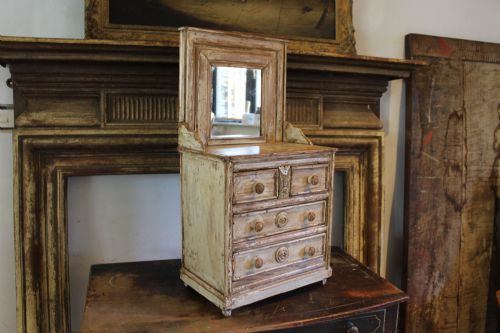
One exceptional listing combines a mirror with a miniature chest of drawers made for an apprentice.
maples of london and paris·Joseph Meissonnier·Rowley Gallery
The Painted Dressing Table Mirror Glossary
- Toilet mirror
- A smaller mirror designed to sit on top of a dressing chest or table. These often feature an adjustable swing frame supported by upright arms.
- Triptych mirror
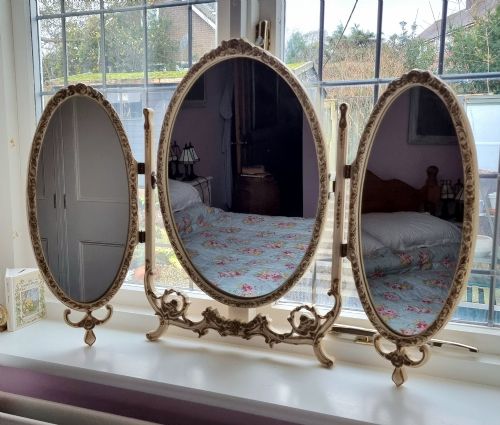
- A three-panel mirror with hinged side sections that angle inward. This configuration allows the user to view angles from multiple sides.
- Scumble glaze
- A decorative paint technique involving translucent layers dragged or textured over a base coat. It creates mottled patterns that imitate richer woods.
- Cheval mirror
- A full-length or large standing mirror hung on a frame with side pivots. Table top variants scale this mechanism down for surface placement.
- Chinoiserie
- European decorative style interpreting Chinese artistic motifs. Pieces often display painted figures, landscapes and gold lacquer against coloured grounds.
Painted Dressing Table Mirror: Frequently Asked Questions
How do I style a painted mirror?
Pair the mirror with complementary wood tones or contrasting painted furniture in a bedroom or dressing room. Placing it on a matching dressing table or console creates a cohesive focal point.
Allow natural light from a nearby window to strike the glass, which brightens the room and highlights the painted surface details.
Are these mirrors adjustable?
Many examples feature brass pivots or side screws that allow the glass frame to tilt to various angles. This mechanism helps direct reflections as needed.
Some larger triptych versions use hinged side panels to alter the viewing angle instead of pivoting frames.
How do I date a painted mirror?
Examine the timber, the style of the paint finish, and the construction methods used in the frame. Victorian and Edwardian pieces often display specific decorative tropes like satinwood inlay or stenciling.
Hardware components, such as brass fittings and the clarity of the mirror plate, also offer clues to the manufacturing period.
What is a triptych dressing mirror?
A triptych mirror consists of a central glass panel flanked by two narrower hinged wings. This design appeared frequently in Edwardian and later twentieth-century dressing setups.
The hinged wings fold inward, allowing the user to adjust the side angles of reflection.