
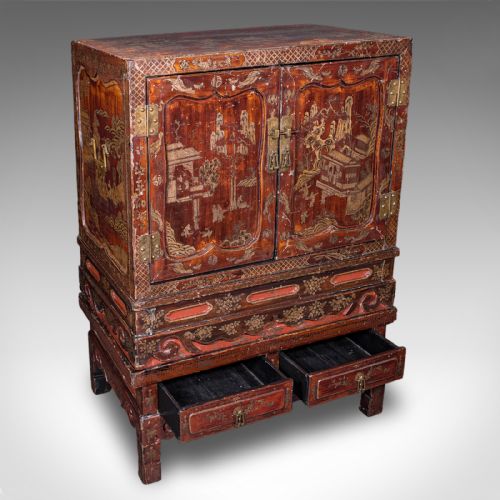
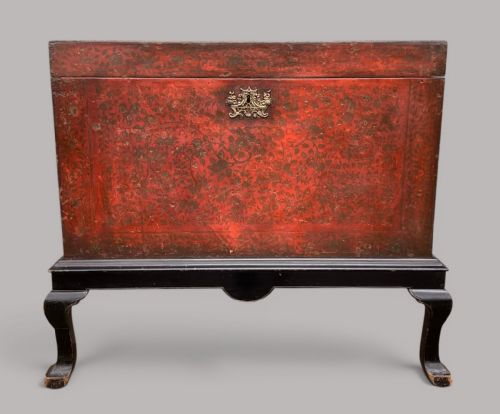
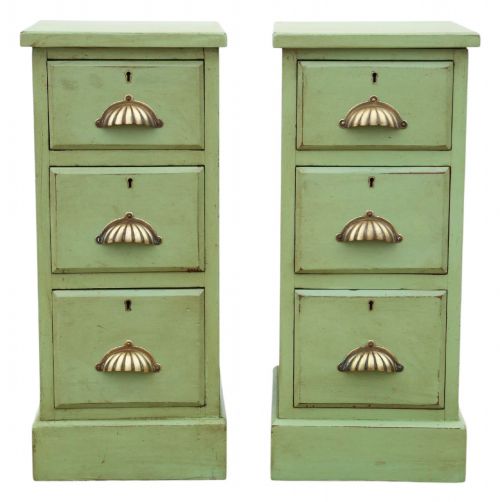


Painted Chest on Stand
A painted chest on stand brings brilliant colour and compact storage to a room, uniting a raised base with a lidded trunk or cabinet.
Painted Chest on Stand
When you search for a painted chest on stand, you find raised storage furniture that lifts a cabinet, trunk or box off the floor upon a dedicated base. The pieces on this page span several centuries, reaching from Georgian and Victorian examples to the early twentieth century.
You meet various distinct forms, including cocktail cabinets, bedside tables, apothecary chests and traditional trunks. These items draw on diverse regional styles such as Chinoiserie, Anglo-Indian, Georgian and Scandinavian country designs.
The underlying construction relies heavily on timber forms like pine and wood, often enhanced by painted wood and pigment. Many pieces incorporate brass or iron hardware to secure the doors and lids.
How they were made
Wood serves as the primary substrate for these pieces, frequently utilising pine alongside other timbers to build the main body and the supporting stand. Artisans then apply layers of pigment and paint directly to the surface, sometimes building up complex finishes.
Lacquer and gilt work frequently appear across the decorative schemes, creating glossy finishes and metallic highlights. Brass and iron fittings such as hinges, handles and decorative mounts are fixed to secure the structure and ornament the exterior.
Some nineteenth century trunks arrived from distant ports wrapped in layers of red lacquer, quietly hiding their pine frames beneath gleaming coats of pigment.
What varies in quality
The standard of a painted chest on stand depends largely on the execution of the surface finish and the integration between the upper box and its base. Finely applied lacquer, detailed pigment work and subtle gilding separate exceptional items from simpler vernacular versions.
Proportion and structural integrity also dictate the calibre of the piece, particularly how cleanly the stand supports the weight of the cabinet above. Well-executed carving on the stand and original hardware contribute significantly to the overall distinction of the item.
Harrods
The Painted Chest on Stand Glossary
- Lacquer
- A durable resin finish applied in multiple layers and polished to a hard sheen. This technique protects the underlying wood while providing a smooth canvas for painted decoration.
- Stand
- The elevated base or frame that supports a chest, cabinet or trunk above floor level. Stands vary from simple turned legs to elaborately carved frames.
- Gilt
- A thin layer of gold leaf or gold paint applied to surfaces for ornamentation. It highlights carved details and painted borders.
- Pigment
- Coloured powder mixed with a binder to create the paints used on these cabinets. The depth and hue of the pigment define the visual character of the painted finish.
Painted Chest on Stand: Frequently Asked Questions
What is a painted chest on stand?
A painted chest on stand combines a lidded trunk, box or cabinet with a raised supporting base. The entire exterior displays decorative paintwork, lacquer or gilt.
These items function as versatile storage units that sit off the floor, offering display surfaces and internal compartments for various household goods.
How were these cabinets used originally?
Owners utilised these pieces to store valuables, textiles, documents or beverages depending on the specific form of the cabinet. Cocktail versions held glassware and bottles, while apothecary variants organised small dry goods.
The raised stand kept the contents away from damp floors while making the upper section easier to access without bending down.
Where do these pieces fit in a room?
These cabinets suit living rooms, hallways and bedrooms where a splash of colour and vertical storage is required. Bedside versions sit beside a bed, while larger cocktail or apothecary cabinets function as focal points against a wall.
Their compact footprints allow them to occupy tight corners while providing substantial visual impact through their painted surfaces.
How do you date a painted chest on stand?
Dating relies on examining the construction methods of the wood, the style of the stand and the composition of the paint layers. Georgian examples show different structural joinery compared to Victorian or twentieth century pieces.
Decorative motifs like Chinoiserie or traditional country styles also point towards specific periods of manufacture and regional workshops.