
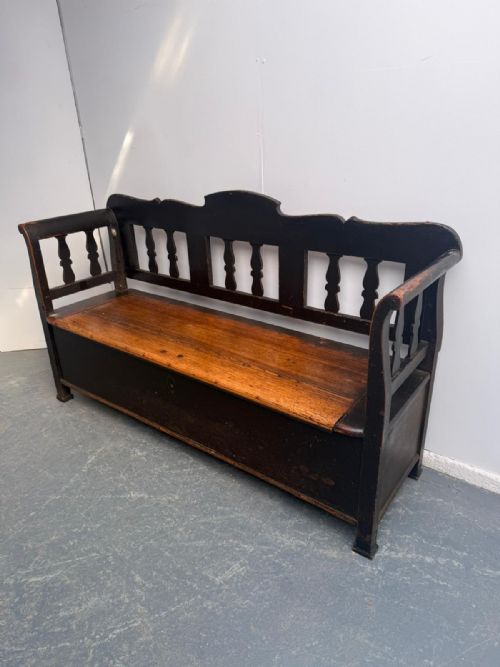
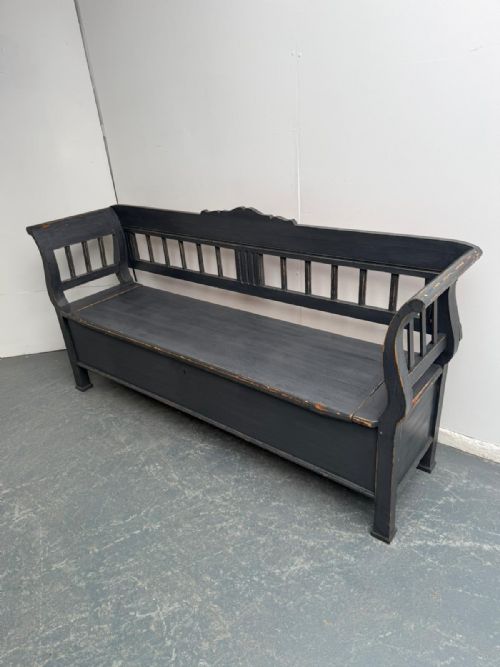


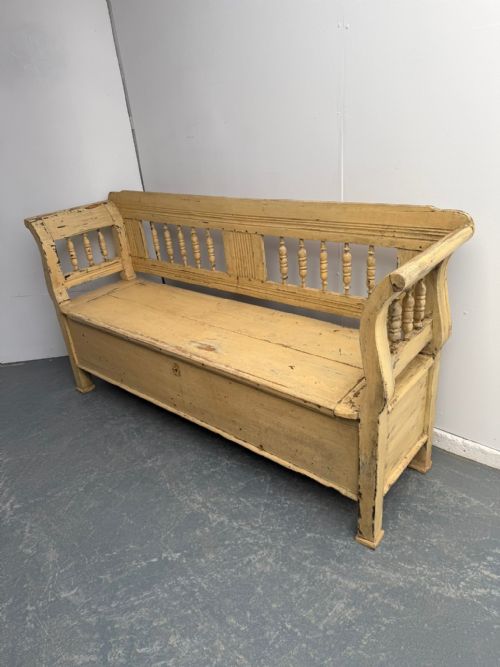
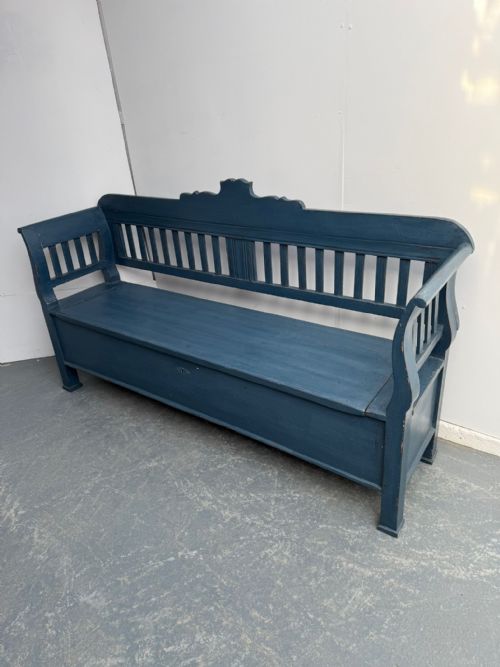


Painted Box Bench
A painted box bench brings practical storage and rustic charm together in one hardworking piece of period furniture.
Painted Box Bench
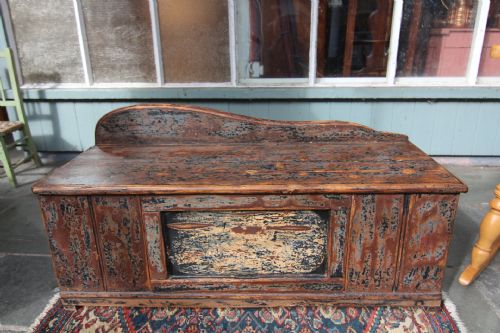
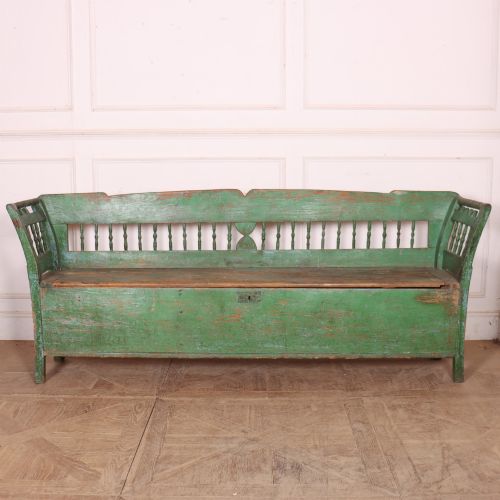
A painted box bench combines a traditional seat with an integrated storage compartment beneath, offering a dual purpose that suited historic domestic life. When searching for a painted box bench, buyers encounter various regional European and British vernacular forms, from Hungarian three-seater settles to Swedish and English country examples.
The pieces appearing here span the Georgian and Victorian eras, alongside general nineteenth-century examples and specific dates such as eighteen-twenty and seventeen-ninety. Styles range from Scandinavian country and Gustavian to folk art, Austrian country, and English country traditions.
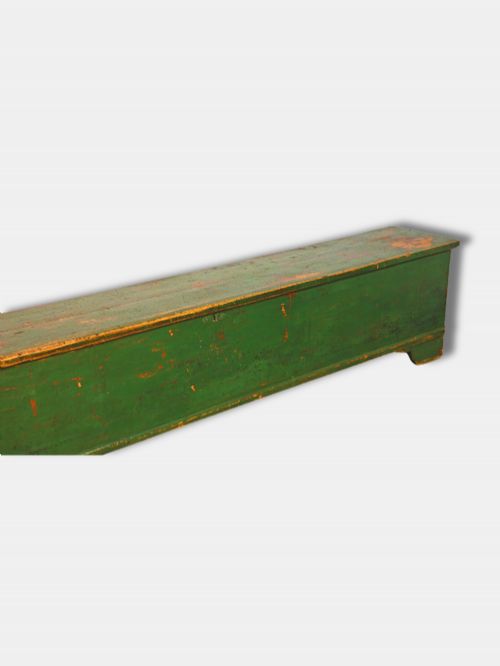
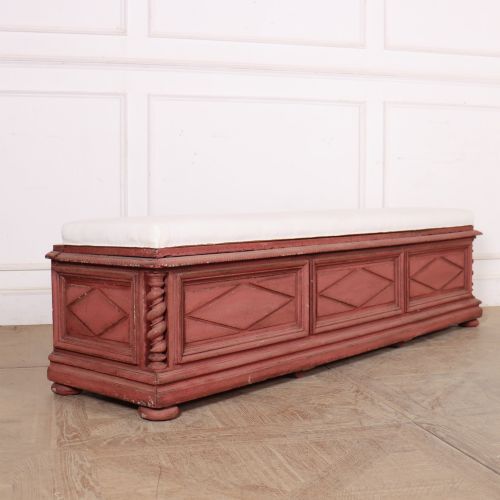
The forms extend beyond standard benches to include box seats, storage benches, blanket boxes, trunks, and settles. These items served as central seating and storage fixtures in farmhouses and domestic interiors across multiple countries.
How they were made
Construction relies primarily on pine and painted wood, utilising sturdy boards built to withstand daily use. Iron and metal components, such as hinges and keys, often secure the storage lids and compartments.
Surface decoration involves applied paint in various tones including green, grey, cream, blue, and black, sometimes featuring polychrome details. Original painted finishes provide the distinct visual character valued by collectors today.
Several Hungarian box settles arrive with room for three or four sitters, proving that historic family gatherings required serious seating capacity.
What varies in quality
The survival of original painted surfaces distinguishes superior examples from those with later or stripped finishes. Patination and the integrity of the timber build contribute significantly to the overall standing of an individual piece.
Proportion and scale also separate standard utility items from more decorative regional pieces, such as larger multi-seater Hungarian settles or refined Gustavian sofas. The clarity of regional stylistic details marks the distinction between ordinary country furniture and exceptional folk art.
The Painted Box Bench Glossary
- Settle
- A wooden bench with a high back, solid arms, and a box seat compartment beneath. This form provided draught protection in large historic rooms.
- Box settle
- A specific type of settle featuring a hinged seat that lifts to reveal storage space. It combined seating with chest functionality.
- Polychrome
- Decorated in multiple colours. This technique appears on specific folk art pieces to add vibrant surface patterns.
- Gustavian
- The Swedish interpretation of French neoclassical style, characterised by lighter proportions and restrained painted finishes. It forms a distinct stylistic category among northern European seating.
- Patination
- The surface alteration and mellowing of wood and paint over time through use and exposure. This quality reflects the genuine age of the piece.
Painted Box Bench: Frequently Asked Questions
What is a box settle?
A box settle is a high-backed wooden bench featuring a concealed storage compartment beneath the hinged seat. It served a dual purpose in historic homes as both a seat and a trunk.
These pieces often stood near hearths to block draughts while keeping household items securely stored inside.
How do I date a painted bench?
Dating relies on construction methods, timber characteristics, and the age of the painted surface. Georgian and Victorian examples show distinct joinery practices and regional design traits.
Examining the fixings, such as iron hinges and locks, also helps establish the period of manufacture alongside any documented history.
Are painted finishes original?
Original painted finishes show natural wear, patination, and layers that align with the age of the timber structure. Many pieces retain their first or early coats of paint, such as grey, green, or cream.
Later repainting is common in vernacular furniture, so examining the surface texture and pigment helps determine its history.
Where were these benches made?
These pieces originate from various European regions including Hungary, Sweden, Austria, and Britain. Each area developed distinct vernacular styles, such as Gustavian forms in Sweden or robust three-seater settles in Hungary.
Local timber availability and domestic traditions shaped the construction and visual appearance of benches from each specific country.
How do I use one at home?
A painted box bench functions effectively in hallways, kitchens, or living spaces where extra seating and concealed storage are useful. The internal compartment holds blankets, boots, or household items.
Placing the bench against a wall allows the high back or settle design to anchor the room's layout.