


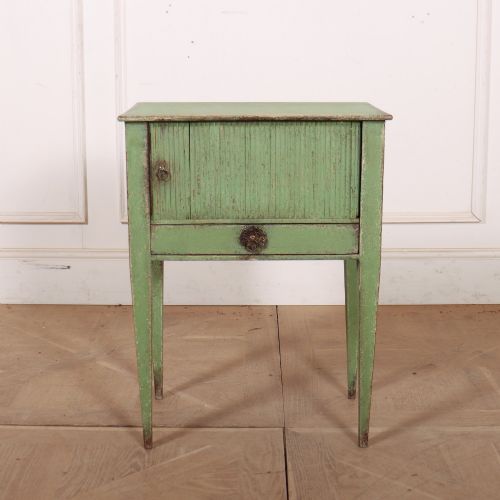


Painted Bedside Pedestal
A painted bedside pedestal brings colour and practical bedside storage to a room, drawing on decades of revival styles and vernacular finishes.
Painted Bedside Pedestal
A painted bedside pedestal offers compact surface space and enclosed storage beside a bed, taking the form of cabinets, cupboards, and small tables. These pieces span the nineteenth century up to the nineteen-thirties, reflecting diverse regional and revival tastes.
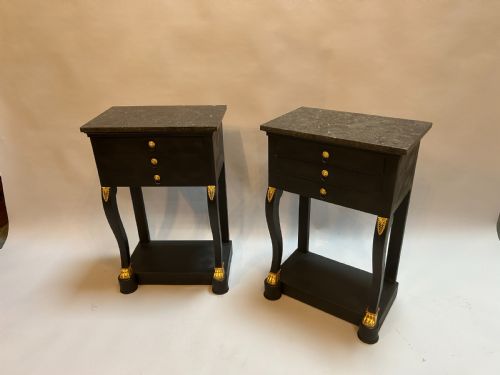
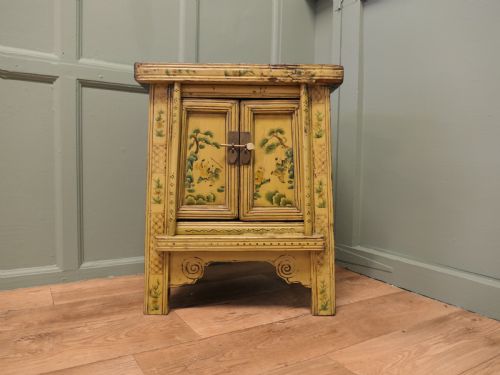
The selection here includes French Empire designs, Dutch provincial pieces, and Chinoiserie decorated items. Buyers frequently encounter cupboards fashioned from pine, oak, and satinwood, finished with painted schemes, faux marble, or gilding.
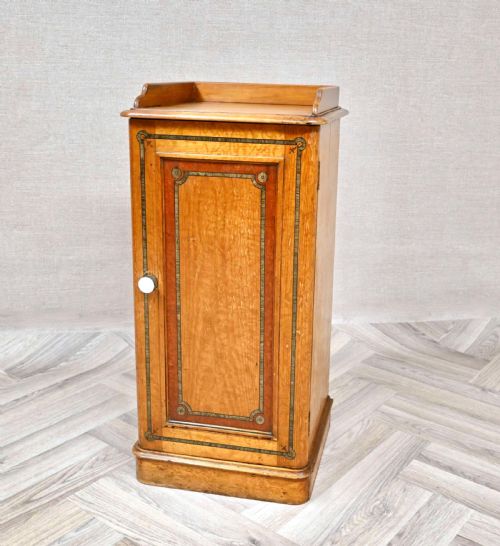
Object types range from traditional pot cupboards and bedside chests to cylindrical stands and lamp tables. Each piece combines functional storage with decorative painted surfaces characteristic of its period.
How they were made
Carpeneters constructed these bedside pedestals using solid timbers such as pine, oak, mahogany, and satinwood. Construction often involved panelled doors, turned columns, and fitted interiors suited to bedside use.
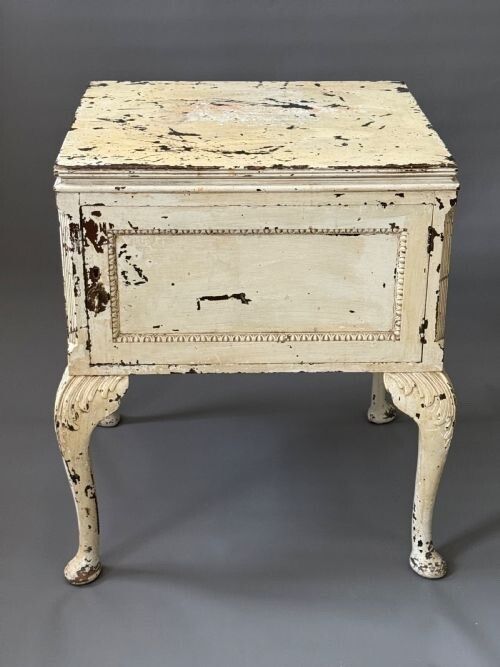
Surfaces received decorative treatments including layered paintwork, Chinoiserie motifs, faux marble rendering, and grained finishes. Metal components like brass and gilt metal provided handles, mounts, and structural accents.
Materials recorded across the selection include brass, pine, oak, satinwood, and marble.
What varies in quality
The standard of a painted bedside pedestal rests on the execution of its decorative scheme and the integrity of the underlying timber. Finer examples display meticulous hand-painted details, such as Chinoiserie scenes or skilled graining, whereas simpler pieces rely on plain painted coats.
Construction details distinguish workshop standards, seen in the choice of cabinet woods like satinwood or mahogany versus utilitarian pine. Hardware choices, from cast brass mounts to plain wooden knobs, further delineate the grade of the piece.
The Painted Bedside Pedestal Glossary
- Pot cupboard
- A small bedside cabinet originally designed to house a chamber pot behind a single door. These practical units form a large portion of early bedside storage.
- Chinoiserie
- European decorative style imitating Chinese artistic traditions, featuring painted motifs of figures, landscapes, and flora. This technique frequently adorns eighteenth and nineteenth-century furniture.
- Satinwood
- A durable hardwood with a lustrous, golden-yellow sheen prized in late nineteenth and early twentieth-century cabinet making. It often serves as a fine veneer or solid timber for bedside tables.
- Grained
- A painted finish imitating the natural grain patterns of more expensive woods like oak or mahogany. Makers used this technique to elevate simpler timbers such as pine.
- Cylinder cupboard
- A cylindrical bedside stand providing enclosed vertical storage with a curved door. These cylindrical forms offer a distinct architectural silhouette next to a bed.
Painted Bedside Pedestal: Frequently Asked Questions
What is a painted bedside pedestal used for?
These pieces provide a stable surface for bedside lighting, books, and personal items while concealing storage within a cabinet or cupboard below. Originally serving domestic needs like housing chamber pots, they now function primarily as bedside tables.
Their compact footprints make them suitable for smaller bedrooms where space is at a premium. The enclosed shelving keeps nighttime essentials neatly out of sight.
How do I date a painted bedside cabinet?
Dating relies on examining the timber construction methods, hardware, and decorative painting styles visible on the piece. Nineteenth-century examples often feature solid pine or mahogany, while Edwardian and later pieces frequently utilise satinwood or specific revival motifs.
Stylistic markers such as French Empire columns or Chinoiserie decoration provide further clues to the decade of manufacture. Comparing the joinery inside the cupboard helps confirm the period.
Are these pedestals sold as pairs?
Many listings include matched pairs of bedside cabinets, which workshop makers originally produced to flank a double bed. Pairs offer symmetry for bedroom interior schemes.
Single pedestals also appear frequently, reflecting pieces that survived independently or were made individually. Both single items and pairs provide distinct decorative accents.
How do I care for a painted wooden surface?
Maintenance involves dusting with a soft, dry cloth and avoiding harsh chemical cleaning products that might damage historical paint layers. Keeping pieces away from direct sunlight and excessive moisture preserves the painted finish and timber.
Wax can be applied sparingly to unpainted wooden parts, but painted surfaces generally require only gentle wiping. Proper environmental conditions prevent the wood beneath from warping.