
Painted Base Table
A painted base table brings together solid timber and decorated pigment, offering utility and distinct character for everyday rooms.
Painted Base Table
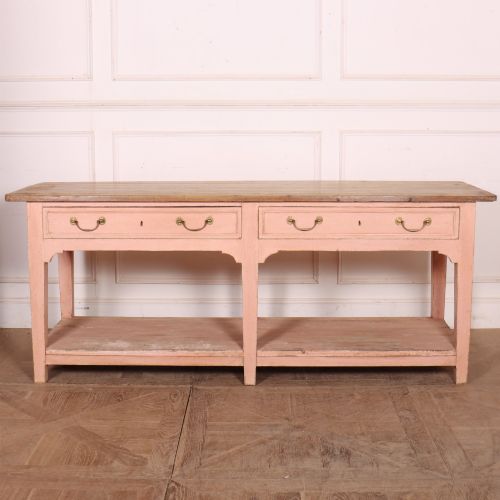
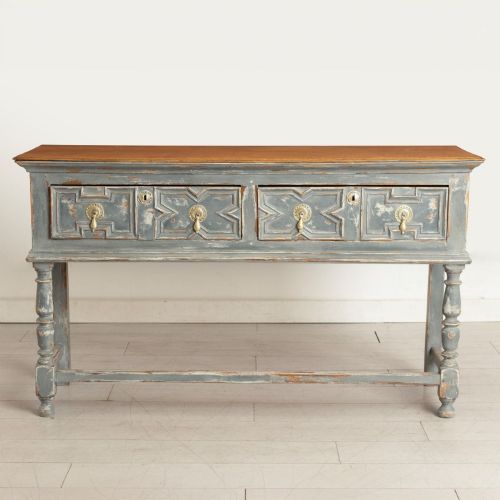
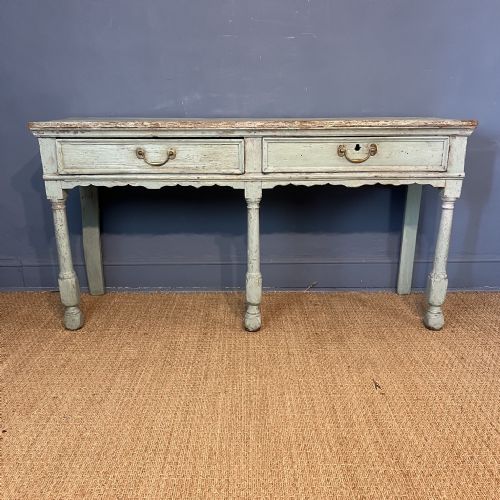
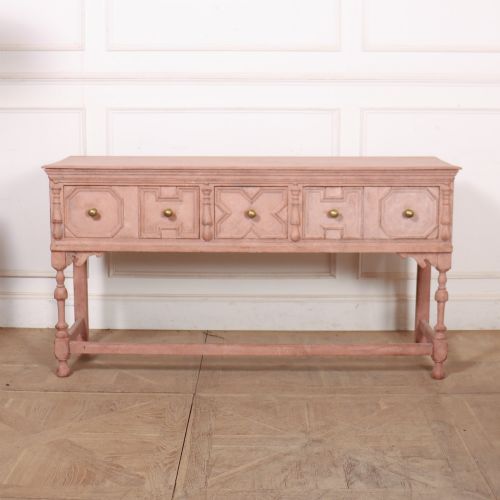
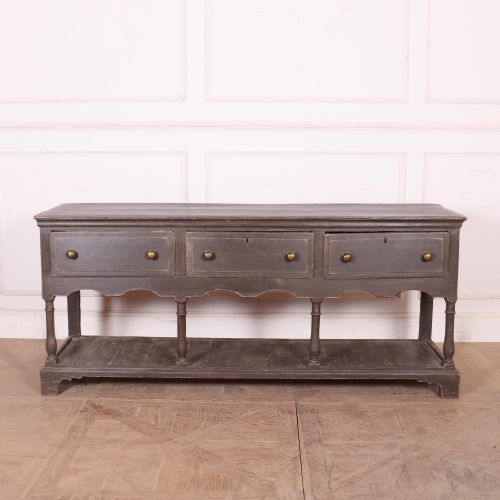
A painted base table typically combines a scrubbed, polished, or plain wooden top with a base finished in paint, incorporating forms such as farmhouse kitchen tables, tavern tables, console tables, and refectory pieces. These items appear across multiple periods, most notably in nineteenth-century country furniture and earlier eighteenth-century vernacular designs.
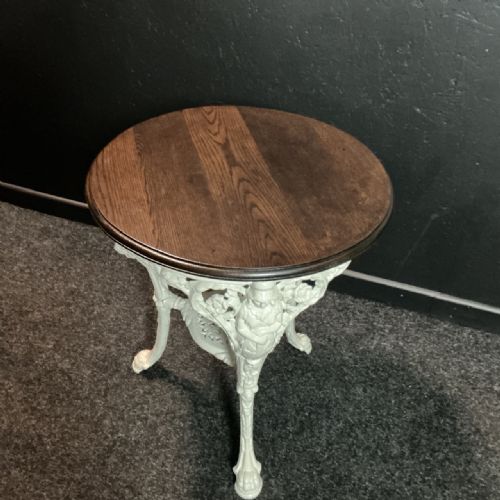
The selection ranges from large pine kitchen tables and oak refectory structures to smaller occasional tables, side tables, and garden pieces utilising cast iron supports. Many examples reflect regional British and European domestic traditions, often built for hard daily use in farmhouses, cottages, and country houses.
Buyers seeking a painted base table often select pieces that retain original colour pigment, surface wear, and signs of domestic history. The form serves as a practical centrepiece for dining, preparation, or display while adding visual depth through contrasting timber and paint.
Materials and construction
Construction relies heavily on sturdy domestic timbers such as pine, oak, elm, ash, and walnut for the structural framework and table tops. Carpenters utilised traditional joinery methods, including pegged mortise and tenon joints, drawer linings in secondary woods, and heavy turned or square-section legs.
Surfaces were finished with lead-based or oil-based paints applied directly to timber or cast iron, sometimes layered over decades of subsequent use. Table tops were frequently left bare for scrubbing, while bases received decorative treatments ranging from simple utilitarian coats to faux marble effects.
Listings for painted base tables feature nineteenth-century pine, oak, and elm constructions alongside Victorian cast iron garden supports.
Assessing quality and authenticity
Quality rests in the survival of original surface finishes and the structural integrity of the frame rather than pristine condition. Tables retaining their early or primary painted surfaces on the base command greater interest than those stripped and repainted in modern times.
Proportion, timber selection, and period-appropriate construction details distinguish superior examples from utilitarian workshops. A harmonious balance between a well-worn wooden top and an undisturbed painted base determines the lasting appeal of each piece.
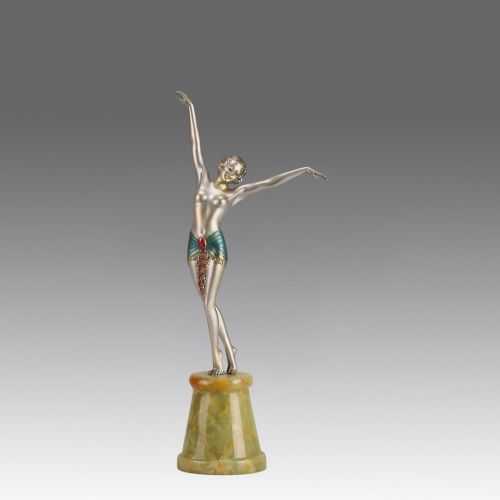
Josef Lorenzl
The Painted Base Table Glossary
- Scrub top
- A wooden table top left unpolished so it could be scrubbed clean with water and sand. This surface treatment appears frequently on nineteenth-century kitchen and farmhouse tables.
- Potboard
- A lower shelf fitted beneath a dresser base or serving table. This horizontal planking was designed to hold pots, pans, and heavy crockery.
- Cricket table
- A small, lightweight occasional table supported by three legs. This vernacular design allowed the piece to stand steady on irregular flagstone floors.
- Cast iron
- An iron-carbon alloy poured into moulds to create intricate structural components. Victorian garden tables and decorative bases frequently utilised this robust material.
Painted Base Table: Frequently Asked Questions
What is a painted base table?
A painted base table is a piece of furniture featuring a wooden or marble top paired with a supporting structure finished in paint. These pieces span kitchen tables, work tables, and serving furniture.
They combine utilitarian function with decorative surface contrast, making them versatile additions to traditional and modern interiors.
How do I care for original paint?
Original painted surfaces require gentle treatment using dry cloths or very soft, slightly damp dusters. Avoid modern chemical solvents, abrasive cleaners, or excessive moisture that might lift historic pigment.
Wax polish can protect bare wooden tops, but care must be taken to keep dressings away from fragile or historic paint layers on the base.
Are scrub tops meant to be bare?
Yes, scrub tops were deliberately left unfinished so cooks and housemaids could scour the timber clean after food preparation. This treatment created the characteristic pale, weathered appearance seen on antique kitchen tables.
Owners typically maintain this dry wooden texture rather than applying modern varnishes or gloss finishes.
How can I tell old paint from new?
Historic paint finishes show natural craquelure, subtle fading, uneven wear patterns, and multiple microscopic layers beneath the surface. Modern emulsions or synthetic paints lack this cumulative depth and tactile patina.
Examining the fixings, surrounding timber, and tool marks helps confirm whether the paint finish corresponds to the age of the underlying structure.