



Painted Apothecary Cabinet
A painted apothecary cabinet is a utilitarian piece of medical storage retaining its original coloured surface, offering partitioned storage for a home or workspace.

Painted Apothecary Cabinet
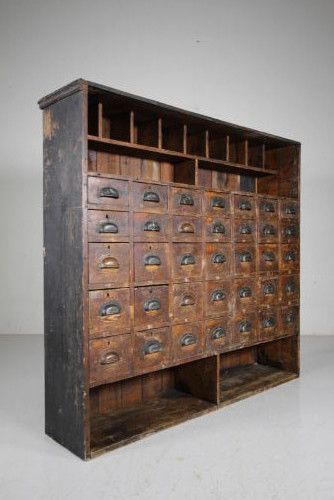
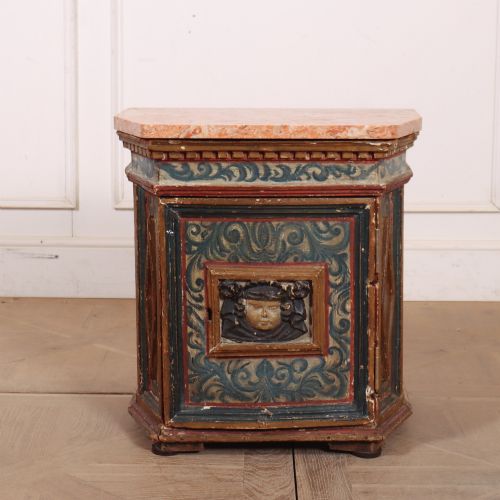
A painted apothecary cabinet brings together functional medical storage and surviving historic paint finishes, spanning centuries of utility from utilitarian shop fittings to domestic wall cupboards. When you search for a painted apothecary cabinet, you encounter multi-drawer banks, smaller countertop chests, and wall-mounted cupboards originally built for pharmacies, medical rooms, and general stores.
The pieces on this page lean heavily toward nineteenth-century workshop and shop furniture, particularly multi-drawer banks in pine and mahogany alongside earlier eighteenth-century spice cupboards and medical boxes. These items range from compact boxes with indigo finishes to large multi-drawer banks with fifty compartments, reflecting the varied storage demands of historic apothecaries and merchants.
Materials and construction
Construction relies predominantly on solid pine and mahogany, shaped into banks of drawers, wall cabinets, and shop fittings using traditional joinery methods suited to heavy daily use. Metal and brass hardware, including pulls and handles, secures the numerous small drawers typical of apothecary storage.
Painted Apothecary Cabinet Retail Price Guide 2026
Typical asking prices for painted apothecary cabinet among the pieces listed under this phrase on Sellingantiques today, from the lower quarter to the upper quarter. They describe what is for sale here now, not the wider market.
Some fifty-drawer pine banks require a map and a packed lunch just to remember where you put the paperclips.
Distinctions in quality
Quality rests in the survival of original painted surfaces, where intact historic layers of cream, green, or white pigment command greater interest than stripped or later repainted timber. The integrity of the original hardware, such as brass pulls and metal label frames, further separates utilitarian pieces from standard storage.
Structural complexity also defines the better examples, seen in multi-drawer banks featuring fifty or twenty-five matching compartments rather than simpler two- or three-drawer configurations. The tightness of the drawer joints and the retention of internal partitions reflect the original maker's standard of workshop production.
The Painted Apothecary Cabinet Glossary
- Apothecary cabinet
- A set of small drawers or a small cupboard designed for storing medicinal ingredients, herbs, and drugs. These pieces often feature numerous uniform drawers to organise diverse contents.
- Shop fitting
- Furniture built specifically for commercial retail premises, such as drapery shops or chemist dispensaries. These items are constructed for heavy daily commercial use.
- Bank of drawers
- A large chest comprising many small drawers arranged in a grid, commonly found in workshops, pharmacies, and mercantile settings. They maximise vertical storage space.
- Spice cupboard
- A small wall-mounted or tabletop cabinet used historically for storing culinary spices and valuable provisions. They often date to the eighteenth century or earlier.
Painted Apothecary Cabinet: Frequently Asked Questions
What is an apothecary cabinet?
An apothecary cabinet is a piece of furniture traditionally used by chemists and pharmacists to store dry herbs, medicines, and preparations in numerous small drawers.
Over time, these functional storage units have transitioned into decorative and practical items for modern interiors, valued for their compartmentalised organisation.
How do I date an apothecary cabinet?
Dating relies on examining the construction methods, timber species, and type of hardware used in the drawers and frame.
Earlier eighteenth-century examples often feature different jointing techniques and timber selections compared to nineteenth-century Victorian shop fittings and later twentieth-century medical cabinets.
Where were these cabinets used?
These cabinets originated in chemist shops, dispensaries, apothecaries, and dry goods stores where organising large quantities of small items was essential.
Today, they find places in kitchens, studies, and living spaces as statement storage pieces that provide compartmentalised organisation.
Are painted finishes original?
Many cabinets retain historic painted surfaces, ranging from early white and cream finishes to green, indigo, and black and gold schemes.
Evaluating the surface involves looking for natural wear, craquelure, and integration into the timber substrate to determine if the paint layer dates to the period of manufacture.