
Padded Upholstered Bench
A padded upholstered bench brings flexible seating and traditional craftsmanship to a room, offering low profile comfort through centuries of varied design.
Padded Upholstered Bench
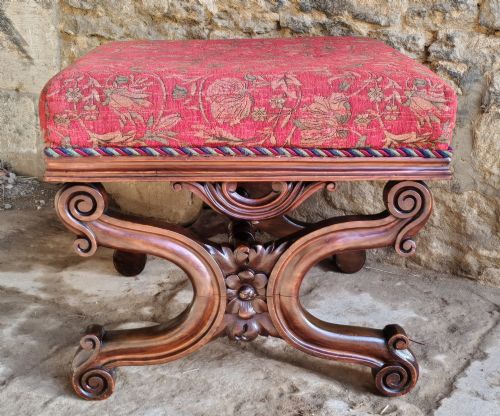
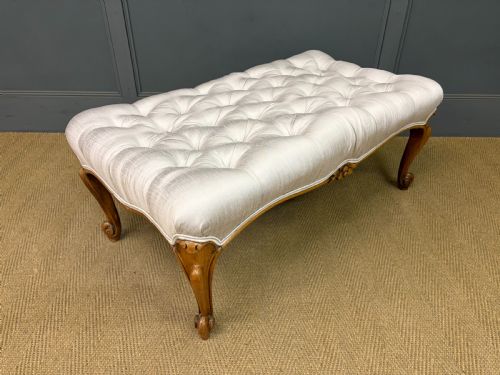
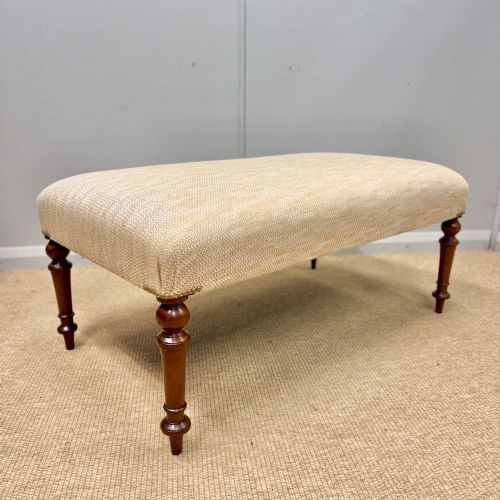
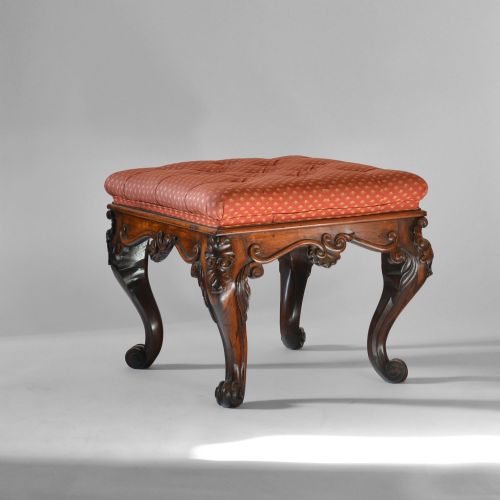
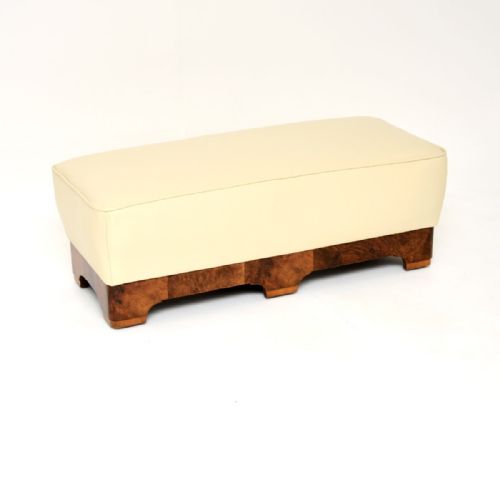
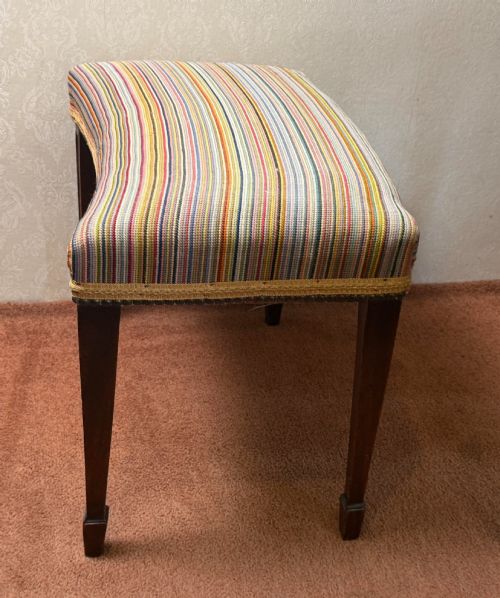
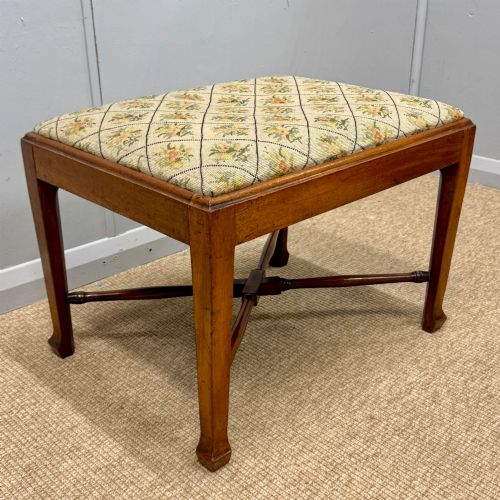
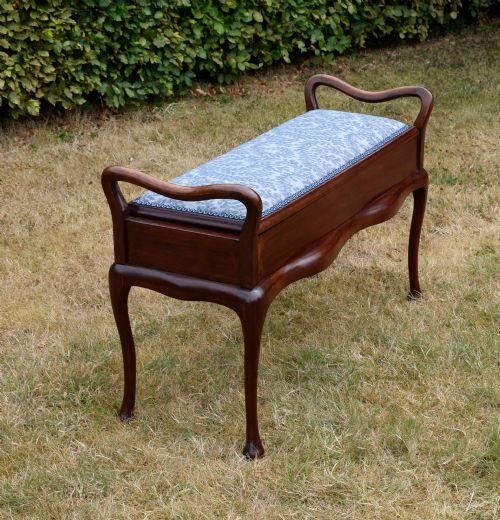
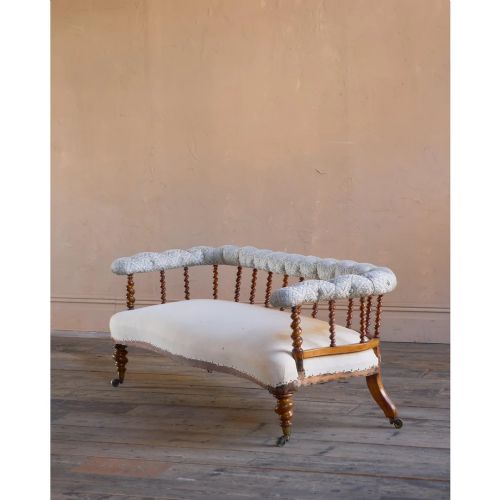
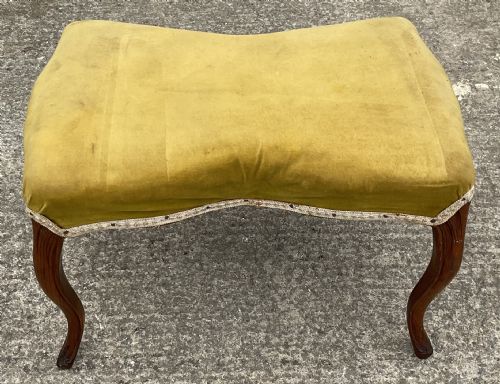
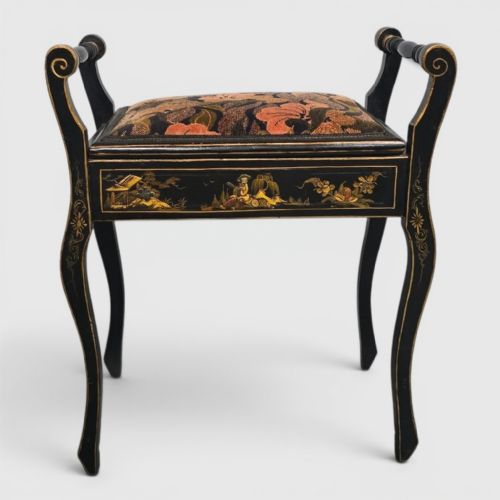
A padded upholstered bench is a low seating form designed for domestic use, encompassing piano stools, window seats, footstools, and club fenders. The pieces found here range from the eighteenth century through the Victorian and Edwardian eras into the art deco period.
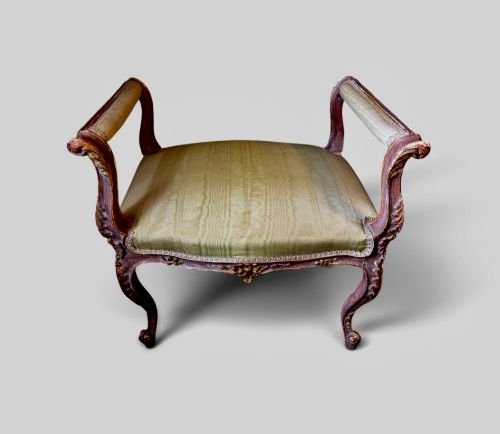
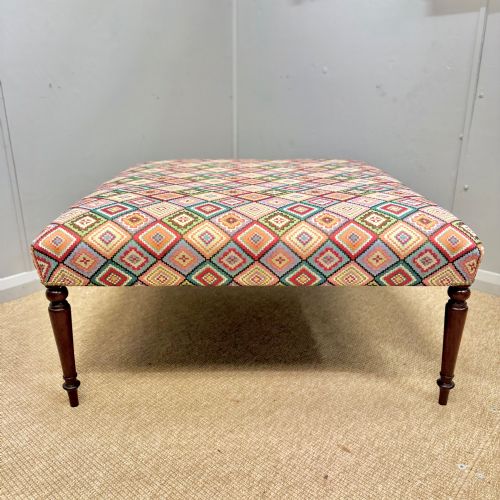
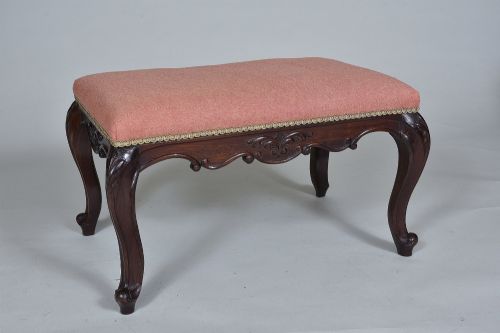
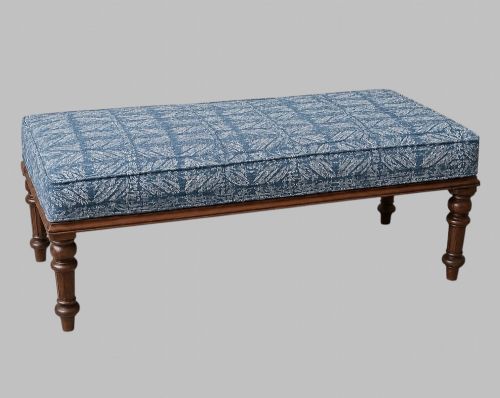
Victorian walnut and mahogany examples predominate on this page, often featuring cabriole legs or turned supports alongside period textiles. Forms stretch from compact dressing table stools to long nineteenth century window seats and heavy brass club fenders.
Makers and styles span English country house taste, rococo revival, and geometric art deco designs in mahogany, walnut, and giltwood. Each variation serves a functional domestic purpose, from piano practice to fireside seating.
How they were made
Frames rely on native and exotic timbers including mahogany, walnut, oak, and rosewood, shaped by hand with turned legs, cross stretchers, or carved cabriole supports. Joinery techniques connect rails to legs securely to bear the weight of daily seating.
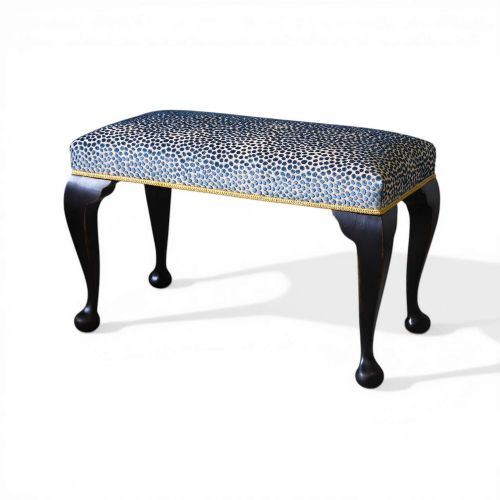
Upholstery incorporates traditional stuffing and springs covered in textiles, leather, needlepoint, or patterned fabrics such as Robert Kime designs. Brass castors, studs, and corner mounts add functional hardware to many of the wooden and leather frames.
Listings feature mahogany, walnut, and giltwood frames paired with leather, needlepoint, and textile upholstery across the Victorian and Edwardian periods.
What varies in quality
Quality rests in the crispness of the timber carving and the architectural balance of the frame, where substantial walnut and mahogany structures command greater presence. Subtle turning on legs and refined proportions distinguish bespoke cabinet work from standard production.
The standard of upholstery and the choice of covering fabric determine the finish of each piece, whether using historic needlepoint or fresh traditional textiles. Timber condition and the retention of original brass castors or mounts influence the integrity of the surviving frame.
C. Hindley & Sons
The Padded Upholstered Bench Glossary
- Club fender
- A low fireside seat with a metal frame and padded leather top, traditionally placed around an open hearth.
- Window seat
- A long upholstered stool designed specifically to fit the alcove of a bay or sash window.
- Cabriole leg
- A furniture leg that curves out in a convex arc and tapers inward in a concave arc, ending in a pad or scroll foot.
- Cross stretcher
- An X-shaped timber brace connecting the legs of a stool or table underneath for structural rigidity.
- Giltwood
- Timber coated with a thin layer of gold leaf or gesso paint for a decorative metallic finish.
Padded Upholstered Bench: Frequently Asked Questions
Where do you put a padded upholstered bench?
These benches suit placement at the foot of a bed, beneath a window, or beside a dressing table for convenient seating. Low footstools and club fenders find a natural home in front of a fireplace.
Larger duet stools and long benches provide practical seating in hallways or living rooms without blocking light or sightlines.
How do I date a Victorian upholstered stool?
Dating relies on timber choice, such as rosewood or walnut, combined with leg shapes like cabriole supports or heavy turned styles. Victorian pieces often incorporate sturdy mahogany frames with period upholstery methods.
Examining the underside reveals construction methods, screw types, and tool marks characteristic of nineteenth-century workshop production.
What is the difference between a window seat and a footstool?
A window seat functions primarily as a light piece of furniture designed for sitting by a window, often featuring arms or a decorative wooden frame. Footstools are lower to the ground and built to support resting feet.
Window seats generally display more ornamental woodwork, whereas footstools prioritize padding and surface area for comfort.
Are piano stools adjustable?
Many Edwardian and Victorian piano stools include internal mechanical systems to alter the seating height for the pianist. Fixed height duet stools and upholstered benches also appear frequently in musical contexts.
Checking the mechanism underneath confirms whether the top rotates or raises via a central screw thread.