
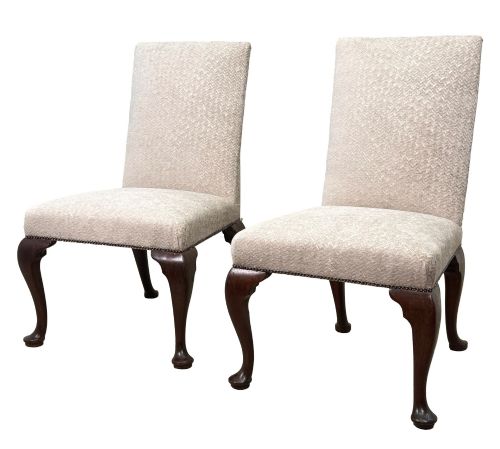
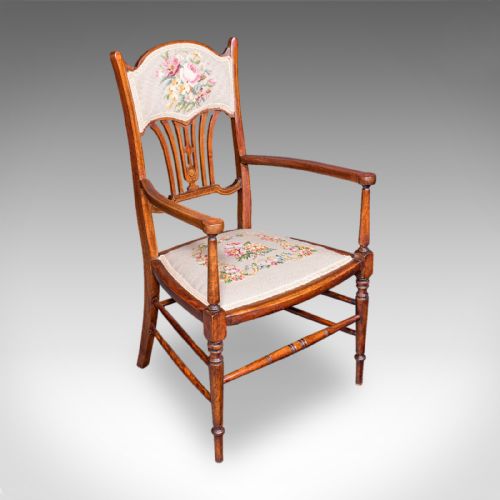
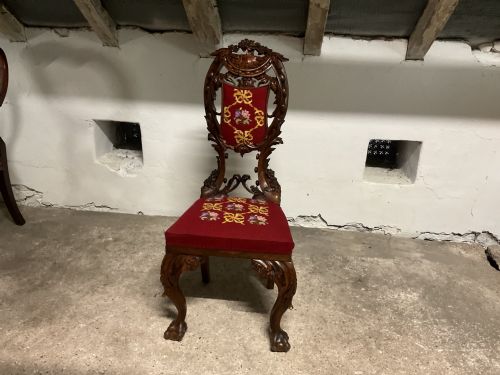
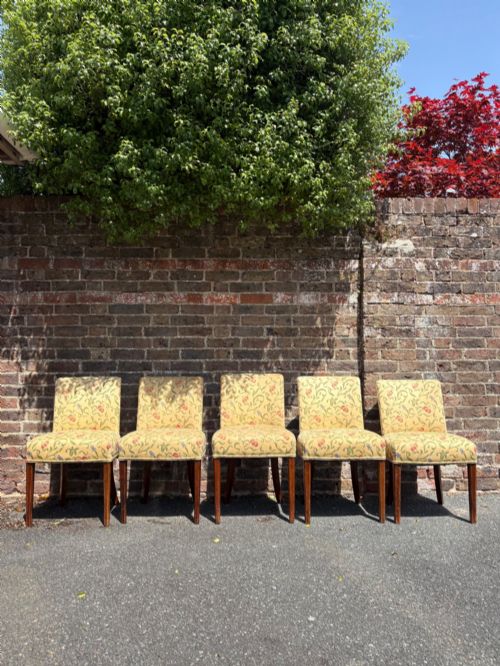


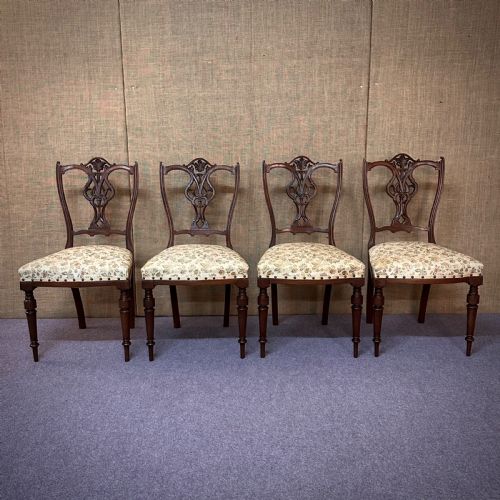


Padded Seat Side Chair
A padded seat side chair brings functional seating to a room without taking up the space of an armchair.
Padded Seat Side Chair
When you search for a padded seat side chair, you find single chairs and matching sets designed to pull up to a dining table or sit neatly against a wall. The examples on this page span several centuries, moving from early walnut and mahogany Georgian designs through Victorian balloon backs to twentieth-century Art Deco and Arts and Crafts forms.
How they were made
Cabinetmakers built these frames using dense hardwoods like mahogany, walnut, and oak, often shaping the timber into carved backs, cabriole legs, or geometric twentieth-century profiles. Joinery methods relied on traditional mortise and tenon construction to ensure structural stability under daily use.
Upholstery was built up directly onto the seat frame using webbing, springs or stuffing, and finished with textiles such as leather, velvet, silk cotton, and woven fabric. Brass accents occasionally appear as decorative studs or castors.
What varies in quality
The distinction between standard examples and finer pieces lies in the crispness of the timber carving and the architectural proportions of the frame. Higher quality chairs show careful timber selection, such as figured walnut or rich mahogany, with harmonious joinery that resists wobble.
The integrity of the original frame construction and the quality of the subsequent upholstery materials also separate ordinary items from superior survivors. Pieces retaining robust timber frames and sympathetic reupholstery command greater appreciation.
Blyth & Sons·Hille
The Padded Seat Side Chair Glossary
- Side chair
- A chair without arms, designed primarily for dining or occasional use around a room. These pieces fit easily beneath tables or against walls.
- Balloon back
- A rounded, curved backrest shaped like an oval or hot air balloon, popular during the Victorian period. This design offers ergonomic support for the spine.
- Cabriole leg
- A furniture leg that curves out in a convex arc and tapers inward in a concave arc, ending in a pad or claw foot. It echoes animal limbs and appeared frequently in eighteenth-century designs.
- Bergère
- An enclosed upholstered armchair with wooden frames and cane or upholstered sides. They provide a deeper, more relaxed sit than a standard side chair.
Padded Seat Side Chair: Frequently Asked Questions
How do I use a side chair?
Side chairs function primarily as additional seating around a dining table or as occasional seats in a bedroom, library, or hallway. Their armless design allows them to tuck neatly beneath tabletops or rest against walls when not in use.
They also serve as decorative accents in corners or by dressing tables, combining practical utility with period style.
How can I tell the period?
Dating relies on examining the timber species, joinery techniques, and stylistic motifs present in the frame. Eighteenth-century pieces often feature rich walnut or carved mahogany with cabriole legs, while Victorian examples frequently display balloon backs or walnut show-wood.
Twentieth-century items introduce cleaner geometric lines, oak framing, or specific artistic movements such as Art Deco and Arts and Crafts.
Are these chairs comfortable?
Comfort depends heavily on the padding and upholstery materials used within the seat structure. Many period examples provide firm support derived from traditional webbing and stuffing methods.
Upholstery condition varies across older pieces, and modern owners sometimes update the fabric or interior cushioning to suit daily lounging preferences.
Can I mix different chair styles?
Mixing single chairs or small sets around a dining table creates a collected, eclectic interior aesthetic. Pairing chairs of similar height or complementary wood tones ensures visual harmony.
Side chairs also move easily between rooms, allowing you to test different arrangements in hallways, bedrooms, or living spaces.