

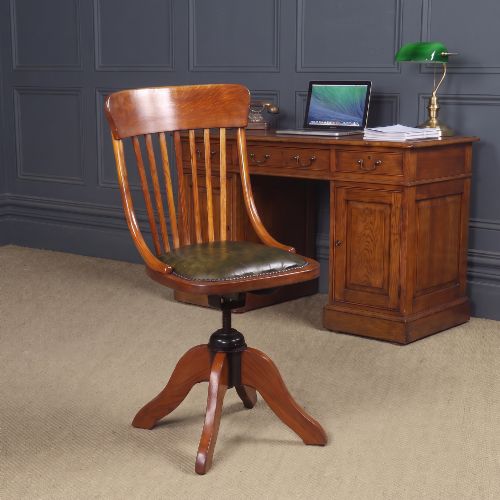
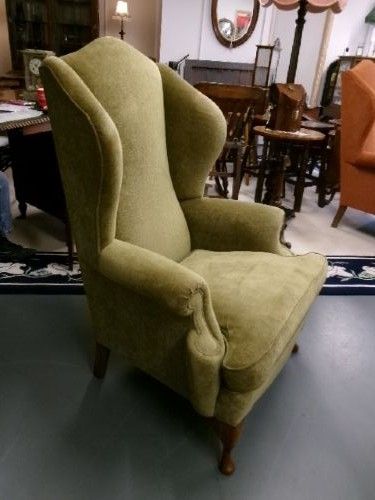
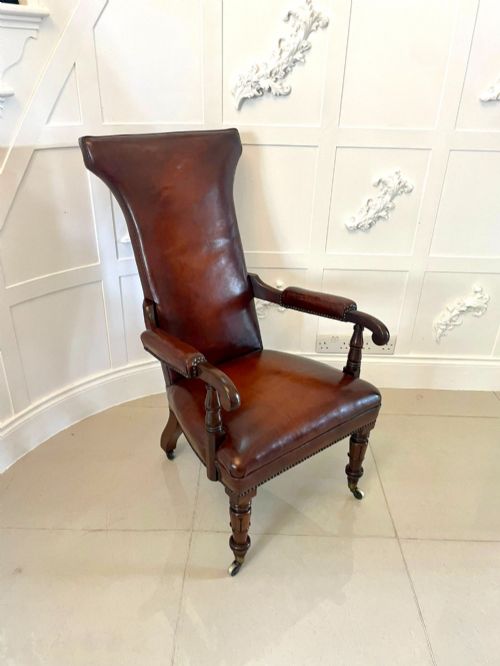
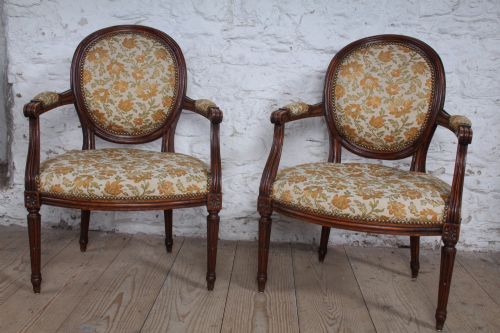

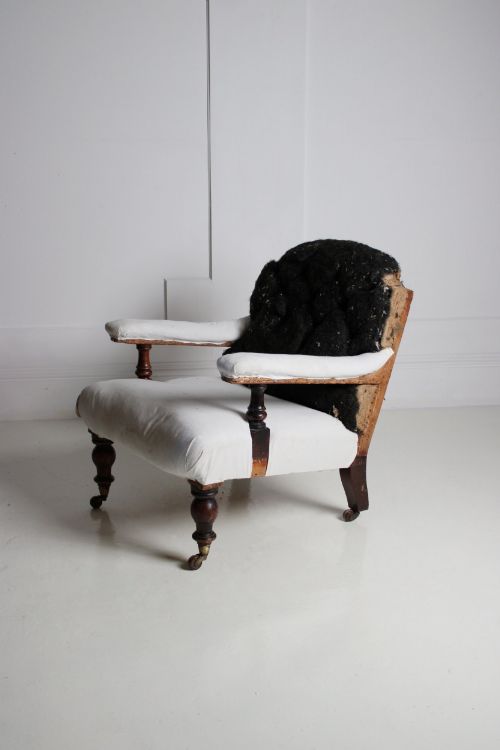


Padded Seat Armchair
A padded seat armchair brings comfort and presence to a room, offering sturdy timber frames and deep upholstery through centuries of design.
Padded Seat Armchair
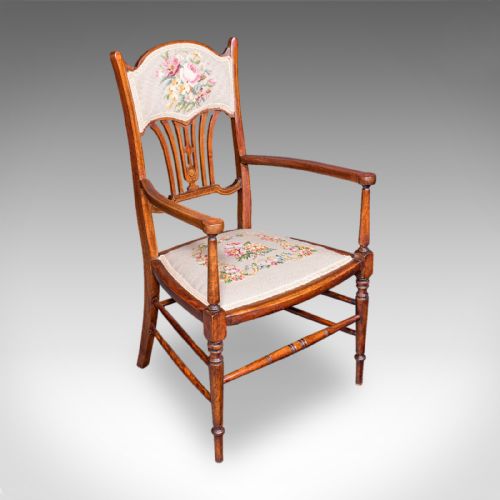
When you search for a padded seat armchair, you encounter seating designed for libraries, morning rooms, and country houses across multiple periods. The selection spans 18th century Georgian and Hepplewhite pieces, through Victorian and Edwardian iterations, up to 1930s styles.
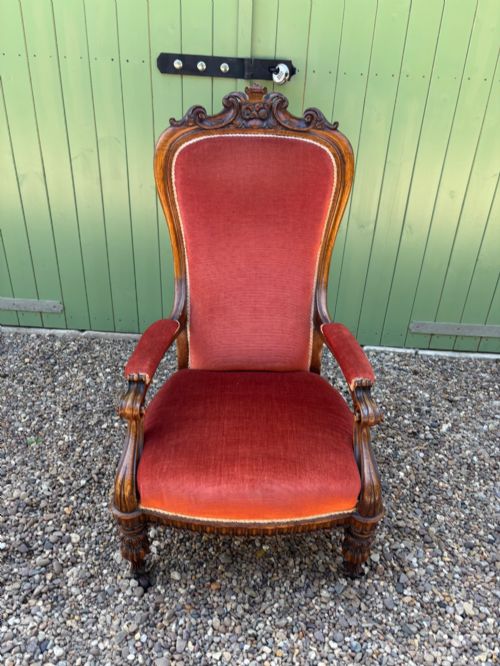
The forms vary widely, including library chairs, Gainsborough chairs, bergères, club armchairs, and rocking chairs. You are most likely to meet Victorian and 19th-century examples alongside Georgian library forms and Edwardian updates.
Makers such as George Jack for Morris & Co and Howard and Sons appear among the listings, alongside period pieces in French and English tastes. The objects function primarily as heavy domestic seating, combining wood frames with textile, leather, or silk coverings.
How they were made
The frames rely upon traditional hardwoods including mahogany, walnut, oak, beech, and yew wood, shaped through carving, turning, and joinery. Gilding and original paint finishes appear on specific continental and English pieces.
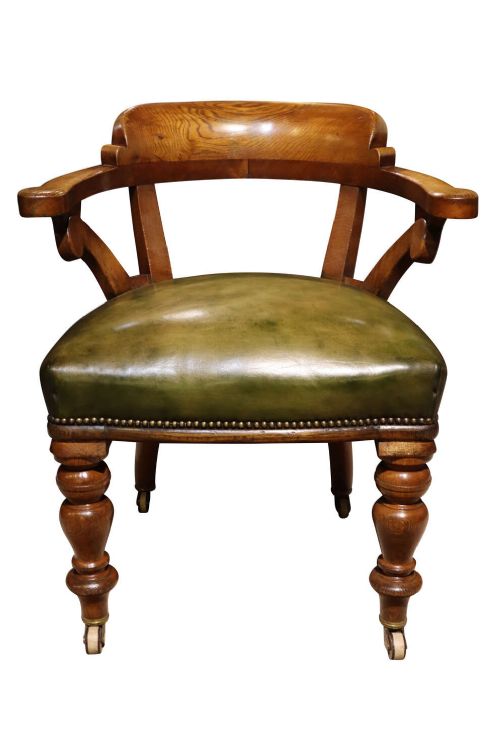
Upholstery methods integrate fabric, velvet, leather, silk, and needlework covers over padded foundations. Caning and studded leather treatments are utilised on specific library and ship chair variants.
Padded Seat Armchair Retail Price Guide 2026
Typical asking prices for padded seat armchair among the pieces listed under this phrase on Sellingantiques today, from the lower quarter to the upper quarter. They describe what is for sale here now, not the wider market.
Listings feature 18th-century, Victorian, and Edwardian periods alongside materials like mahogany, walnut, oak, brass, and leather.
What varies in quality
The distinction between tiers rests upon the execution of the timber carving and the integrity of the frame construction. Solid woods like mahogany and walnut, handled by skilled workshops, provide lasting structural weight compared to standard utility builds.
The selection of covering materials, from Colefax and Fowler silk to hand-tooled leather and needlework, marks the division between standard domestic seating and high-status library or salon pieces.
Morris & Co·Howard and Sons
The Padded Seat Armchair Glossary
- Bergère
- An enclosed upholstered armchair with wooden framing exposed around the sides and back. This French-derived form frequently incorporates cane work or padded panels.
- Gainsborough chair
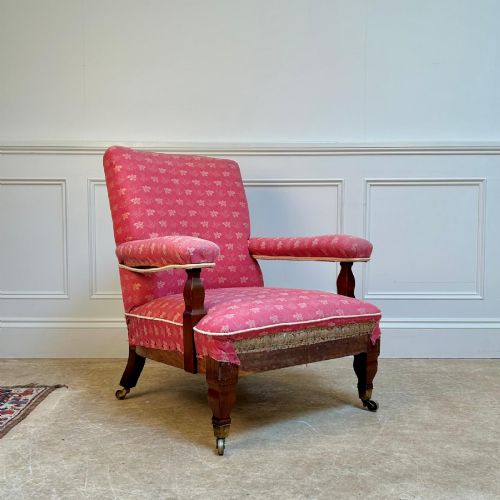
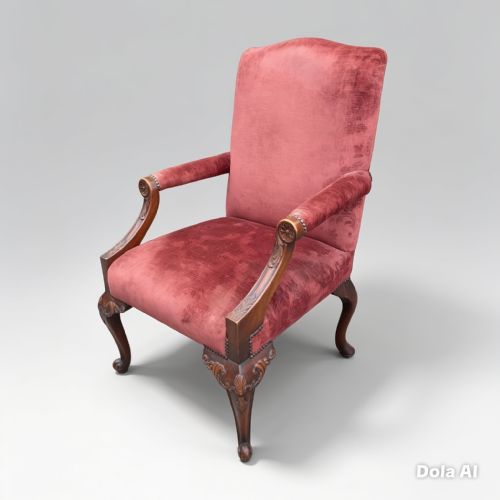
- A roomy 18th-century armchair with an upholstered back and seat, open padded arms, and short mahogany legs. These were traditionally designed for writing desks and libraries.
- Fauteuil
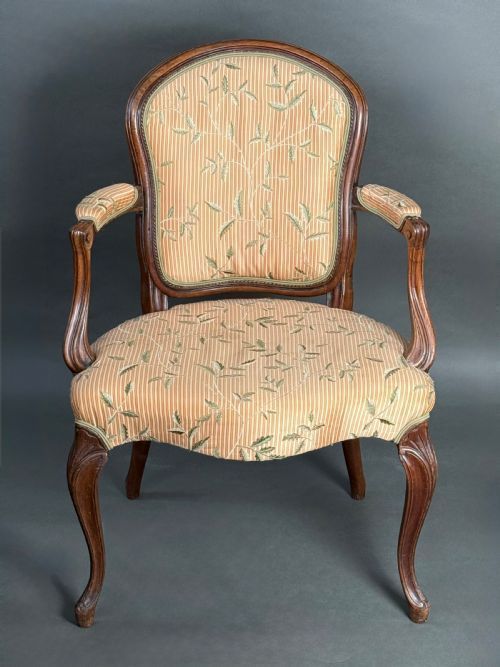
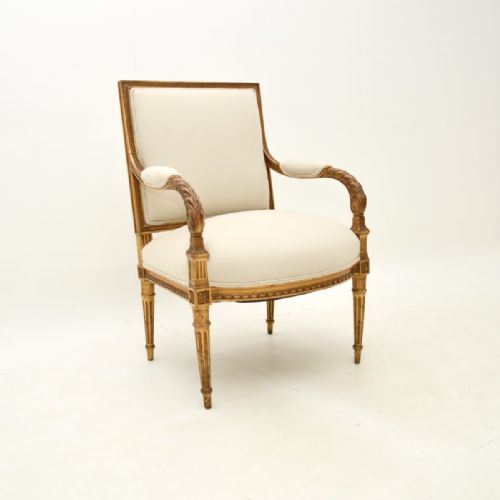
- An open-armed French armchair with an exposed wooden frame, typically carved in walnut, oak, or gilt wood. The style reflects Louis periods and subsequent revivals.
- Club armchair
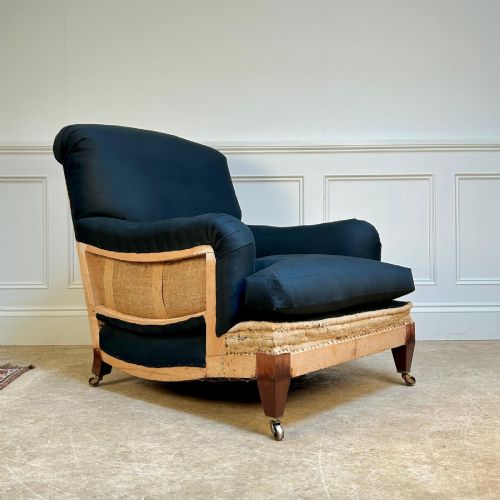
- A deep, heavily upholstered low seat designed for comfort, originating in France and popularised by makers like Howard and Sons. They feature generous padding and sprung foundations.
- Carver
- An armchair designed to match a set of dining chairs, usually featuring shaped arms to accommodate formal clothing. They frequently occupy the heads of dining tables.
Padded Seat Armchair: Frequently Asked Questions
How do I date a library armchair?
Dating relies upon examining the timber species, joinery techniques, and the stylistic cues of the frame. Georgian pieces often display mahogany or yew with straight or carved legs, while Victorian examples favour heavier golden oak or walnut.
Upholstery styles and webbing provide secondary clues, though many chairs have been recovered over time. Comparing the carved details against known period pattern books helps narrow the decade of manufacture.
What is the difference between a Gainsborough and a club chair?
A Gainsborough chair is an 18th-century form with an exposed wooden frame, open padded arms, and a relatively upright stance suited for a desk. It prioritises architectural timber work alongside comfort.
A club chair is a later, heavily padded design that conceals most of the frame beneath deep upholstery. It offers a low, enveloping seat intended for relaxation rather than writing.
Where should I place a bergere armchair?
A bergère suits drawing rooms, studies, or bedrooms where its exposed carved wood and cane or upholstered panels remain visible from all angles. Because the sides are often finished with decorative framework, these chairs work well when floated away from walls.
Pairing them with a reading lamp or placing them beside a fireplace highlights their traditional proportions. Ensure the room humidity remains stable to protect the wooden frames and any cane work.
Are French and English armchairs constructed differently?
French armchairs, such as Louis-style fauteuils, typically emphasise carved gilt wood, walnut, or painted frames with flowing rococo or neoclassical curves. They prioritize ornamental grace in salons and boudoirs.
English equivalents from similar eras often employ heavier mahogany, oak, or beech with a focus on functional library use or country house utility. The joinery reflects regional cabinet-making traditions rather than continental court styles.