


Padded Headboard Bed
A padded headboard bed brings softness and architectural presence to a bedroom, combining supportive textile upholstery with classic timber frames.
Padded Headboard Bed
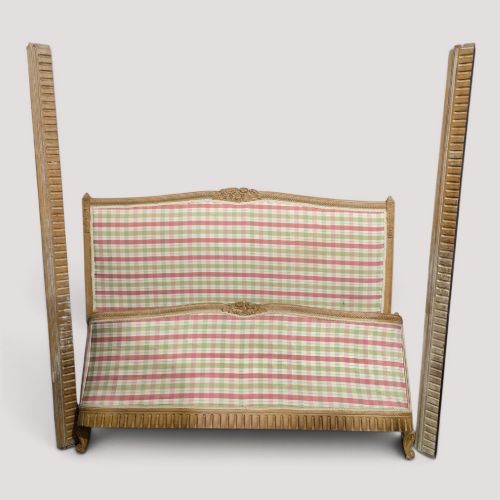
A padded headboard bed combines a timber or painted framework with a cushioned and upholstered backrest designed for comfort. These pieces span the Victorian era through the early twentieth century, reflecting enduring European taste.
The selections available here showcase diverse proportions, ranging from single beds and double sizes to king and super king formats. Low-end styles and distinct headboard structures appear frequently alongside complete bed frames.
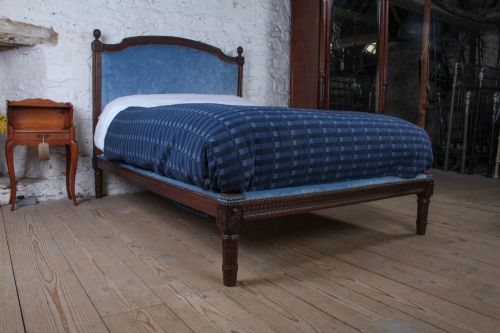
French influences dominate the selection, encompassing Louis XVI, Louis XV, Empire, and Provincial aesthetic traditions. Painted wood, limed timber, walnut, and burr walnut provide the foundational structure for these upholstered sleeping quarters.
How they were made
Craftsmen built the primary frames using solid timber such as walnut, oak, and other native woods, often finishing the surfaces with paint, liming, or gilding. Structural integrity relies on traditional joinery that supports both the heavy mattress bases and the integrated headboards.
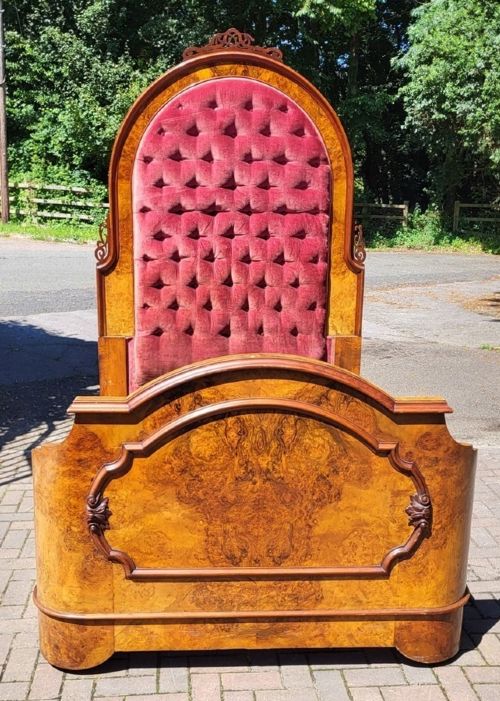
Textiles play a central role in the construction, utilising button backing, tapestry, velvet, and various modern or traditional fabric upholsteries secured directly to the padded wooden backrests. Many pieces feature newly upholstered finishes that refresh the textile elements while retaining the historic wooden framework.
Velvet, tapestry, and deep buttoning conspire to turn an ordinary bedroom wall into an extraordinarily plush backdrop for morning tea.
What varies in quality
The refinement of the carved wooden detailing and the choice of primary timber set exceptional examples apart from simpler utilitarian frames. Finely figured burr walnut and intricate gilt or painted flourishes indicate higher atelier ambition.
The precision of the upholstery work, including buttoning depth and fabric selection, dictates the overall visual impact of the headboard. Frames that retain harmonious proportions between the padded textile insert and the exposed woodwork represent superior design standards.
The Padded Headboard Bed Glossary
- Burr walnut
- A veneer or timber taken from the burls of walnut trees, prized for its swirling, highly figured grain patterns. It frequently appears on high-status Victorian bedframes.
- Louis XVI style
- A neoclassical design vocabulary characterised by straight tapered legs, symmetrical geometry, and classical carving motifs. This aesthetic heavily influences many continental beds.
- Limed wood
- A finishing technique where a whitish compound is rubbed into the grain of timber to lighten its appearance. This treatment creates a soft, weathered surface texture.
- Button back
- An upholstery method where deep buttons are pulled through the padding at regular intervals to create a diamond pattern. This technique adds both texture and structural firmness.
- Low-end bed
- A bedstead featuring a footboard that sits low to the ground or lacks a raised foot section entirely. This configuration creates an open sightline across the bedroom.
Padded Headboard Bed: Frequently Asked Questions
What defines a padded headboard bed?
A padded headboard bed integrates a cushioned, fabric-covered backrest directly into a wooden bedstead or standalone headboard structure. This design combines the warmth of textiles with traditional framing.
These pieces emerge primarily from Victorian and early twentieth-century workshops, drawing heavily on French stylistic traditions such as Louis XVI and Empire designs.
How do I choose the right size?
Consider both the available floor space and the visual weight of the headboard when selecting a bed size. Options range from single and double formats up to king and super king proportions.
Larger frames with elaborate carved woodwork or extensive tapestry panels require generous room dimensions to sit comfortably within a balanced interior.
Are these beds newly upholstered?
Many listings feature beds that have been recently updated with fresh fabric upholstery while preserving the historic wooden framework underneath. This approach combines modern textile durability with period craftsmanship.
Original fabrics appear less frequently, as centuries of use typically necessitate reupholstering to maintain structural soundness and aesthetic appeal.
What timber types should I expect?
Construction materials primarily include walnut, burr walnut, oak, and various painted or limed woods. These timbers form the structural chassis that supports the upholstered headboard insert.
Surface finishes range from natural wood grains and limed treatments to painted surfaces and gilded highlights, depending on the specific regional style.
How do I identify French provincial styles?
French provincial and Chateau styles are identified by softer, more rustic interpretations of court furniture, featuring painted finishes and gentle curves. They avoid the strict formality of high neoclassical court pieces.
Look for gracefully curved headboards, limed timber surfaces, and understated decorative carvings that emphasise domestic comfort over rigid symmetry.