


Padded Fireplace Guard
A padded fireplace guard gives a room low, comfortable fireside seating built directly into the hearth.
Padded Fireplace Guard
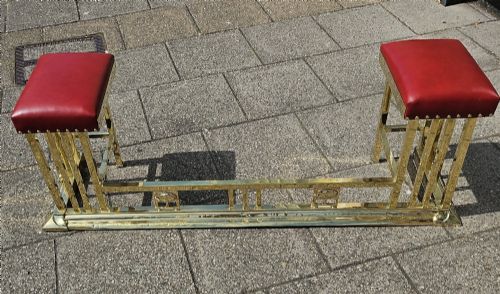
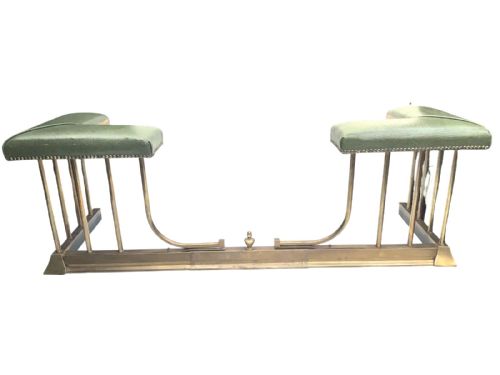
A padded fireplace guard, frequently catalogued as a club fender, provides a sturdy metal frame fitted with cushioned seating that wraps around the hearth. These pieces belong predominantly to the Victorian and Edwardian periods, stretching from the late nineteenth century into the early twentieth century. Most examples found on this page utilise brass, steel, or iron frames paired with leather or fabric upholstery.
Buyers encounter various configurations, ranging from simple brass rails to heavy cast steel and iron models with extender sections. English country house styles sit alongside later Art Deco designs, reflecting how domestic interiors evolved around the fireplace. Each piece serves the dual purpose of protecting the room from stray embers while offering a practical seat close to the warmth.
How they were made
Makers constructed the structural frames from robust metals including brass, cast steel, copper, and iron, often combining them to create contrasting metallic finishes. Tubular brass and heavy iron provide the rigid skeleton required to withstand daily use against the heat of an active fireplace. These metal components were joined and polished, sometimes incorporating silvered elements or specialist corner mounts.
The seats feature traditional upholstery stretched over internal padding, utilising durable materials such as leather, velvet, and heavy fabric. Artisans secured the hide or textile directly to the metal base, ensuring the cushion remained firm yet comfortable for sitting. This combination of heavy metalwork and soft upholstery defined the craft of the period.
Listings span from the Victorian and Edwardian eras into the nineteen thirties, featuring brass, steel, and leather.
What varies in quality
The distinction between standard examples and superior pieces rests on the weight of the metal and the complexity of the frame construction. Heavy cast steel and thick tubular brass indicate substantial manufacturing effort compared to lighter, simpler frames. Superior examples often feature refined corner detailing, integrated copper accents, or specialised extender mechanisms.
Upholstery choices and the preservation of the original padding also determine the standing of a piece. High-grade leather and rich velvet upholstery that has survived in good condition elevates the character of the fender. The integration between the heavy metal base and the cushioned top shows the level of care invested by the original maker.
The Padded Fireplace Guard Glossary
- Club fender
- A low, U-shaped hearth seat with a metal frame and a padded top. This term appears interchangeably with padded fireplace guard in many listings.
- Extender
- An adjustable section allowing the fender to fit various hearth widths. This addition provided flexibility for different fireplace dimensions.
- Cast steel
- A strong alloy produced by melting blister steel in crucibles, used for heavy framework. This material offers exceptional rigidity for structural hearth guards.
- Silvered
- A metallic finish applied to brass or iron to give a bright, silvery appearance. It provides a distinct contrast against traditional polished brass.
Padded Fireplace Guard: Frequently Asked Questions
What is a padded fireplace guard used for?
These pieces provide a low seating option directly around the hearth while forming a physical barrier against sparks and embers. They allow people to sit close to the fire in traditional rooms.
They serve as both practical fireplace accessories and functional furniture within the living space.
How do I date a brass club fender?
Dating relies on examining the construction methods, the composition of the metal, and stylistic clues from periods such as the Victorian or Edwardian eras. Heavy cast elements and specific patination on the brass point toward late nineteenth or early twentieth-century origins.
Later Art Deco examples introduce heavier iron and distinct geometric styling typical of the nineteen thirties.
What materials are common in these guards?
The primary structural materials are brass, steel, copper, and iron, often shaped into tubular or cast frames. These metals are paired with upholstered seats made from leather, velvet, or heavy fabric.
Some pieces combine brass and copper or add silvered finishes for decorative contrast.
Are these fenders adjustable in size?
Certain examples include extender sections designed to alter the width of the metal frame. This mechanism allowed owners to fit the guard precisely to different hearth dimensions.
Buyers should examine the specific construction of each piece to determine if it incorporates an adjustable frame.