

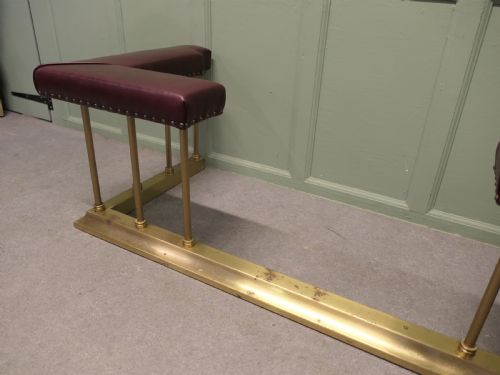


Vintage Brass Hearth Seating
Vintage brass hearth seating comprises sturdy fireside furnishings designed to provide a comfortable seat right by the grate.
Vintage Brass Hearth Seating
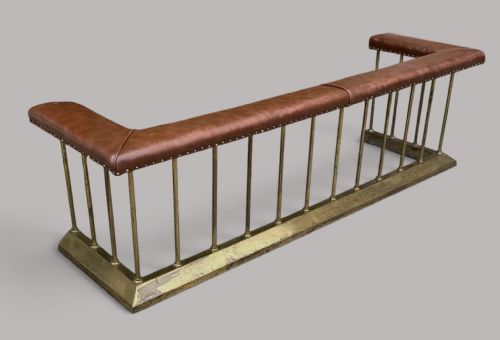
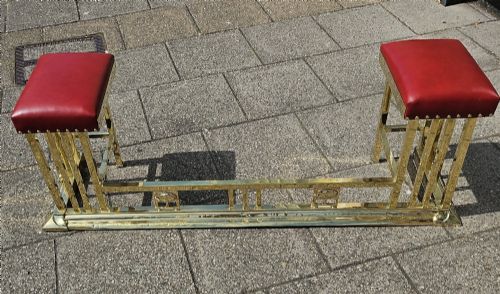
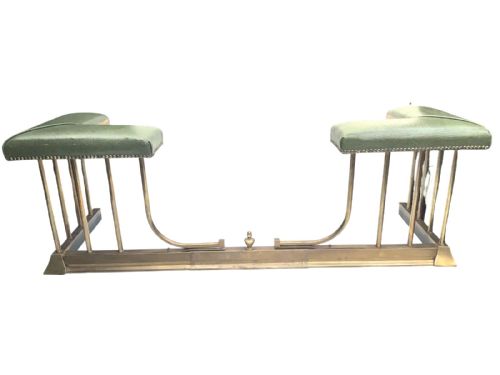
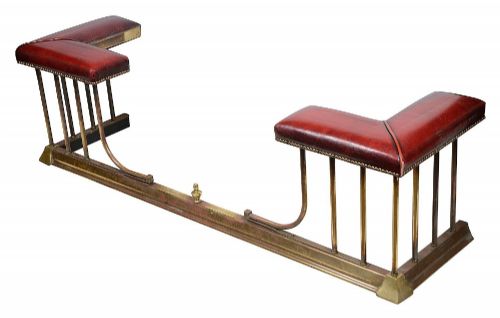
When you search for vintage brass hearth seating, you encounter a specialised category of fireside furniture built to frame an open fireplace. These pieces combine a rigid metallic frame with a low upholstered bench, allowing you to sit directly in front of the fire while keeping the heat contained. The selection on this page centres primarily on club fenders originating from the nineteenth and twentieth centuries.
You will find examples spanning the Victorian and Edwardian eras, alongside later pieces from the Art Deco period and mid-twentieth century. Traditional forms feature corner seating pads upholstered in leather, resting above sturdy brass balustrades and bases. These functional seats turn the hearth into a sociable focal point of the room, exactly as they did in country houses and period townhouses.
Materials and construction
Makers built the structural frames of these hearth seats using robust metals, predominantly brass, complemented by steel, copper, and iron components. Polished brass provides the gleaming exterior framework, often paired with heavier internal iron or steel supports for structural stability. Some variations incorporate contrasting copper details alongside the dominant brass tubes and spindles.
The integrated seats utilise durable upholstery materials such as leather and fabric to withstand daily fireside use. Mature tan and green leather appear frequently on the padded top rails, secured with traditional studding techniques. This combination of structural metalwork and padded leather creates a resilient piece capable of enduring decades of regular heat exposure.
Some models include corner extensions wide enough to rest a warming tankard of ale after a long day in the saddle.
Assessing quality and craftsmanship
The distinction between standard examples and superior pieces rests on the weight and gauge of the metal used in the frame. Finer hearth seats utilise heavy cast brass components and substantial tubular metal rather than thin plated sheets. This solid construction ensures the fender remains rigid and stable on uneven hearth stones.
Upholstery standards also define the tier of a piece, particularly the depth of the padding and the quality of the leatherhide. Superior examples feature hand-stitched or traditionally buttoned leather seats that maintain their firmness over generations. The precision of the joinery where the metal uprights meet the base further indicates the maker's original skill.
The Vintage Brass Hearth Seating Glossary
- Club fender
- A low fireside seat with an open metal frame and upholstered top rails that wraps around the hearth. This design originated in British gentlemen's clubs to maximise warmth from the coal fire.
- Balustrade
- A row of small turned or pillared uprights supporting the upper rail of the fender frame. These decorative spindles form the open metallic barrier characteristic of traditional designs.
- Chesterfield seat
- A heavily button-tufted style of upholstery traditionally finished in leather. It provides a firm, classic seating surface on the top rail of the fender.
- Extender
- A section or mechanism allowing the overall width of the fender to be adjusted. This permitted the furnishing to be fitted precisely to different hearth dimensions.
Vintage Brass Hearth Seating: Frequently Asked Questions
What is a club fender?
A club fender is a specialised fireside seat featuring a metal base and an upholstered top rail that encloses the hearth. It allows people to sit close to the fire while preventing stray embers from reaching the room.
Originally popular in large country houses, these furnishings created a warm social hub directly around the fireplace during colder months.
How do I date a brass hearth seat?
Dating relies on observing the stylistic details, construction methods, and materials present in the frame. Victorian examples often display heavier, ornate cast brass elements, whereas Edwardian and Art Deco pieces lean towards sleeker, polished lines.
Examining the type of leather upholstery and the fasteners used can also provide clues to the approximate decade of manufacture.
Are these seats comfortable to use?
Yes, they are designed specifically for sitting close to the fire, featuring padded leather or fabric top rails. The low height places the sitter at an optimal level for warming by the hearth.
While firm by modern standards, the traditional leather padding offers durable support suited for extended fireside gatherings.
How do I maintain brass and leather?
Maintaining brass requires occasional gentle cleaning with a suitable metal polish to preserve its brightness without stripping the aged patina. Leather upholstery benefits from periodic conditioning to keep the hide supple and prevent cracking from fireplace heat.
Avoid using harsh chemical cleaners on either the metal frame or the antique leather surfaces.