

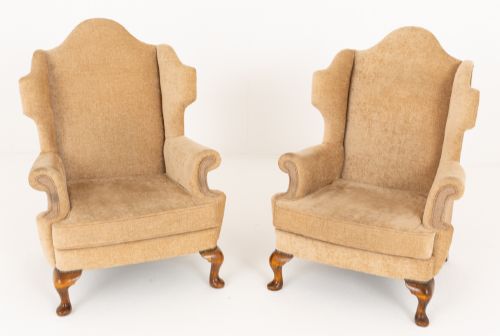


Padded Fabric Armchair
These padded fabric armchair examples span centuries of seating design, offering deep seats and upholstered comfort for everyday rooms.
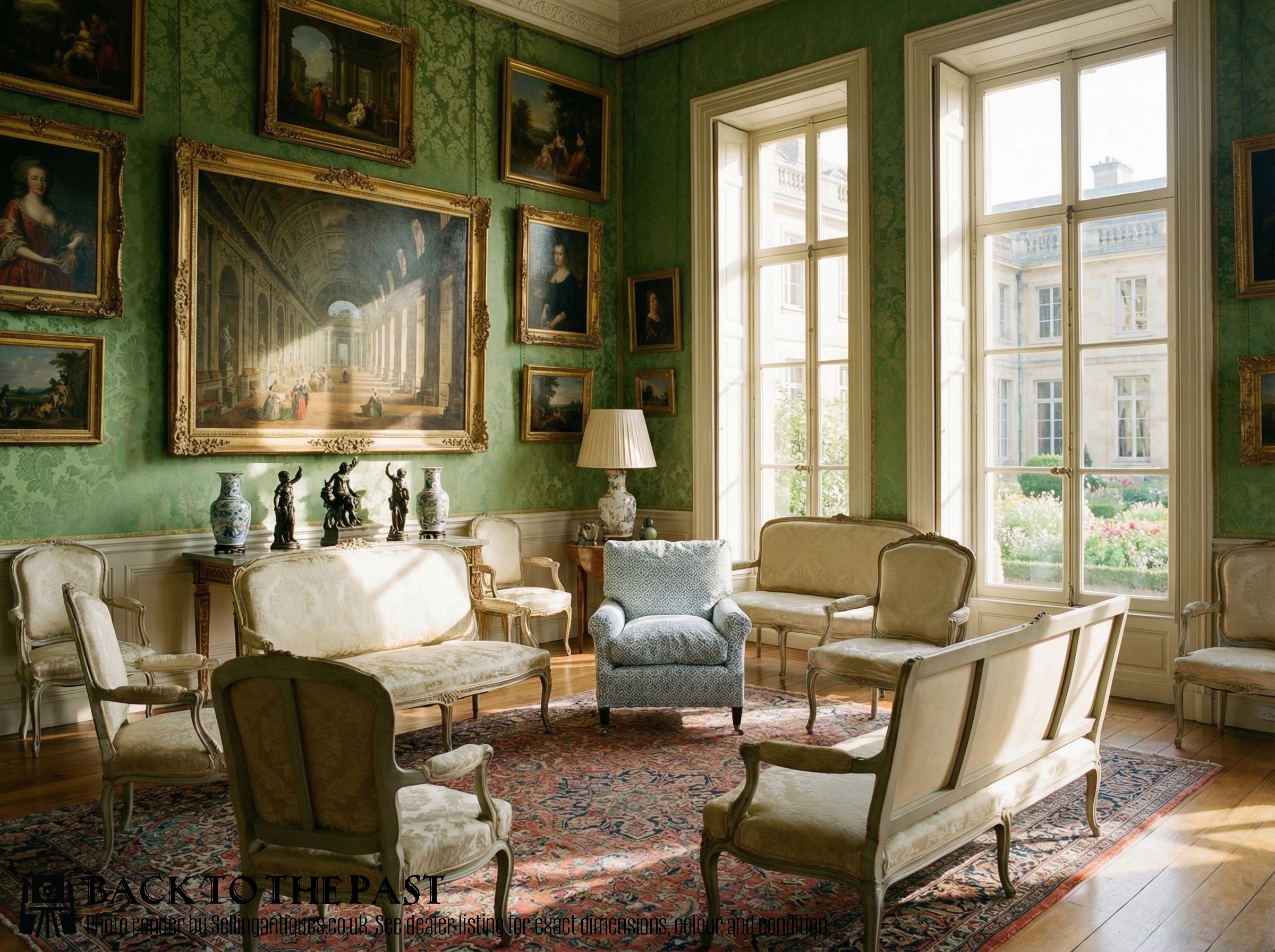
Padded Fabric Armchair
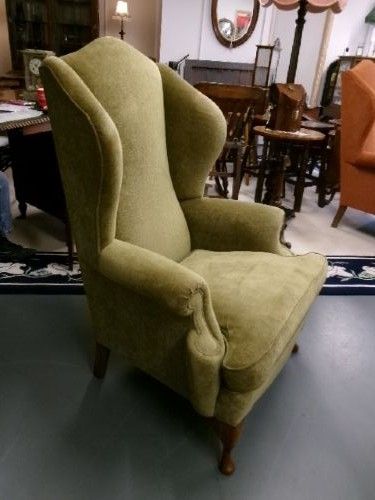
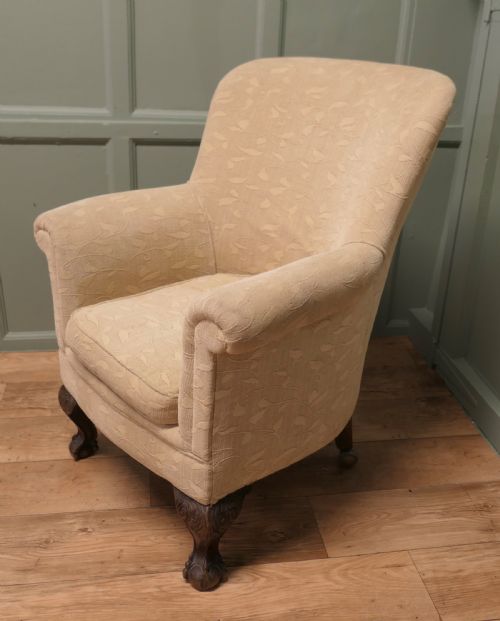
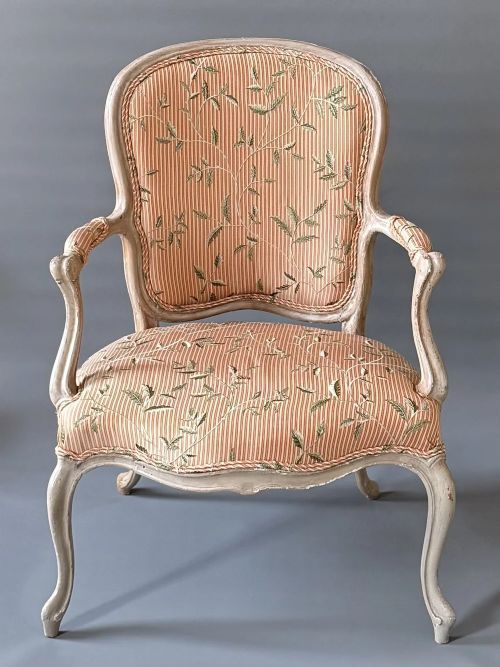
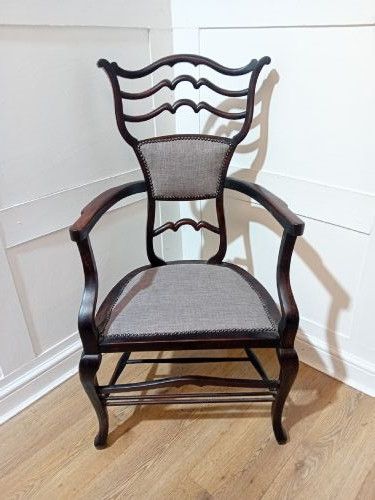
A padded fabric armchair brings together timber frames and upholstered comfort, appearing in forms ranging from Georgian Gainsborough chairs to Victorian library seats and Edwardian Bridgewater styles. When exploring a padded fabric armchair selection, buyers encounter occasional tub chairs, oversized open armchairs, and formal wing chairs designed for domestic repose.
The material combinations span mahogany and walnut show frames paired with cotton, woven fabric, and brass castors. Many pieces reflect historical revivals, including Queen Anne and Georgian styles produced across the eighteenth, nineteenth, and early twentieth centuries.
Materials and construction methods
Makers utilised solid hardwoods like mahogany and walnut to construct sturdy load-bearing frames, often featuring exposed timber rails known as show frames. These wooden skeletons provide structural integrity while supporting sprung or stuffed cushioning upholstered in woven fabrics and cottons.
Joinery techniques involved traditional mortise and tenon joints to withstand daily use. Metal components such as brass castors appear on legs to ease movement across carpeted and wooden floors.
Padded Fabric Armchair Retail Price Guide 2026
Typical asking prices for padded fabric armchair among the pieces listed under this phrase on Sellingantiques today, from the lower quarter to the upper quarter. They describe what is for sale here now, not the wider market.
Listings span periods from the 18th century to the 1930s, featuring mahogany, walnut, and woven fabric upholstery.
Assessing build and upholstery standards
Quality rests upon the proportion of the timber frame and the integrity of the underlying joinery, where finely carved mahogany or walnut demonstrates superior craftsmanship compared to simpler pine or secondary woods. The retention of original show frames and untouched structural timber elevates an example.
Upholstery execution and fabric selection dictate the finished character, with hand-stitched padding and period-appropriate textile choices distinguishing high-grade workshop output from later commercial re-upholstery.
Howard And Sons
The Padded Fabric Armchair Glossary
- Show frame
- The exposed wooden framework of an upholstered chair that surrounds the padded sections and displays the carved detail or polished grain of the timber.
- Gainsborough chair
- A type of open-armed armchair with a wide seat and padded back, originating in the mid-eighteenth century and typically associated with writing desks.
- Wing chair
- A high-backed armchair featuring upholstered side panels designed to shield the sitter from drafts and retain fireplace heat.
- Library armchair
- A comfortable, sturdy seat designed for reading rooms, often characterised by generous proportions and padded armrests.
- Tub chair
- A curved, semi-circular seating form where the back and arms merge into a continuous enclosing shape.
Padded Fabric Armchair: Frequently Asked Questions
What is a Bridgewater armchair?
A Bridgewater armchair is a relaxed, informal seating style characterised by low arms, a deep seat, and loose cushion fillings designed for comfort.
These pieces typically date from the late nineteenth or early twentieth centuries and suit casual living spaces.
How do I identify a Georgian armchair?
Georgian armchairs often feature straight or subtly cabriole mahogany legs, restrained carving, and supportive upholstered backs. They reflect the classical proportions popular during the eighteenth century.
Later reproductions built in the early twentieth century often adopt these same Georgian style characteristics.
Are these chairs comfortable for daily use?
Most examples are built with supportive springing and padded upholstery intended for long periods of sitting. Generous proportions in oversized and library variants make them practical for modern living.
Seat heights and depths vary across the periods, so checking dimensions ensures compatibility with your room.
What woods were used for frames?
Mahogany and walnut predominate among the better-quality frames seen in these listings. These dense hardwoods allowed cabinetmakers to carve subtle details while maintaining structural strength.
Secondary woods like beech or pine occasionally appear beneath the upholstery where the timber remains hidden.