
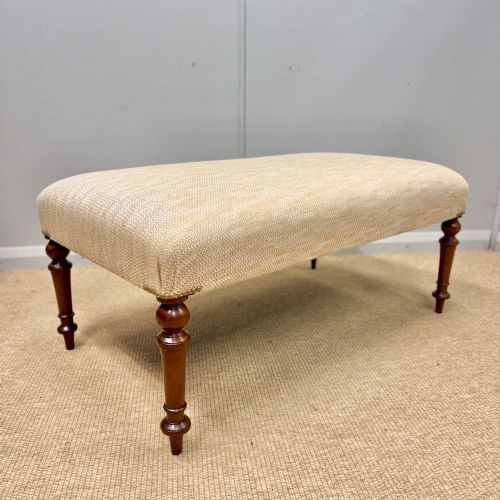
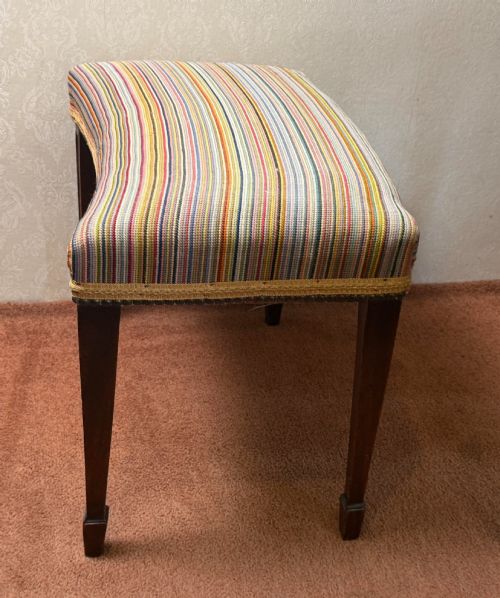
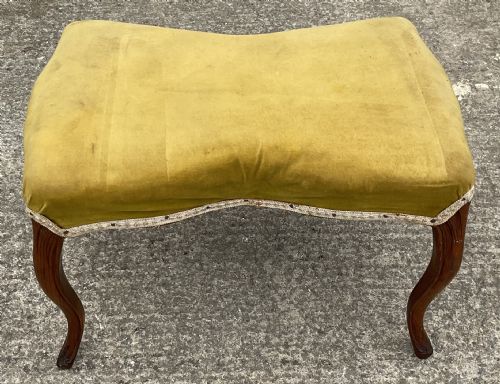
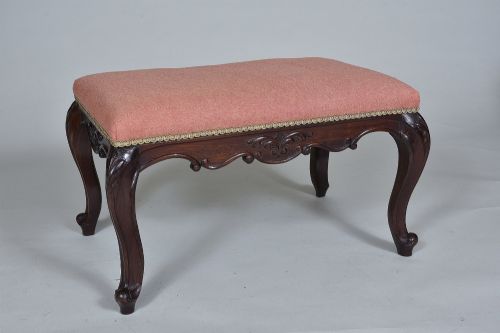


Padded Bench Footrest
A padded bench footrest offers solid timber framing and traditional upholstery, giving a room both a practical seat and a comfortable rest for tired feet.
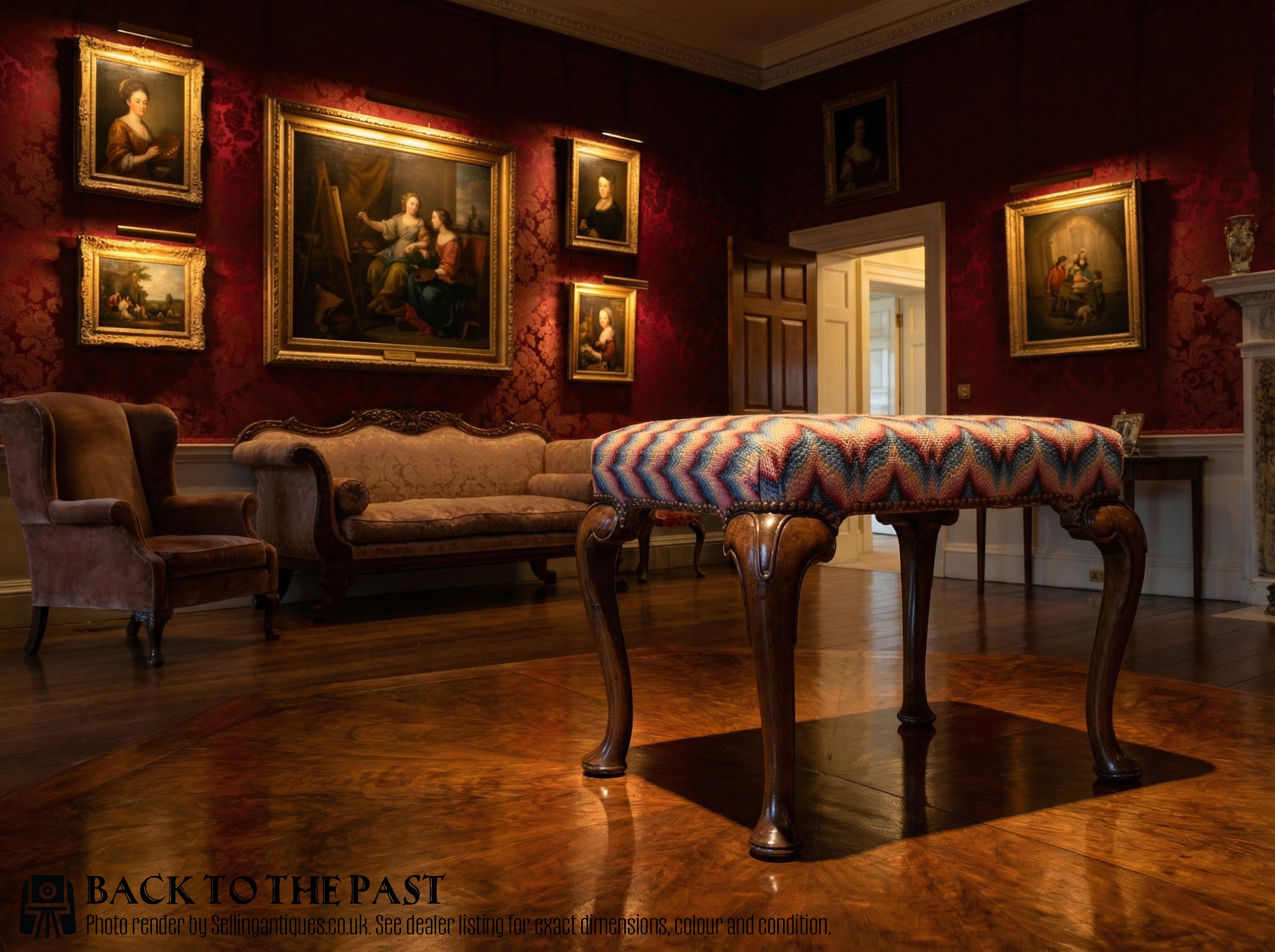
Padded Bench Footrest
A padded bench footrest spans multiple centuries of design, appearing as long fender stools, deep buttoned ottomans, and compact dressing table seats. These items range from eighteenth-century Georgian proportions to Edwardian oak forms, fulfilling a practical domestic need for low seating and leg support.
The version most commonly met on this page is the Victorian walnut or mahogany stool, often raised on cabriole legs or brass castors. Alongside these, long footstools and revival styles echo earlier periods like the Queen Anne and George II eras through carved timber details.
Makers across the nineteenth and early twentieth centuries constructed these low benches in varied lengths, from compact squares to very long fender stools designed to sit before a hearth. Their primary purpose remained supportive, whether upholstered in modern fabric, leather, or antique needlepoint.
Timber and Upholstery Construction
Makers predominantly utilised hardwoods such as mahogany, walnut, and oak for the structural frames of a padded bench footrest, ensuring lasting stability under regular use. Joinery techniques varied from traditional pegged joints on early oak pieces to sturdy mortise and tenon frames on later Victorian designs.
The upper padding relied on textiles, wool, leather, and woven rattan, secured over supportive stuffing to create a resilient surface. Brass castors frequently appeared on nineteenth-century examples to ease movement across heavy carpets.
Victorian households relied on long fender stools to keep feet safely away from the coal dust near the fireplace.
Distinctions in Craftsmanship and Detail
The upper tier of a padded bench footrest is marked by the crispness of hand-carved woodwork, particularly on cabriole legs and styling that references Chippendale or Louis XIV revivals. Finer examples show careful attention to proportions and timber selection, such as figured walnut or dense mahogany.
Upholstery finish also dictates grade, separating standard recovers from pieces retaining decorative needlepoint, deep buttoning, or high-grade leather hides that complement the underlying frame.
The Padded Bench Footrest Glossary
- Cabriole leg
- A furniture leg that curves outward in a convex arc and tapers inward to a foot, typical of eighteenth-century and revival seating. This shape mimics animal limbs and requires skilled timber shaping.
- Fender stool
- A long, narrow footstool designed to sit directly in front of a domestic hearth fender. These pieces are typically low to the ground and span a considerable width.
- Joint stool
- An early form of wooden stool constructed with tight mortise and tenon joints rather than turned legs. They offer sturdy box-like frames often seen in oak.
- Needlepoint
- A form of canvas work embroidery used historically to cover seat tops and footstools. It provides a durable, heavily patterned textile surface.
- Ottoman
- A low upholstered seat or footstool without a back or arms, sometimes featuring internal storage. They appear in various revival styles across the nineteenth century.
Padded Bench Footrest: Frequently Asked Questions
What is a fender stool used for?
A fender stool provides a long, low surface designed to sit neatly in front of a hearth fender. Historically, it kept feet warm and elevated away from cold stone floors.
Today, these long padded bench footrest pieces function effectively at the foot of a bed or beneath a long window as extra seating.
How do I date an antique footstool?
Dating relies on observing timber choices, leg shapes, and structural joinery methods. Walnut and heavy mahogany commonly point to Victorian or earlier periods, while oak joint stools suggest earlier centuries.
Secondary indicators include the presence of hand-carving styles, such as Jacobean or George II revivals, which mirror the prevailing tastes of their makers.
Are these footstools sturdy enough for daily seating?
Most timber-framed examples utilise dense hardwoods like mahogany and oak, which offer strong foundational support. Their original construction was intended for everyday domestic use.
Modern buyers regularly use them as occasional seats provided the internal webbing and upholstery remain secure and firm.
What timber is most common?
Mahogany and walnut appear most frequently across the nineteenth-century selections on this page. Cabinet makers favoured these rich woods for their durability and smooth finish.
Early pieces occasionally feature solid oak, while later Edwardian examples also incorporate lighter woods alongside traditional upholstery materials.