



Padauk Wood Table
A padauk wood table brings dense, richly coloured timber and deep carving into a room, offering both durability and striking colonial character.
Padauk Wood Table
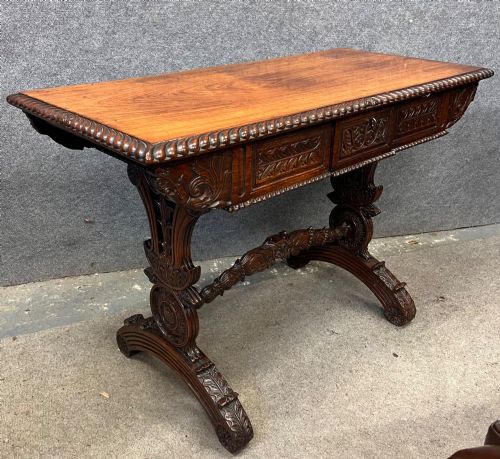
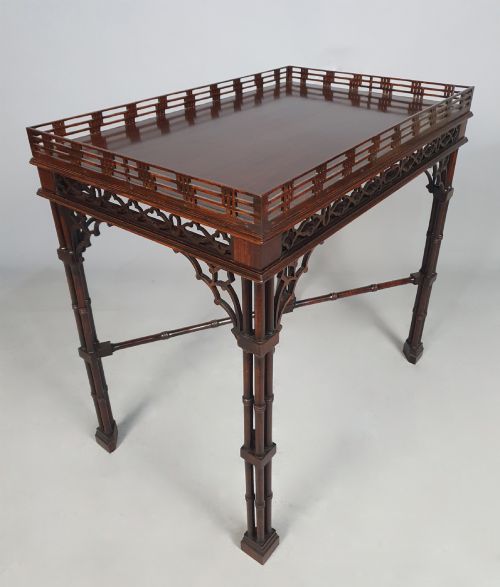
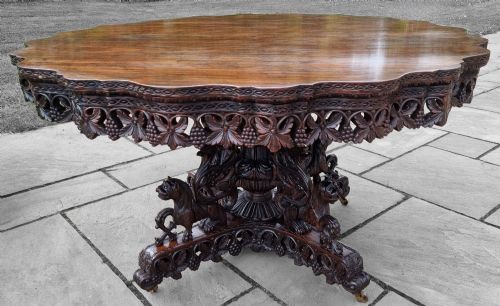
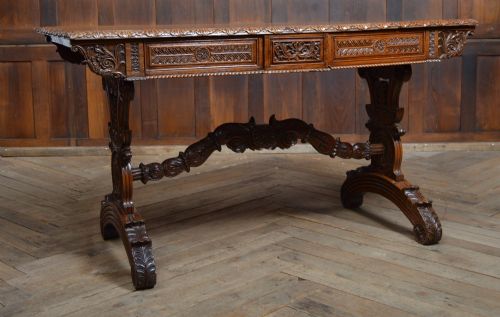
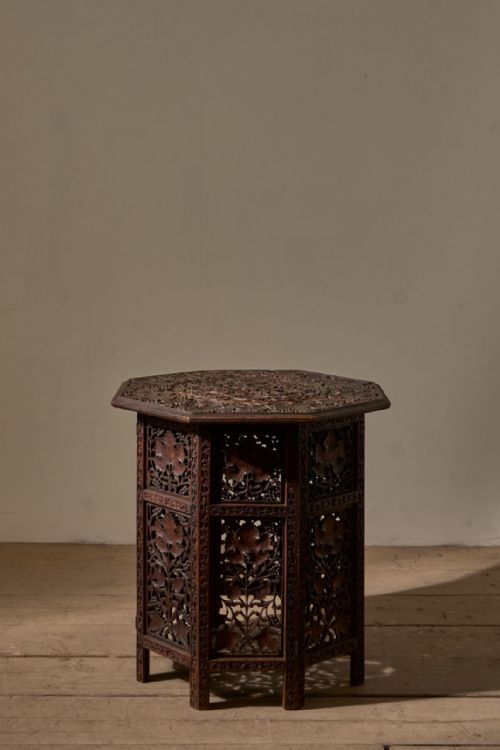
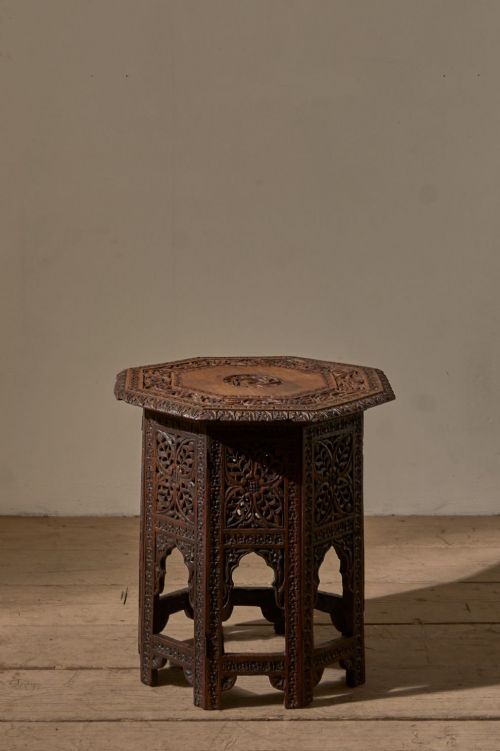
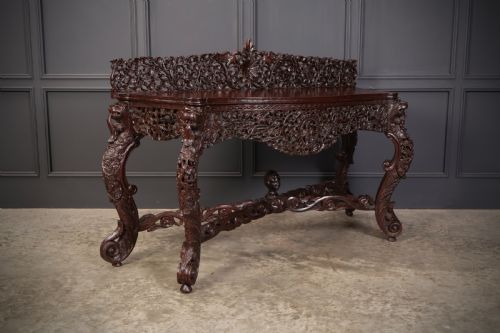
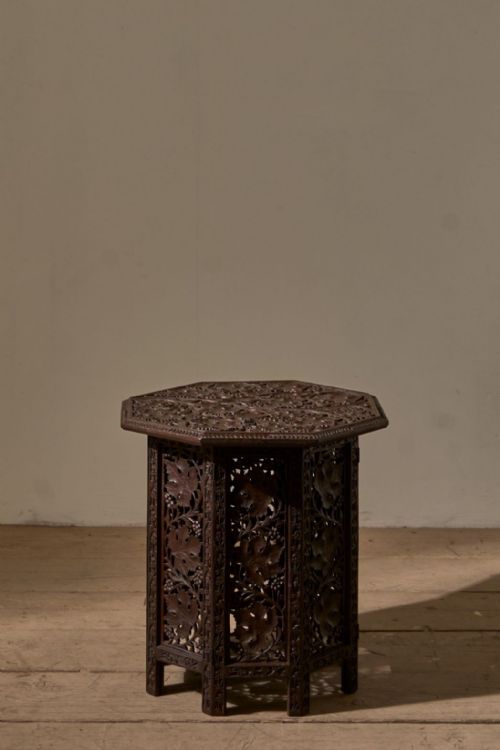
The version you are most likely to meet on this page is the Anglo-Indian side table or centre table, typically featuring heavy hand-carved ornamentation such as leaf designs, dragons, or architectural pedestal bases. Many date from the mid to late nineteenth century, reflecting the intricate craftsmanship of colonial cabinet makers working with imported tropical hardwoods.
What varies in quality
The distinction between ordinary and exceptional examples rests upon the depth, crispness, and artistic execution of the hand-carving across the timber. Tables featuring sharply defined motifs, such as dragons and complex leaf patterns, demonstrate superior sculptural skill compared to simpler, softer renderings.
Proportion and the integration of secondary materials, such as fitted marble tops or fine bone inlay, further differentiate the range. Pieces that maintain structural integrity alongside elaborate carving represent the upper tier of nineteenth-century colonial craftsmanship.
Padauk Wood Table Retail Price Guide 2026
Typical asking prices for padauk wood table among the pieces listed under this phrase on Sellingantiques today, from the lower quarter to the upper quarter. They describe what is for sale here now, not the wider market.
Listings span the nineteenth century, specifically featuring pieces dated from 1850 to 1890, alongside broader Victorian eras.
The Padauk Wood Table Glossary
- Padauk
- A heavy, durable tropical hardwood known for its deep reddish-brown colour and resistance to decay. It takes a fine finish and supports intricate hand-carving.
- Anglo-Indian
- A style of furniture produced during the British colonial period in India, combining European furniture forms with traditional Indian decorative carving.
- Centre Table
- A freestanding table designed to be viewed from all sides, commonly placed in the middle of a large room during the Victorian period.
- Pedestal
- A structural support base, often heavily carved, lifting the tabletop from a central column or cluster of feet rather than four distinct corner legs.
- Bone Inlay
- Decorative fragments of bone set flush into the wooden surface of a piece to create contrasting geometric or floral patterns.
Padauk Wood Table: Frequently Asked Questions
Where were these tables made?
These tables were produced across British colonial territories, particularly in India and Burma, as well as through Chinese export workshops during the Victorian period.
Craftsmen in these regions combined traditional local carving techniques with European furniture shapes requested by colonial residents and overseas markets.
How do I care for padauk wood?
Padauk wood benefits from stable room humidity and protection from direct sunlight to preserve its deep colour and prevent the timber from drying out.
Regular dusting with a soft, dry cloth is sufficient for maintenance, avoiding harsh chemical polishes that can damage the antique finish.
How can I identify the period?
Dating relies on examining the construction methods, the style of the carving, and the specific form, with most examples originating from the mid to late nineteenth century.
Victorian Gothic Revival influences, colonial motifs, and the integration of materials like marble or bone inlay provide further clues to their exact era of manufacture.