


Oyster Wood Chest
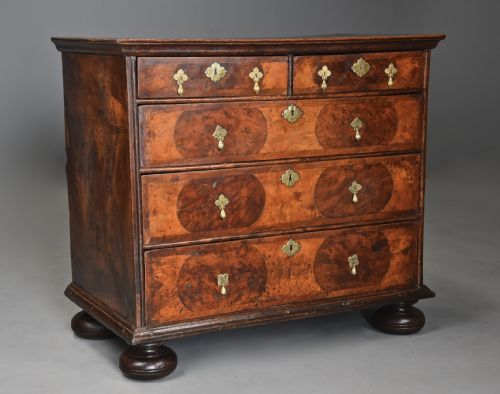
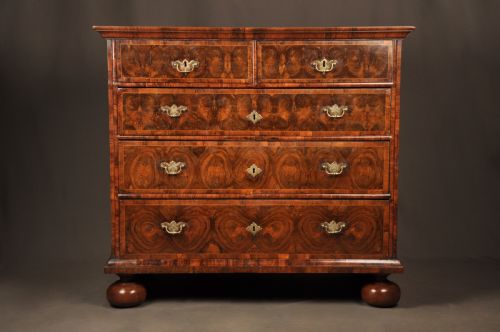
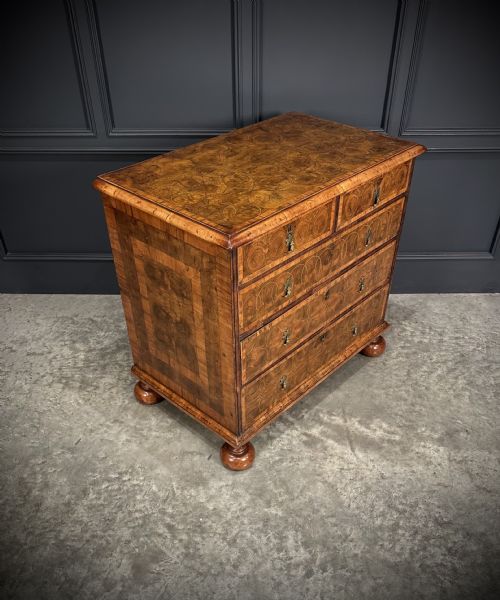
An oyster wood chest brings together circular cross-grain veneers cut from branches to create a mesmerizing patterned surface.
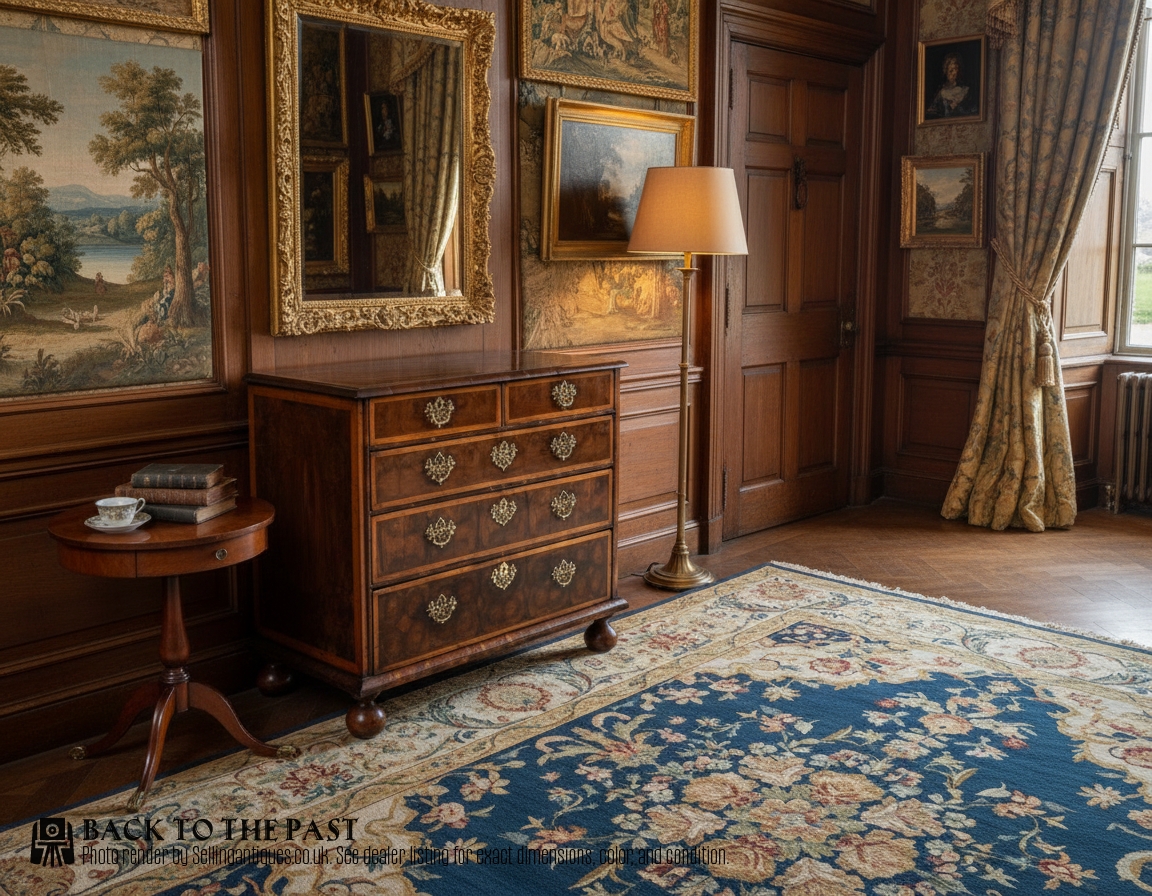
Oyster Wood Chest
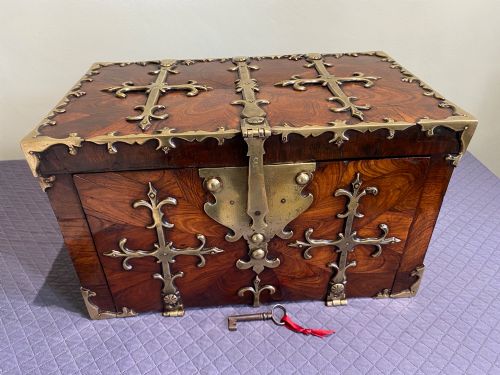
An oyster wood chest is a striking storage piece defined by its distinctive circular timber veneers arranged across the drawers and top. When you search for an oyster wood chest, you encounter items predominantly from the seventeenth century and the Georgian era, alongside occasional later revival pieces. These pieces range from compact chests of drawers and cabinets on stands to smaller decorative boxes.
The version you are most likely to meet on this page is a William and Mary period chest of drawers or a chest on stand. These seventeenth century examples frequently showcase olive wood, walnut, or yew wood veneers combined with geometric banding. Cabinets on stands and smaller collectors boxes also appear, giving you various scales of this distinctive joinery.
How they were made
Cabinet makers created oyster veneers by cross-cutting small branches or boughs of timber at an angle to produce circular and oval slices. These thin discs were then laid onto a primary carcase, often constructed from oak or pine, to form intricate patterns across the surface. Makers frequently utilised contrasting timbers like boxwood or holly for stringing and banding between the oyster sections.
The construction relied on meticulous timber selection to ensure the grain patterns interlocked neatly across the drawer fronts and top panels. Craftsmen finished these surfaces with traditional polishing techniques that highlighted the concentric growth rings of the olive, walnut, laburnum, or yew wood.
Listings feature seventeenth century periods alongside Georgian eras, utilising olive wood, walnut, yew, and laburnum.
What varies in quality
The primary distinction in quality lies in the precision of the veneer work and the symmetry of the cutting across the carcase. Finer examples display tightly packed, uniform circular slices with minimal filler between the joints, whereas simpler pieces show wider gaps or less deliberate alignment. The choice of secondary timbers and the complexity of the banding also signal the skill invested by the original workshop.
Proportion and structural integrity separate standard items from the more accomplished survivals of the period. Pieces that retain their original stands, brass hardware, and unaltered carcase structure command greater appreciation among collectors than those with extensive later replacements.
The Oyster Wood Chest Glossary
- Oyster veneer
- A method of cutting branch wood transversely to produce small, circular or oval pieces resembling oyster shells. These pieces were then laid side by side to create decorative, patterned surfaces on furniture.
- Chest on stand
- A tall storage form consisting of a primary chest section elevated on a separate framework with legs. This configuration lifts the detailed veneer work closer to eye level.
- Banding
- Narrow strips of contrasting timber inlaid around the perimeter of drawer fronts or panels. This technique frames the oyster veneer and enhances the geometric design.
- Stringing
- Very thin inlay lines used to outline panels and drawers on seventeenth and eighteenth century furniture. It provides a sharp visual border against the surrounding grain.
- Carcase
- The underlying structural body of a chest or cabinet upon which the decorative veneers are applied. Oak and softwoods served as the standard foundation materials.
Oyster Wood Chest: Frequently Asked Questions
What is an oyster wood chest?
An oyster wood chest is a decorative storage piece surfaced with circular cross-sections of timber branches.
These patterns create a distinctive rippled effect across the drawers and top surfaces.
How do I date an oyster chest?
Dating relies on examining the construction methods, handles, and timber combinations used in the piece.
Seventeenth century examples often feature olive or walnut on oak carcases, while later pieces show different proportions.
Where were these chests used?
They served as principal storage furniture in polite domestic interiors and private chambers.
Their decorative surfaces made them suitable for displaying wealth in reception rooms.
How do I care for oyster veneer?
Keep the wood away from direct sunlight and sudden temperature changes to protect the delicate cross-grain slices.
Apply traditional wax sparingly to maintain the finish without building up heavy residues.
What woods appear on these chests?
Cabinet makers used olive wood, walnut, yew, laburnum, and kingwood for the distinctive circular veneers.
Contrasting timbers like boxwood and holly provided the fine inlay lines.