




Oval Wooden Tray Stand
An oval wooden tray stand offers a practical folding surface, combining a portable serving dish with a sturdy supporting base.
Oval Wooden Tray Stand
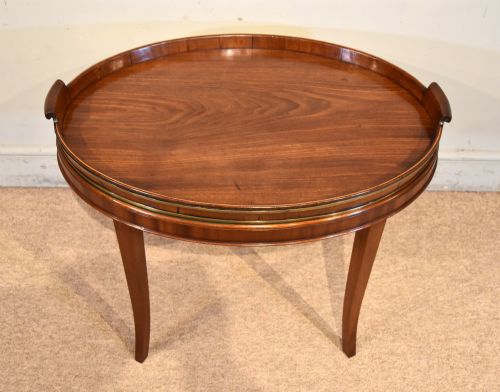
An oval wooden tray stand brings together domestic utility and portable furniture, featuring a detachable tray resting on a folding or fixed base. Buyers searching for an oval wooden tray stand typically encounter designs from the eighteenth and nineteenth centuries, alongside Edwardian interpretations.
The pieces on this page span Georgian, Victorian, and Edwardian periods, frequently executed in mahogany or mixed wood veneers. Forms range from traditional butler's trays to occasional tables and low coffee tables.
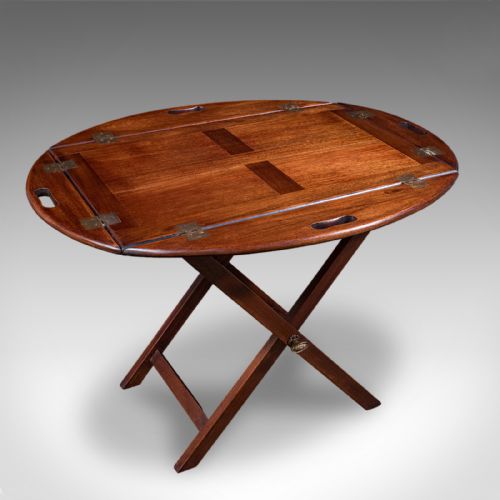
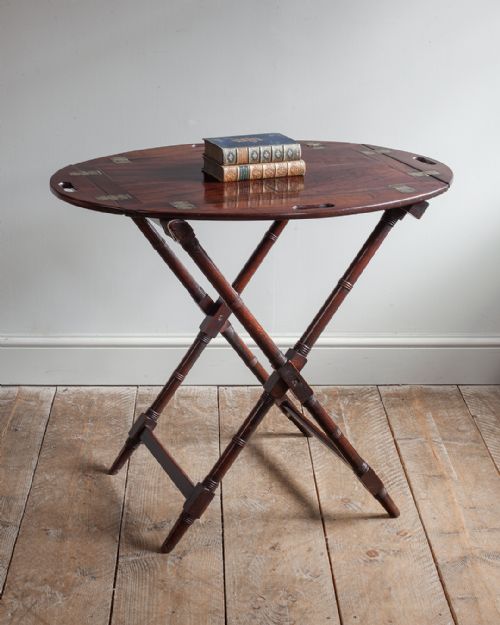
Origin and craftsmanship vary across the selection, including English cabinetmaking and Chinese export pieces. Most examples rely on folding frames that allow the entire furniture piece to be stored flat when not in use.
Materials and Construction
Makers utilised dense timbers such as mahogany and oak to construct both the raised rims of the trays and the supporting stands. Finer examples incorporate satinwood and marquetry detailing to decorate the tray surface.
Joints and folding mechanisms rely on traditional carpentry techniques, pairing stable wooden frames with canvas webbing where required for support. Trays often feature shaped or pierced handgrips cut directly into the solid timber borders.
Oval Wooden Tray Stand Retail Price Guide 2026
Typical asking prices for oval wooden tray stand among the pieces listed under this phrase on Sellingantiques today, from the lower quarter to the upper quarter. They describe what is for sale here now, not the wider market.
Listings feature mahogany, oak, satinwood, and mixed wood veneers across Georgian, Victorian, and Edwardian periods.
Assessing Quality and Execution
Superior pieces display careful timber selection, where mahogany graining matches harmoniously across the tray base and surrounding mouldings. Lesser examples show simpler construction with plain hardwoods and minimal decorative embellishment.
The refinement of the supporting stand distinguishes finer workshops, noting tightly fitted folding hinges and well-proportioned legs rather than utilitarian bracing.
The Oval Wooden Tray Stand Glossary
- Butler's tray
- A portable wooden tray with raised sides, often featuring hinged flaps or handgrips, designed to sit upon a separate folding stand. These items served nineteenth-century households for carrying dining requisites.
- Marquetry
- Inlaid wood patterns assembled from various veneers to create decorative pictures or geometric designs on furniture surfaces. Craftsmen apply this technique to embellish tabletop panels.
- Satinwood
- A durable, yellowish timber prized for its lustrous grain, frequently utilised in eighteenth and nineteenth-century cabinetmaking for decorative banding and fine veneers.
- Drop-flap
- A hinged section on the side of a tray or table that lowers or lifts to alter the surface area. This mechanism provides flexibility in dining and serving arrangements.
Oval Wooden Tray Stand: Frequently Asked Questions
What is a butler's tray table?
A butler's tray table consists of a removable wooden tray placed upon a separate folding or rigid stand. It functions as a versatile serving piece that can be dismantled for compact storage.
Historically used for transporting meals and tea services between rooms, contemporary owners often repurpose them as low coffee tables or occasional surfaces.
How do I date an antique tray stand?
Dating relies upon examining the timber species, construction methods, and stylistic details present in the woodwork and hardware. Georgian and George III pieces typically display solid mahogany construction with hand-cut joinery.
Edwardian or later nineteenth-century examples may incorporate satinwood veneers, marquetry inlay, or alternative hardware that reflects the manufacturing standards of that era.
Are these trays attached to their stands?
Most traditional trays rest loosely within a dedicated wooden frame on top of the stand. This allows the tray to be lifted off independently for carrying.
Certain variations or later adaptations secure the tray directly to the base, transforming the piece into a fixed occasional or coffee table.
How should I care for wooden tray tables?
Maintenance involves dusting the timber regularly with a soft cloth and avoiding placement near direct heat sources or strong sunlight. These conditions help preserve the antique finish and prevent wood splitting.
Applying occasional appropriate wax polish maintains the lustre of mahogany and satinwood surfaces without damaging historic polishes.