



Georgian Oval Tray Table
A georgian oval tray table brings practical folding versatility and rich mahogany grain into a sitting room.
Georgian Oval Tray Table
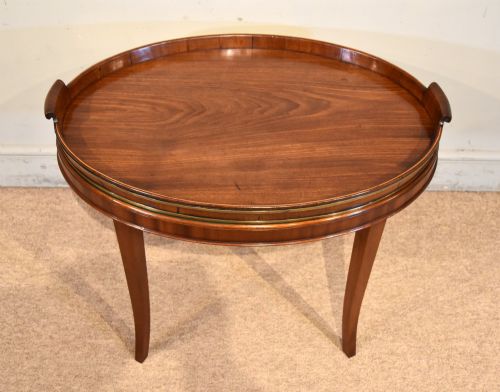
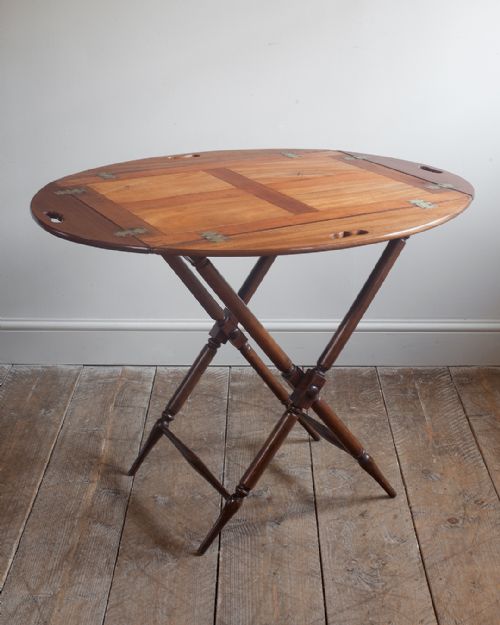
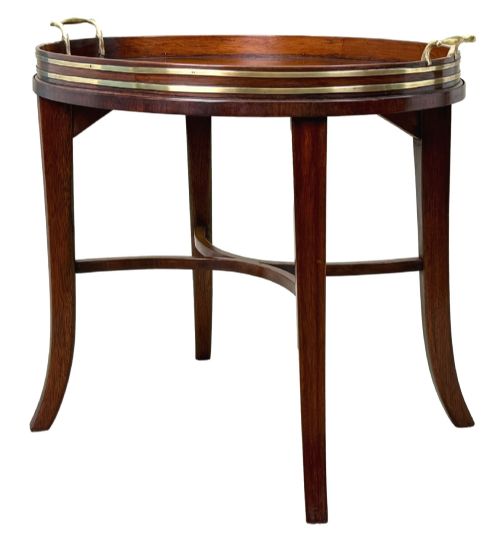
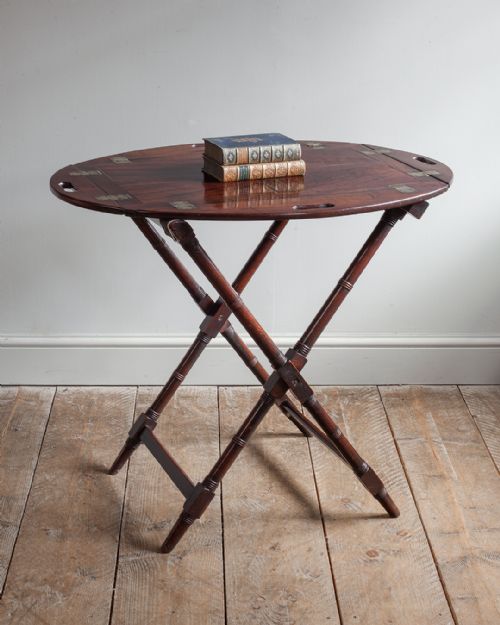
A georgian oval tray table combines a removable serving platter with a folding or fixed wooden stand, forming a portable surface once used by domestic staff for clearing tea or silver. These pieces appear primarily as mahogany butler trays from the eighteenth century and the regency period, often featuring shaped galleried rims with hand-cut handholds. Buyers encounter both period originals on folding stands and later nineteenth-century adaptations converted into coffee tables.
The form spans straightforward timber surfaces to elaborately decorated examples incorporating satinwood, marquetry, or painted neo-classical scenes. While some listings present standalone trays, the complete tables unite the tray top with a matching wooden stand designed to collapse when not in use. Later variations from the Edwardian era adopt lighter woods and delicate inlay work while retaining the traditional oval silhouette.
Materials and construction
Makers built these tables predominantly from solid mahogany, frequently utilising Cuban mahogany for its deep grain and substantial weight, alongside contrasting satinwood for decorative inlay borders. Trays often incorporate raised wooden galleries fixed around the perimeter, sometimes secured with brass bound decoration or corner hinges to allow the sides to fold flat.
Stands were constructed from matching timbers with hinged cross-framing that allowed the entire unit to be packed away efficiently after service. Papier-mache surfaces, exemplified by the work of Henry Clay, introduced moulded paper pulp finished with lacquer and gold leaf as an alternative to timber.
Henry Clay patented his weather-resistant papier-mache in the eighteenth century, giving rise to glossy trays tough enough to carry heavy silver teapots without flinching.
Distinctions in quality
Quality rests in the selection of the timber grain, the crispness of the moulded gallery edges, and the integrity of the joinery connecting the tray base to its frame. Superior examples display carefully matched flame mahogany veneers and finely fitted handholds that demonstrate patient hand-tooling.
The sophistication of decorative elements, such as intricate marquetry inlay, hand-painted neo-classical scenes, or substantial brass binding, separates utilitarian serving pieces from high-status furniture designed for formal drawing rooms.
Henry Clay
The Georgian Oval Tray Table Glossary
- Butler tray
- A portable wooden tray with a raised gallery rim, designed to sit upon a folding stand for serving drinks or meals. These versatile pieces became central to eighteenth-century domestic service before transitioning into permanent living room furniture.
- Gallery rim
- A raised wooden border surrounding the edge of a tray to prevent items from sliding off during transit. These rims often feature integrated cut-out handles at each end.
- Papier-mache
- A composite material made from paper pulp mixed with glue and resin, pressed in moulds and cured to form a hard, smooth surface suitable for painting and lacquering.
Georgian Oval Tray Table: Frequently Asked Questions
What is a butler tray table?
A butler tray table consists of a removable wooden tray resting on a collapsible stand, originally used for serving and clearing refreshments.
Over time, many of these trays found permanent homes on fixed bases to serve as functional coffee or occasional tables in modern interiors.
How do I spot a Georgian tray table?
Georgian examples typically feature solid mahogany construction with raised gallery edges, hand-cut handholds, and pegged joinery that predates modern metal screws.
Examining the underside reveals the tool marks and timber shrinkage consistent with eighteenth-century cabinet making practices.
Are these tables sturdy enough for daily use?
Period tray tables were built to handle the heavy loads of china, silver, and glassware required during formal domestic service.
While original folding stands benefit from careful handling, solid wood construction ensures they easily support books, drinks, and lamps in a contemporary room.
What is the difference between a tray and a tray table?
A tray is simply the portable serving platter itself, whereas a tray table includes both the platter and its dedicated support stand.
Many listings distinguish between standalone trays and complete combinations paired with folding or fixed bases.