


Oval Walnut Loo Table
When you search for an oval walnut loo table, you enter the distinctive world of nineteenth-century multifunctional dining and centre tables.
Oval Walnut Loo Table
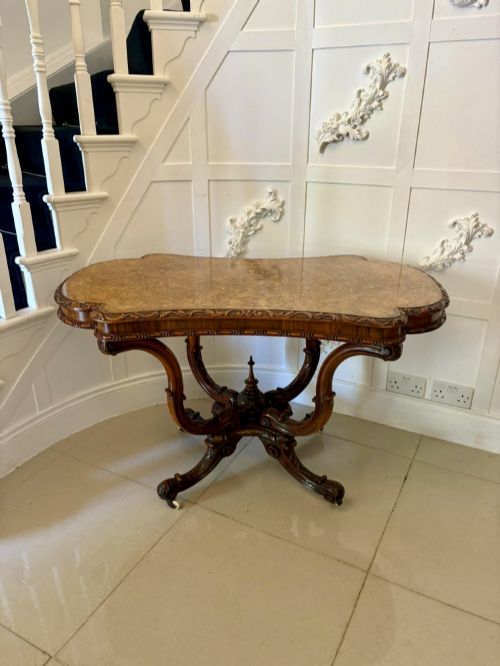
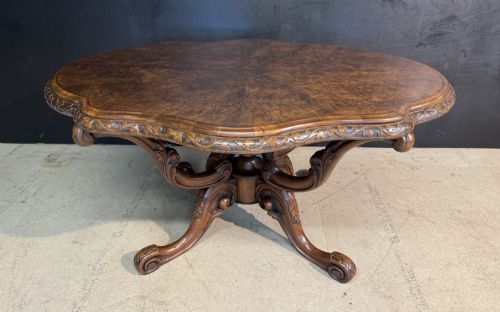
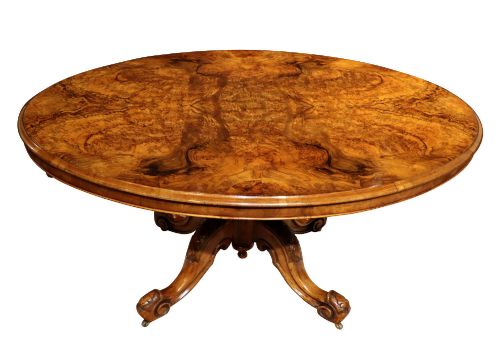
An oval walnut loo table is a nineteenth-century English piece designed primarily for domestic use during the Victorian period. These tables frequently appear in Victorian, Victorian Revival, and Edwardian styles, spanning the mid to late nineteenth century from the 1850s through to the 1890s.
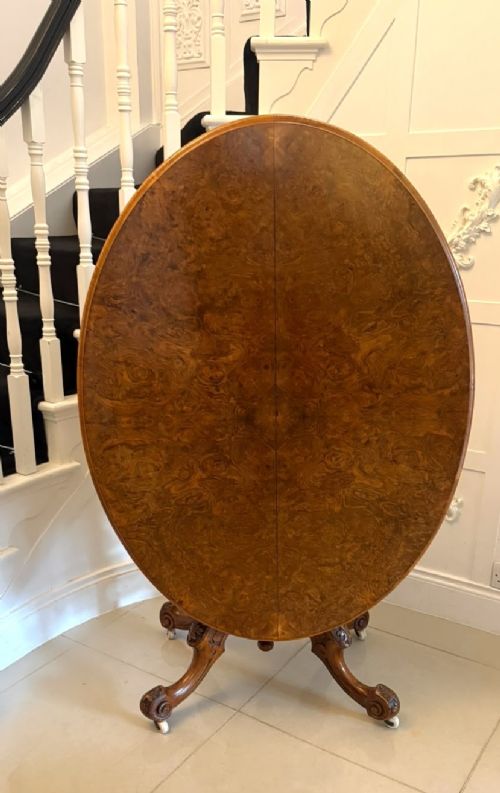
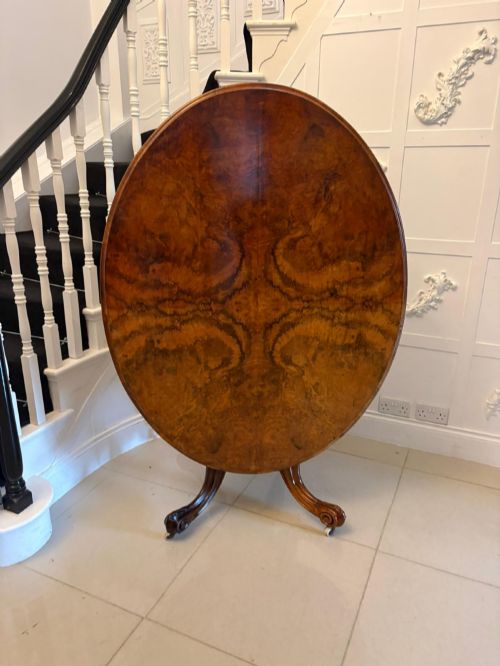
The form functions primarily as a centre table, breakfast table, or occasional dining table, often seating between four and six people. Many examples feature a tilt top mechanism that allows the surface to pivot upright when not in use.
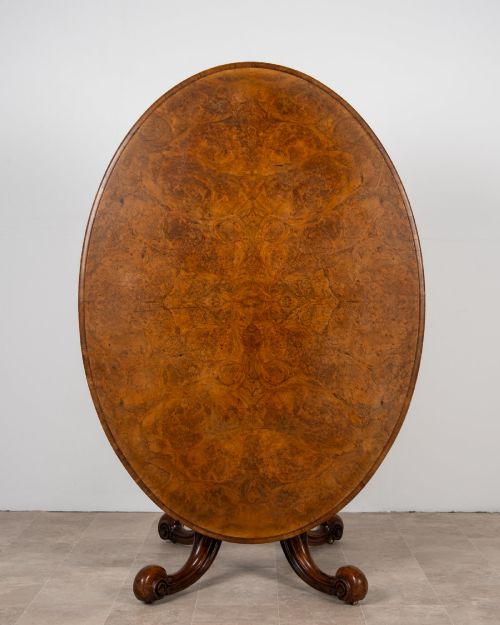
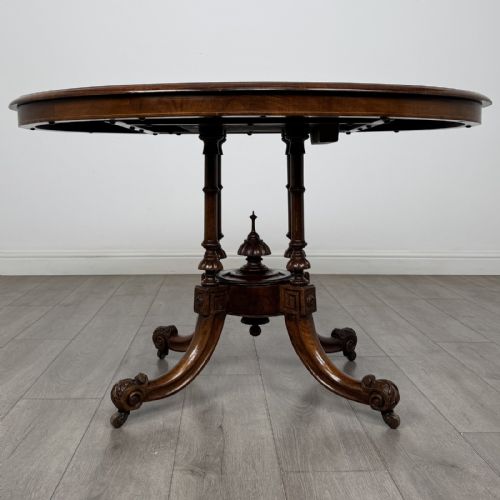
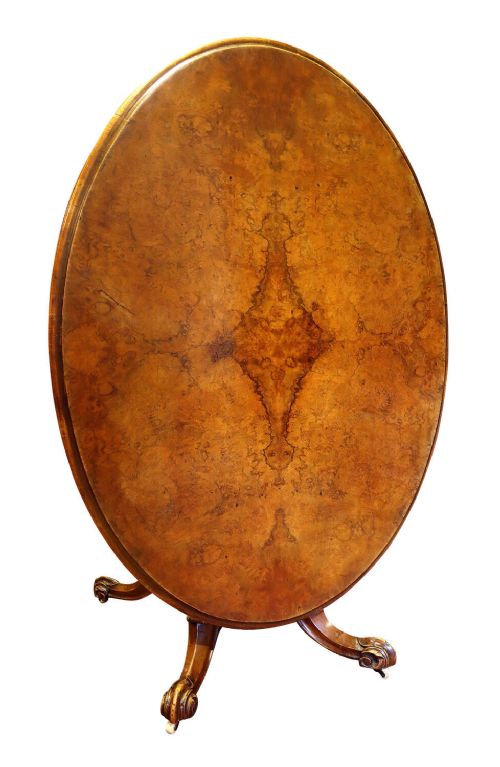
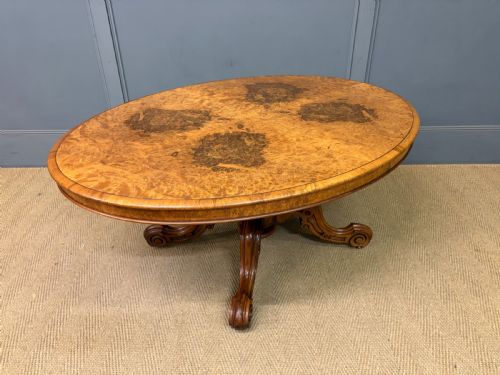
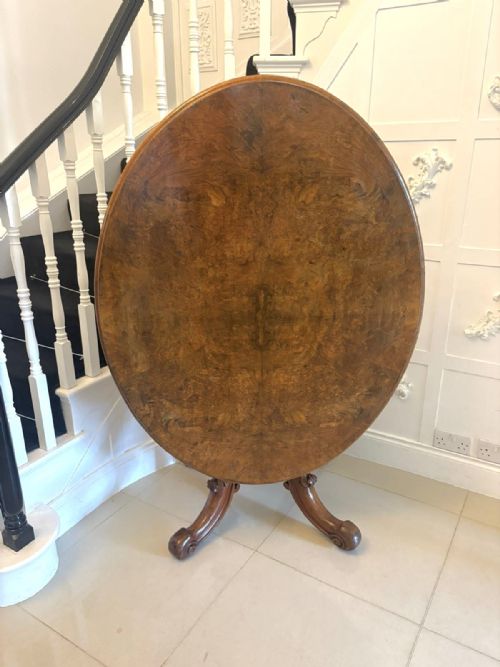
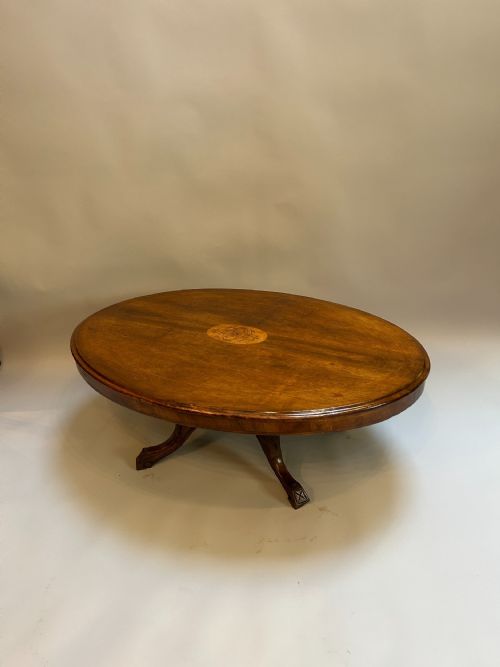
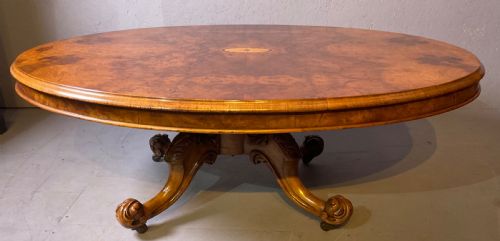
The physical build centres on an oval shape supported by various bases, including carved quadrapod legs, pedestal columns, and freestanding basket bases. These pieces serve as prominent centrepieces within nineteenth-century reception rooms.
How they were made
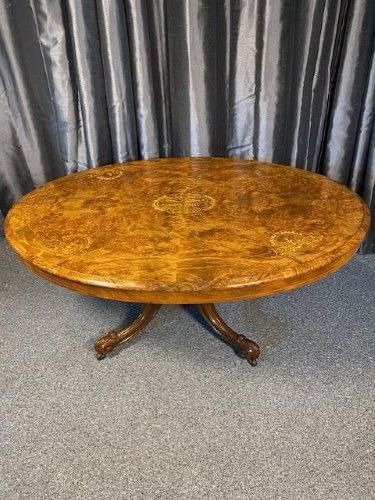
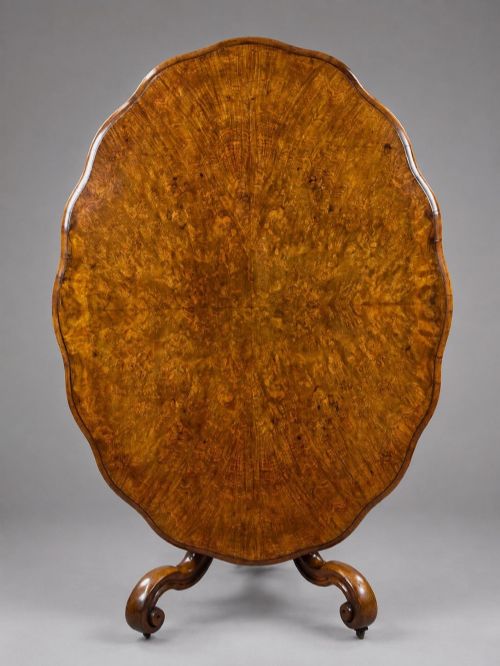
Cabinet makers utilised solid walnut and decorative veneers, particularly burr walnut, applied over secondary timbers to create highly figured table tops. This technique highlights the natural swirling grain patterns inherent in walnut growths.
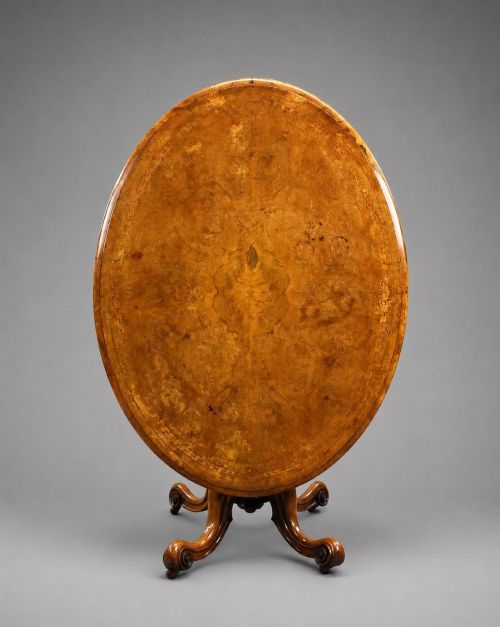
Surface decoration frequently incorporates boxwood inlay, marquetry inlay, and general wood inlay to produce geometric or floral motifs along the borders. Brass components often appear in the operational hardware and castors beneath the quadrapod or pedestal bases.
The structural framing relies on hand carving, particularly evident on the cabriole legs and central pillars of Victorian examples. Mechanisms such as scissor action hinges and snap top catches enable the tilting function.
Oval Walnut Loo Table Retail Price Guide 2026
Typical asking prices for oval walnut loo table among the pieces listed under this phrase on Sellingantiques today, from the lower quarter to the upper quarter. They describe what is for sale here now, not the wider market.
Victorian households utilised the tilting mechanism so enthusiastically that many table tops retain their original brass locking catches intact.
What varies in quality
The choice of surface veneer determines much of the visual appeal, with tightly figured burr walnut commanding greater presence than plain timber. The intricacy and precision of the marquetry and boxwood inlay further distinguish finer examples.
Carving execution on the pillar and quadrapod base shows the hand of the maker, where deep, crisp relief work separates standard production from superior craftsmanship. The stability of the tilt top mechanism and the neatness of the joinery reflect the original maker's skill.
Gillows·Edwards & Roberts
The Oval Walnut Loo Table Glossary
- Burr walnut
- A veneer sliced from the knotty growths of a walnut tree, yielding complex and highly decorative grain patterns. This material forms the primary visual surface on many Victorian tables.
- Tilt top
- A pivoting mechanism allowing the table top to rotate into a vertical position for storage or space-saving against a wall. The mechanism relies on a brass or iron catch to secure the surface horizontally.
- Marquetry inlay
- Decorative patterns formed by fitting small pieces of contrasting veneer into a prepared recess on the table top. These designs often feature floral or scroll motifs.
- Quadrapod base
- A heavy, four-way branched pedestal base that supports the central column of the table. This configuration provides stability for the large oval top.
- Centre table
- A freestanding piece finished on all sides to sit in the middle of a room rather than against a wall. These tables often double as dining or breakfast surfaces.
Oval Walnut Loo Table: Frequently Asked Questions
What is a loo table used for?
A loo table served as a multi-purpose nineteenth-century household table used for morning breakfast, evening gatherings, and social card games.
The tilting top allowed the large oval surface to be folded upright and pushed to the side of the room when extra floor space was needed.
How do you tilt the top?
The top pivots on a hinge mechanism operated by releasing a wooden or brass catch beneath the surface. This allows the heavy walnut top to swing safely into a vertical position.
Securing the catch locks the table flat for dining or display use.
How many people can sit at one?
Most oval walnut loo tables accommodate between four and six diners comfortably, depending on the overall length of the oval top. The absence of fixed corner legs on pedestal bases helps maximise legroom.
Smaller occasional versions suit four seats, while larger breakfast variants extend seating capacity.