



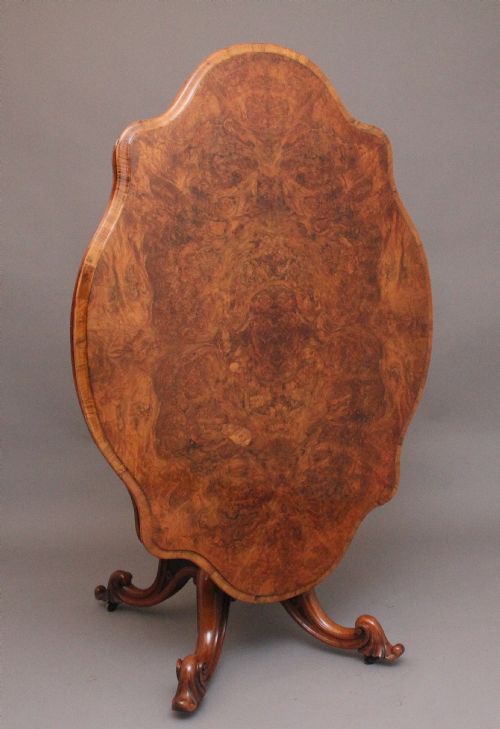


Oval Top Tripod Table
These oval top tripod table pieces combine a balanced three-legged pedestal base with a turned or tilted top for versatile placement.
Oval Top Tripod Table
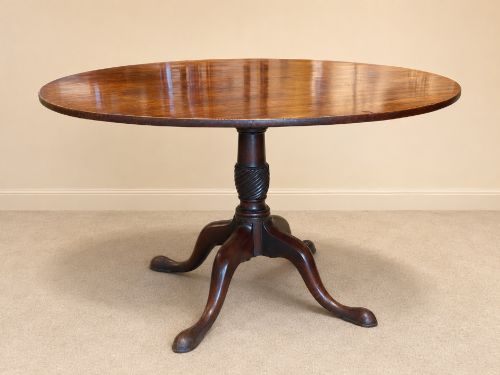
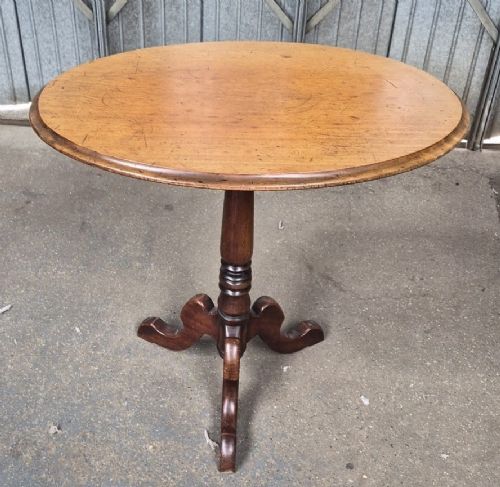
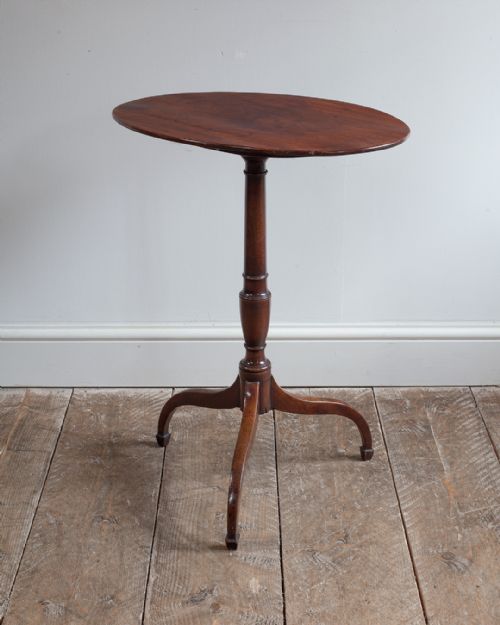
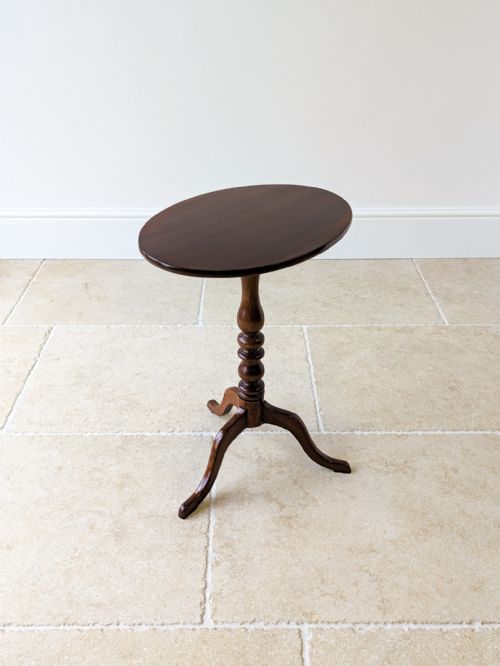
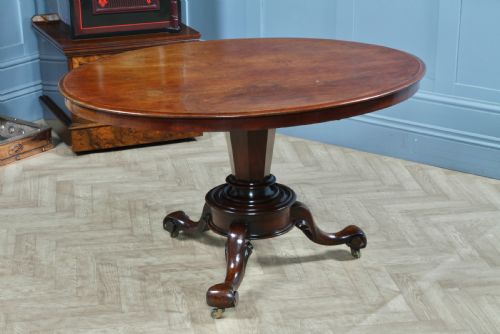
An oval top tripod table stands upon a central pedestal supported by three splayed legs, offering a compact footprint suited to smaller spaces. These pieces appear across the eighteenth and nineteenth centuries, spanning Georgian, Victorian, and Edwardian periods.
The form functions in domestic interiors as a wine table, lamp table, occasional table, or tilt-top dining centre table. Mahogany examples dominate the record, alongside burr walnut, rosewood, amboyna, and oak variations.
Buyers encounter numerous compact wine tables and occasional tables alongside larger centre and dining formats. Many retain tilting mechanisms designed to save space when pushed against a wall.
How they were made
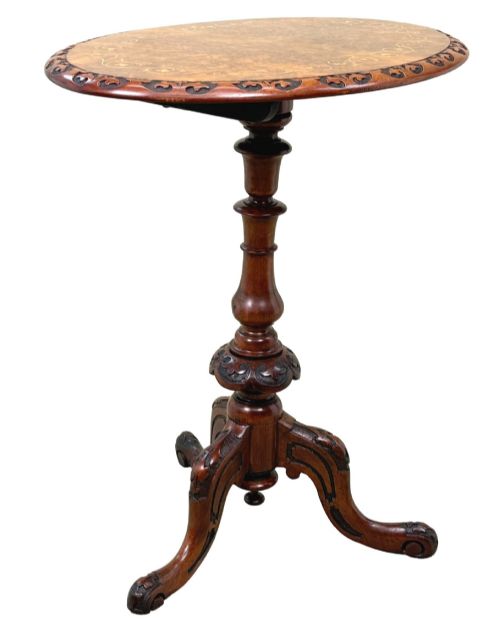
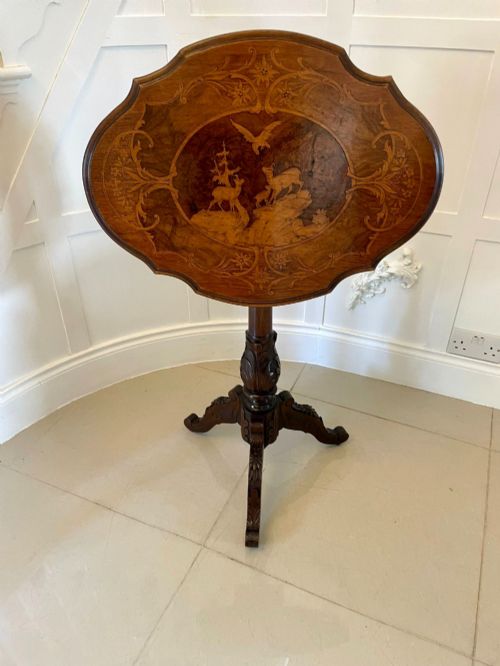
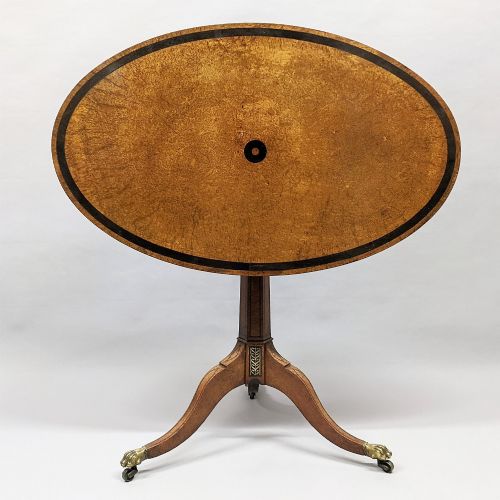
Cabinet makers utilised solid timber and veneers such as flame mahogany, burr walnut, and rosewood applied to core woods. Tops often feature figured grain patterns, raised pie crust edges, or inlaid marquetry details.
The pillar and tripod base construction requires precise joinery to unite the central column with three splayed legs. Many examples incorporate a birdcage or tilt-top catch mechanism allowing the top to pivot upright.
Secondary ornamentation includes hand carving along the pillar or borders, brass fittings, and painted surfaces on specific continental or export items.
Oval Top Tripod Table Retail Price Guide 2026
Typical asking prices for oval top tripod table among the pieces listed under this phrase on Sellingantiques today, from the lower quarter to the upper quarter. They describe what is for sale here now, not the wider market.
Mahogany and burr walnut are the most frequently recorded timbers across both nineteenth and eighteenth-century listings.
What varies in quality
The selection of timber grain largely determines visual impact, with figured mahogany, burr walnut, and amboyna representing the higher end of the range. Figured veneers and matched grain patterns display greater craftsmanship than plain timber surfaces.
Structural integrity in the tripod base and pillar connection dictates longevity, particularly in tilt-top designs where the mechanism experiences daily movement. Clean joinery and balanced weight distribution ensure the table remains steady on its three feet.
Edwards & Roberts
The Oval Top Tripod Table Glossary
- Tripod base
- A supporting structure consisting of three splayed legs radiating from a central pillar. This design provides stability on uneven domestic floors.
- Tilt-top
- A hinged tabletop mechanism that allows the surface to pivot into a vertical position. This function enabled easier storage against walls when the table was not in use.
- Pie crust edge
- A raised, carved ornamental rim shaped in small undulating curves around the perimeter of the tabletop. The profile resembles pastry work on traditional baking.
- Birdcage
- A timber framework beneath the tabletop that allows the surface to both rotate and tilt. It connects the top to the central pillar through a small box-like construction.
- Occasional table
- A small, movable table intended for specific, intermittent tasks such as holding a lamp, drink, or book. The designation covers various formats from the Georgian and Victorian eras.
Oval Top Tripod Table: Frequently Asked Questions
What was an oval top tripod table used for?
These pieces served multiple domestic purposes ranging from holding wine glasses and lamps to acting as small dining or centre tables. Their light construction allowed servants to move them easily around a room as needed.
Tilt-top variants also functioned as decorative display surfaces when folded upright against a wall between uses.
How do I identify a Georgian period piece?
Georgian examples generally utilise solid mahogany with restrained carving on the pillar knees or pad feet. The timber exhibits a deep, rich patina developed over centuries of handling.
Construction details often include pegged joints and simpler turning on the central column compared to later Victorian iterations.
Why do some tables have tilting tops?
The tilting mechanism saved valuable floor space in period drawing rooms and parlours when the tables were not occupied. Turning the surface vertical allowed multiple tables to line the perimeter of a room.
This practical feature required precise counterbalancing within the birdcage and pedestal design to prevent the top from wobbling.
How should I care for a polished wood surface?
Keep wooden tables away from direct heat sources and strong sunlight to prevent the timber and veneers from drying out or fading. Regular dusting with a soft, dry cloth preserves the finish.
Apply traditional beeswax periodically to nourish the grain without building up synthetic residues that dull the patina.