




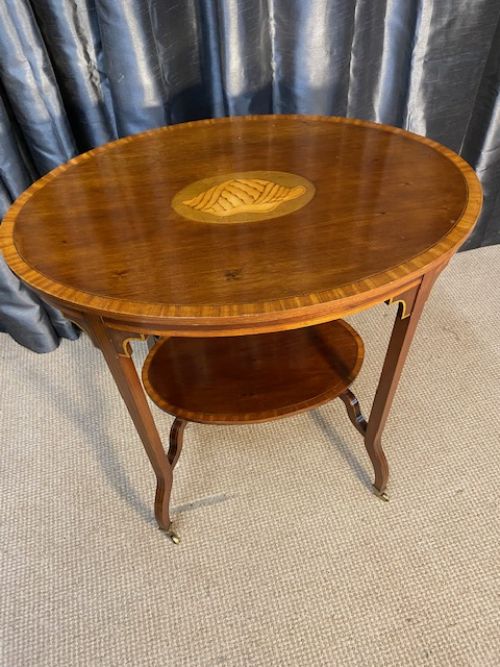


Oval Tier Accent Table
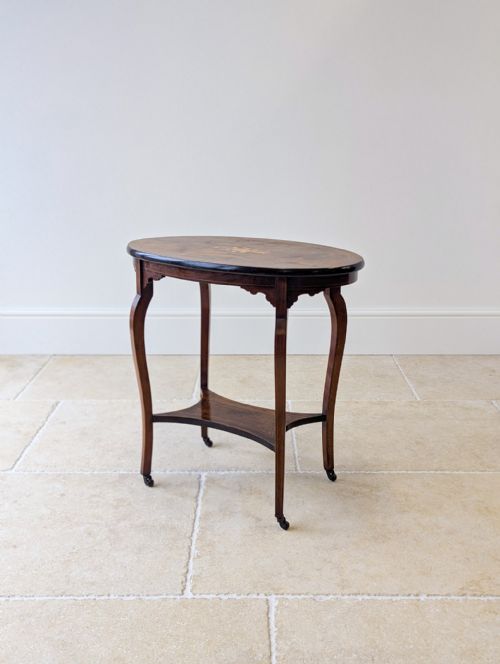
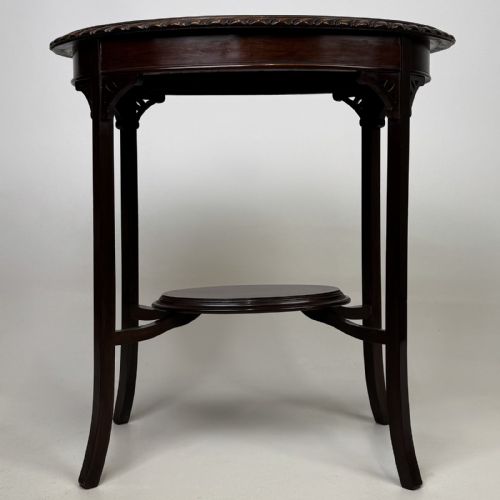
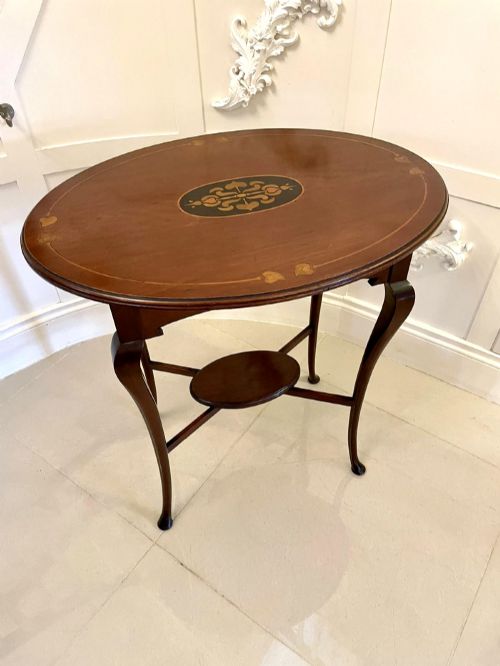
An oval tier accent table offers compact surface space and tiered display, mostly found in Edwardian and Victorian mahogany or walnut designs.
Oval Tier Accent Table
When you search for an oval tier accent table, you find a variety of occasional, side, and lamp tables, alongside etageres and whatnots. These pieces provide functional surfaces and stacked shelving for display.
The pieces on this page lean heavily towards the Edwardian and Victorian periods, with examples stretching from the nineteenth century into the interwar nineteen-twenties and nineteen-thirties.
Mahogany and walnut form the backbone of the selection, frequently enhanced by satinwood, rosewood, and kingwood timbers, alongside inlaid decoration and brass mounts.
Materials and Technique
Cabinetmakers utilised solid timbers and selected veneers such as walnut, mahogany, and amboyna to construct these multi-level frames. Surfaces frequently incorporated satinwood inlay, marquetry, and delicate stringing.
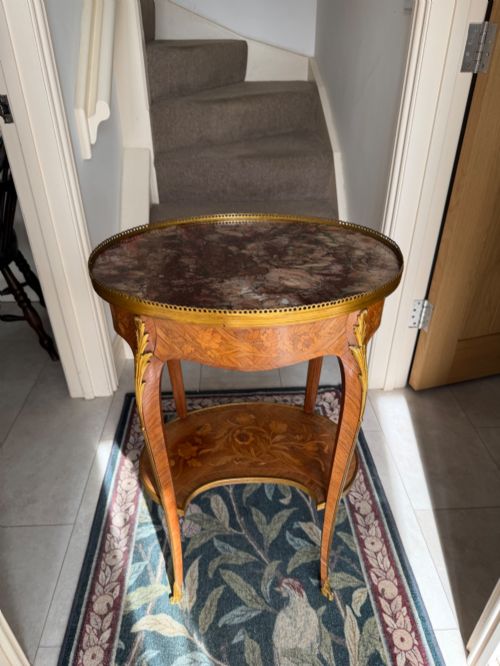
Structural embellishments often included cast brass mounts, gallery rails, and hand-carved foliate details upon legs and tiers. Polished finishes highlighted the natural grain patterns of the figured woods.
Oval Tier Accent Table Retail Price Guide 2026
Typical asking prices for oval tier accent table among the pieces listed under this phrase on Sellingantiques today, from the lower quarter to the upper quarter. They describe what is for sale here now, not the wider market.
The listings span from the nineteenth century through the Edwardian era into the nineteen-thirties, dominated by mahogany and walnut.
Gradations in Quality
The caliber of an oval tier accent table rests on the crispness of its inlay and the depth of figure within the mahogany, walnut, or rosewood veneers. Finely executed marquetry and precise brass mounts distinguish the finer workshops from standard production.
Structural integrity across multiple tiers and stability within the leg joints separate robust pieces from those showing wear. The integration of hand-carved elements and balanced proportions elevates certain examples above simpler occasional tables.
Haentgos Freres Paris
The Oval Tier Accent Table Glossary
- Etagere
- A piece of furniture consisting of a set of open shelves for displaying small objects. These tiered stands appear frequently in nineteenth and early twentieth-century French and English designs.
- Marquetry
- Decorative woodwork in which delicate pieces of veneer are fitted into a ground to form geometric or pictorial designs. This technique frequently ornaments the top surfaces and tiers.
- Whatnot
- An open multi-shelved piece of furniture used for storing or displaying ornaments. Victorian examples often feature multiple oval tiers supported by slender uprights.
- Satinwood
- A durable, yellowish wood native to India and Ceylon, prized for its lustrous grain. It is often utilised for contrasting inlay work on dark mahogany tables.
Oval Tier Accent Table: Frequently Asked Questions
What is an oval tier accent table used for?
These pieces serve primarily as side, lamp, or window tables where surface area and display space are required in a compact footprint. The additional tiers allow for the placement of lamps, books, and decorative objects without crowding a room.
Historically, they filled similar functions in Victorian and Edwardian drawing rooms, acting as movable furniture that adapted easily to shifting social layouts.
How do I identify an Edwardian table?
Edwardian tables generally display lighter proportions than their Victorian predecessors, frequently combining mahogany with delicate satinwood inlay or Sheraton Revival motifs. They date from roughly nineteen hundred to nineteen ten and often feature slender tapered legs.
Construction methods from this era also tend to rely more on factory-standardised mahogany veneer alongside traditional solid timber framing.
Are these tables solid wood or veneered?
Makers utilised both solid timbers and veneers depending on the desired visual effect and the period of manufacture. Walnut and mahogany tables often feature figured veneers on the top surfaces to create striking grain patterns.
Underframes and legs were typically fashioned from solid hardwoods to ensure stability across the multiple tiers.
Where were etageres placed?
Etageres and tiered stands typically stood against drawing room walls or beside seating areas where ornaments and small curiosities could be readily viewed. Their multi-level design maximised vertical display space in smaller Victorian and Edwardian interiors.
They functioned both as decorative centrepieces and as practical storage for everyday items.