


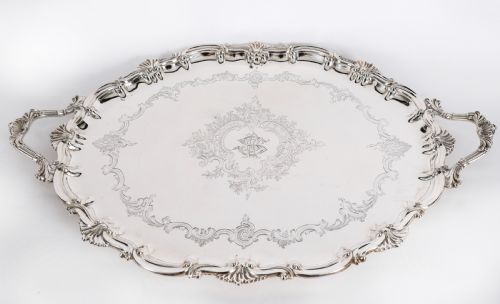

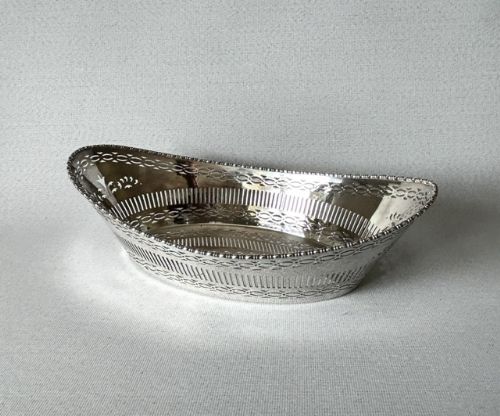


Oval Silver Serving Tray
An oval silver serving tray brings timeless elegance to drinks, tea, and formal dining.
How they were made
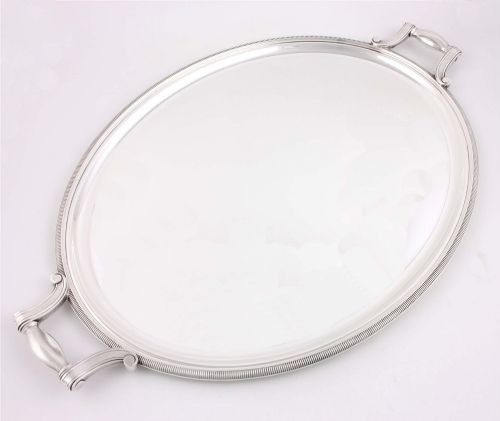
Silversmiths constructed solid sterling silver trays by hammering and shaping sheets of precious metal, whilst plated variants utilised base metals, copper, or electroplated nickel silver coated in a layer of silver. Manufacturers applied techniques like EPNS during the nineteenth and twentieth centuries to democratise luxury dining wares.
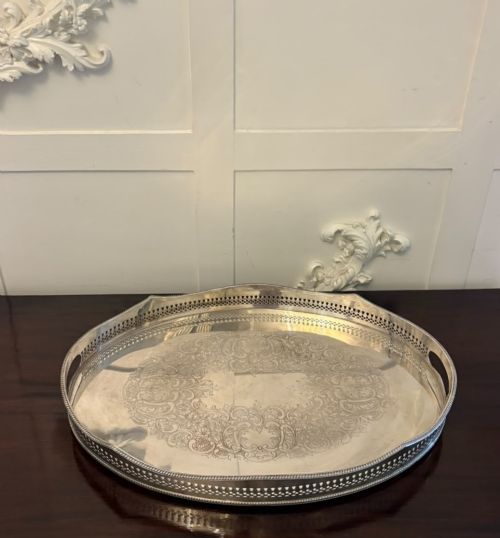
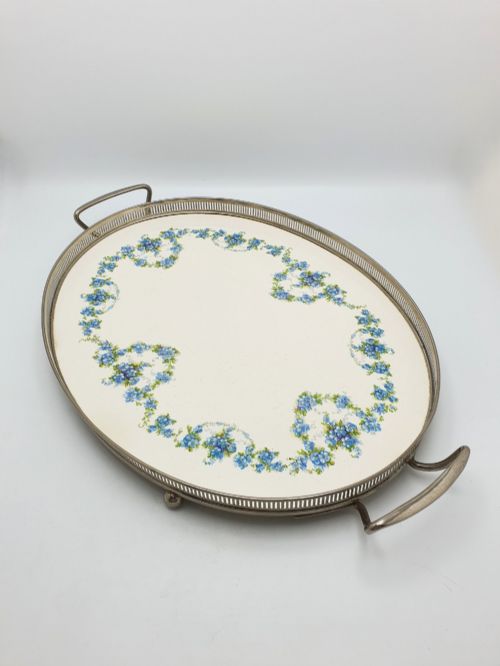
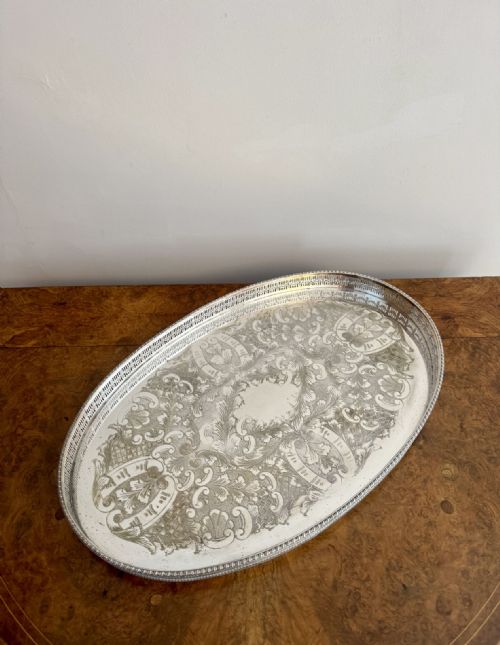
Decoration relied heavily on manual engraving, intricate embossed scrolls, and pierced galleries soldered directly to the rim. Workshops also incorporated secondary materials such as seasoned oak bases or fitted ceramic panels to add structural rigidity and textural contrast.
What varies in quality
The calibre of an oval silver serving tray rests upon the crispness of its hand-engraved motifs and the structural integrity of applied mounts and handles. Superior examples maintain a heavy gauge of metal that resists bending under the weight of decanters and glassware.
Maker reputation heavily influences distinction, with pieces originating from renowned houses or workshops commanding greater attention for their superior finishing and design balance. Furthermore, the preservation of original silver plating or unblemished sterling surfaces dictates the overall desirability of each piece.
Several trays managed to travel as far as a Chicago World's Fair before finding their way back onto the modern marketplace.
Mappin & Webb·Christofle·Thomas Bradbury & Sons·Walker & Hall·Harrison Bros·Martin Hall·Elkington & Co·Tiffany & Co·Asprey·Roberts & Belk
The Oval Silver Serving Tray Glossary
- Gallery tray
- A serving tray featuring an elevated, pierced, or pierced-and-engraved metal railing around its perimeter designed to prevent items from sliding off during transport.
- EPNS
- Electroplated Nickel Silver, a composite material created by depositing a thin layer of pure silver onto a nickel silver base metal via electrolysis.
- Salver
- A flat serving tray typically used for presenting glasses, letters, or calling cards, often synonymous with smaller serving trays.
- Engine turned
- A decorative mechanical technique that etches precise, intricate geometric patterns into the metal surface using a lathe.
- Hallmark
- An official stamp or series of marks applied to precious metals indicating the standard of purity, the maker, and the assay office of origin.
Oval Silver Serving Tray: Frequently Asked Questions
What were oval silver serving trays used for?
These trays served wealthy households primarily for carrying tea services, decanters, cocktails, and platters between rooms. They were also utilised to present calling cards or host formal dining courses.
Over time, their role shifted from strictly utilitarian kitchenware to decorative display items that sat upon sideboards or cocktail tables when not actively hosting guests.
How do I clean an antique silver tray?
Maintenance requires mild, non-abrasive silver polish applied gently with a soft cloth to avoid stripping thinner layers of silver plate. Regular dusting with a microfibre cloth prevents tarnish build-up without resorting to harsh chemical dips.
Avoid submerging trays that incorporate wooden bases or ceramic centres into water, as moisture can warp the timber or damage the mounting joints.
How can I tell Victorian trays from Edwardian ones?
Victorian pieces often lean towards heavier, highly ornate embellishments featuring deep embossing, elaborate scrolling, and floral motifs. They reflect the opulent aesthetic of the nineteenth century.
Edwardian trays typically embrace lighter proportions, sometimes incorporating neoclassical motifs, geometric piercing, or restrained gallery railings influenced by changing twentieth-century tastes.
Are silver plated trays worth collecting?
Silver plated trays produced by esteemed historic makers offer durable quality and visual appeal without the higher cost associated with solid sterling silver. Many collectors prize them for their artistic craftsmanship and historical association with major manufacturing houses.
Evaluating a plated tray depends heavily on the thickness of the original plating, maker renown, and the clarity of decorative engraving.