



Oval Ruby Dress Ring
An oval ruby dress ring brings together vibrant red stones and diamond brilliance across periods from the Victorian era to the mid-twentieth century.
Oval Ruby Dress Ring
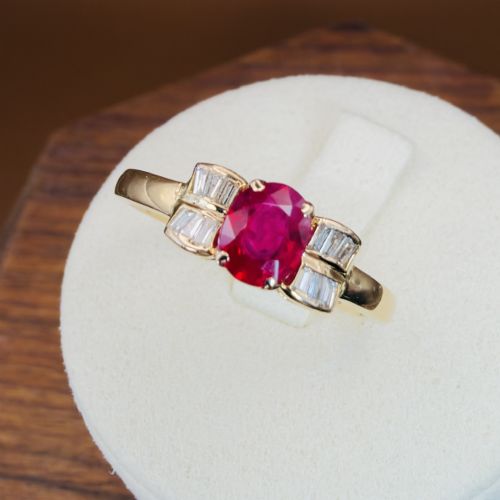
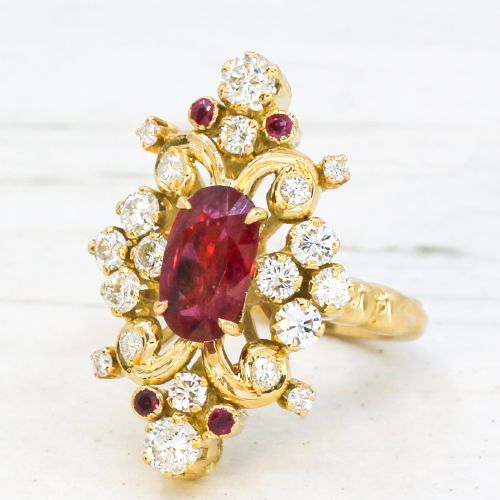
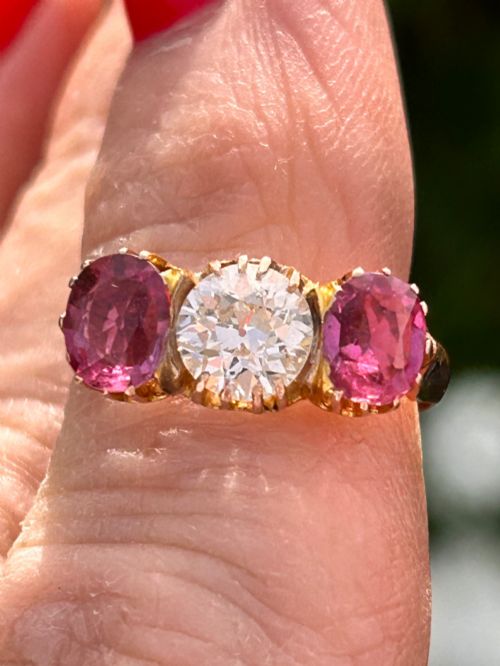
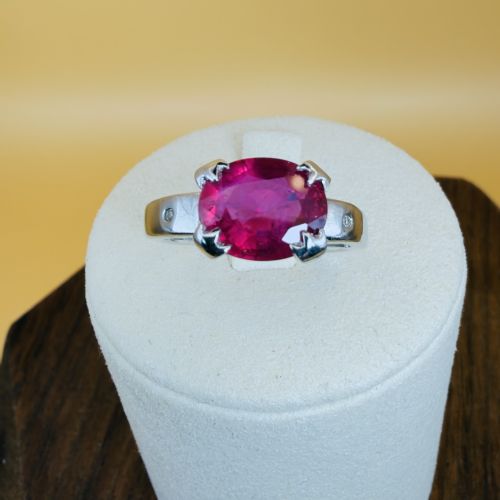
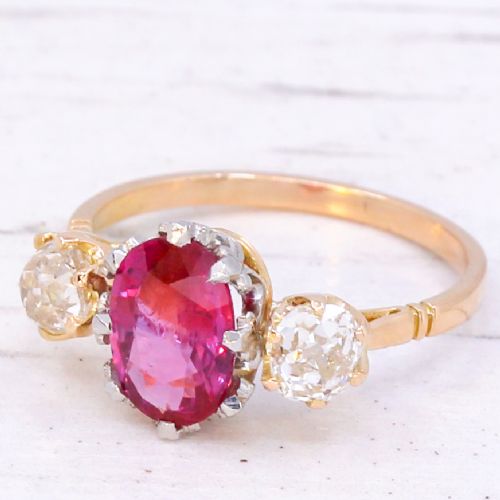
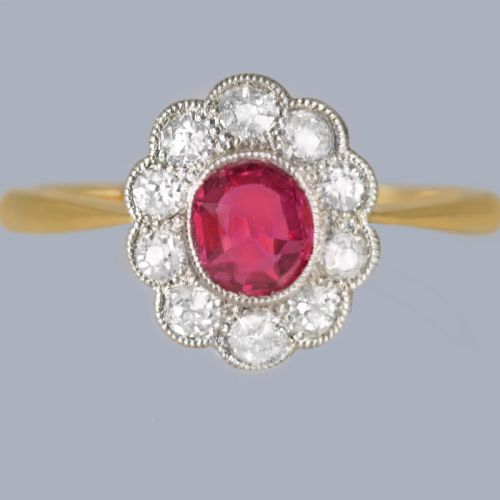
An oval ruby dress ring showcases a central red corundum shaped in a soft curve, typically surrounded by diamonds or paired in cluster, trilogy and halo formats. Buyers seek these pieces for their striking colour contrast and historical character, spanning Victorian, Edwardian, Art Deco and mid-century aesthetics.
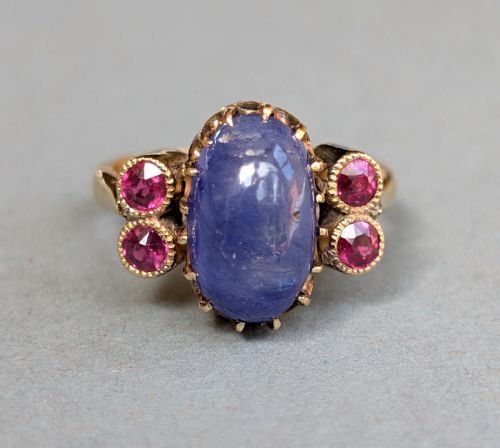
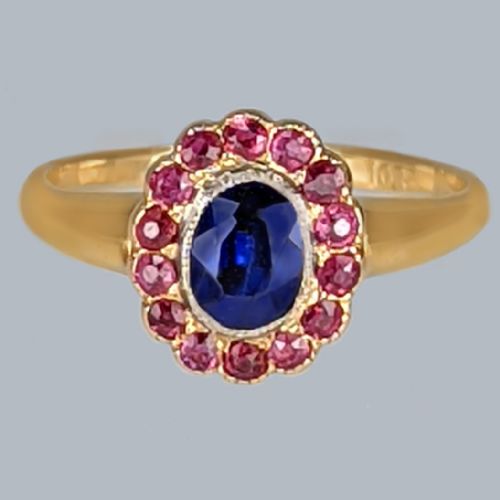
The pieces appearing on this page range from delicate 1920s solitaires and 1930s geometric mountings to substantial 1950s clusters and 1960s statement designs. Cluster configurations dominate the selection, often pairing oval rubies with brilliant or old cut diamonds in yellow gold, white gold or platinum settings.
How they were made
Goldsmiths utilised 18ct yellow gold, 18ct white gold and platinum to construct durable mountings that securely hold central oval rubies and surrounding diamond accents. Platinum gained particular favour in Art Deco and mid-century pieces for its strength in delicate prong and millegrain settings.
Stones are shaped into oval, cushion, baguette and old cuts, then set by hand into cluster, halo, trilogy and solitaire arrangements. Gemmological reports frequently accompany these rings to document stone origins and treatment details.
Oval Ruby Dress Ring Retail Price Guide 2026
Typical asking prices for oval ruby dress ring among the pieces listed under this phrase on Sellingantiques today, from the lower quarter to the upper quarter. They describe what is for sale here now, not the wider market.
Listings span the Victorian era, Edwardian period, 1920s, 1930s, 1940s, 1950s, 1960s and late 20th century.
What varies in quality
Quality rests in the origin, saturation and treatment status of the ruby, alongside the cut and clarity of accompanying diamonds. Unheated Burmese stones and natural rubies with certified reports distinguish higher tier examples from synthetic or treated alternatives.
The precision of the metalwork, whether hand-carved Edwardian filigree or crisp Art Deco geometry, defines the craftsmanship. Heavier carat weights in both rubies and diamonds elevate the stature of individual pieces within each period.
The Oval Ruby Dress Ring Glossary
- Cluster ring
- A ring featuring a central stone surrounded by a border of smaller stones, typically diamonds framing an oval ruby.
- Trilogy
- A three-stone setting representing the past, present and future, often combining a central ruby with side diamonds.
- Old cut diamond
- A hand-faceted diamond cut popular in antique jewellery, known for smaller tables and broader facets.
- Millegrain
- A decorative technique featuring tiny raised metal beads along the edges of a setting.
- Unheated ruby
- A natural ruby that has undergone no thermal enhancement to improve its colour or clarity.
Oval Ruby Dress Ring: Frequently Asked Questions
How do I date an oval ruby dress ring?
Dating relies on stylistic clues such as geometric Art Deco lines, Edwardian millegrain work, or heavier mid-century cluster proportions. Hallmarks and specific setting techniques also help place a ring within Victorian, vintage or antique periods.
Material choices like platinum combined with yellow or white gold further indicate the manufacturing decade.
What is a cluster ring?
A cluster ring groups a prominent central gemstone, such as an oval ruby, with a border of smaller accent stones. This arrangement maximises visual impact and light reflection.
Diamonds are the most common framing stones found in these historical designs.
Are these rubies natural?
The selection includes natural rubies, unheated Burmese stones, and occasional synthetic variants as recorded in specific item descriptions. Gemmological reports often accompany pieces to verify stone origin and treatment status.
Checking individual listings provides precise details for each ring.
How do I care for a ruby ring?
Rubies rank high on the hardness scale, making them durable for regular wear when set securely in gold or platinum. Cleaning requires warm soapy water and a soft brush to maintain stone brilliance.
Avoiding harsh chemicals and professional prongs checks preserve the setting over time.