



Oval Marquetry Tea Table
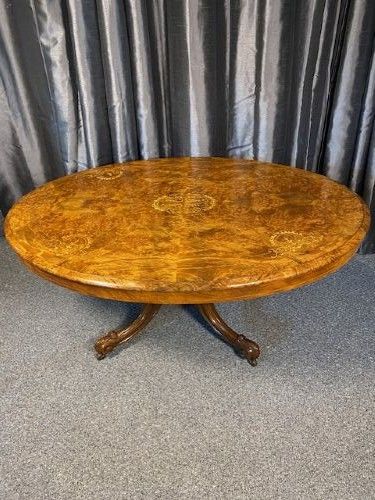
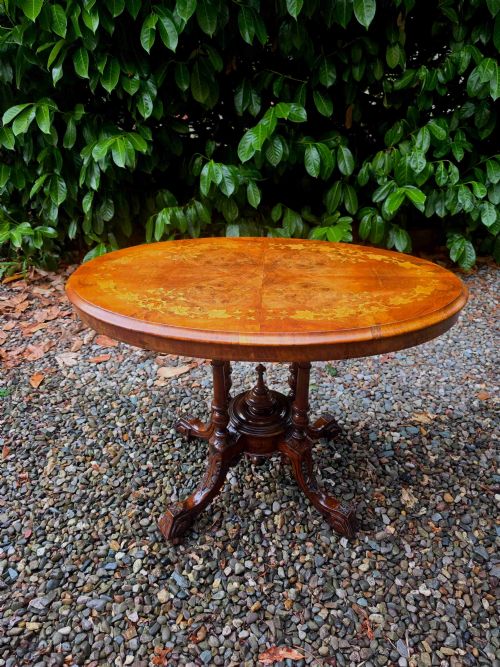
When you choose an oval marquetry tea table, you select a refined piece of furniture that brings intricate floral patterns and curved timber into a room.
Oval Marquetry Tea Table
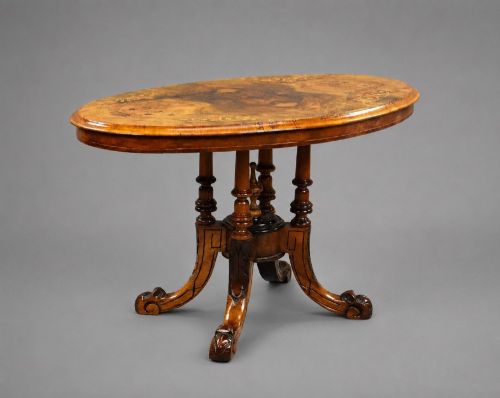
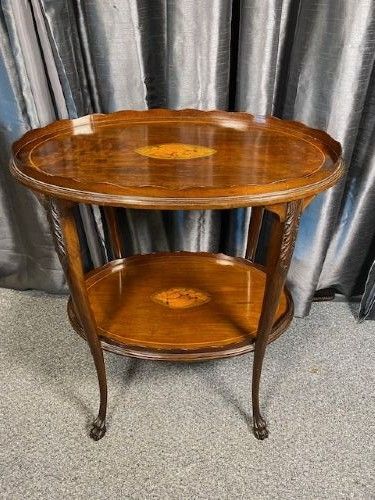
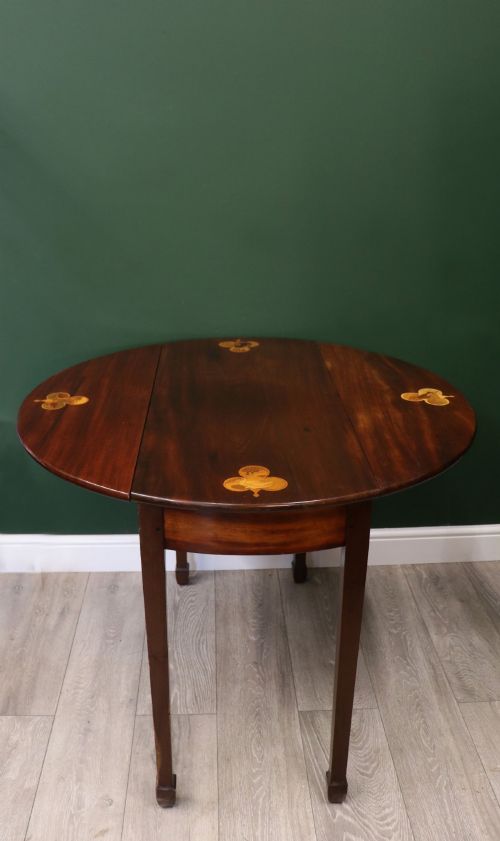
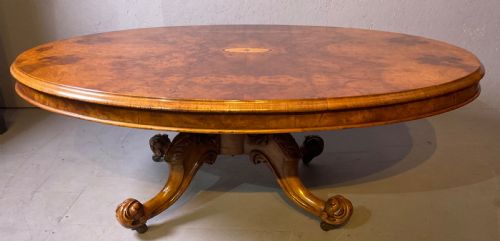
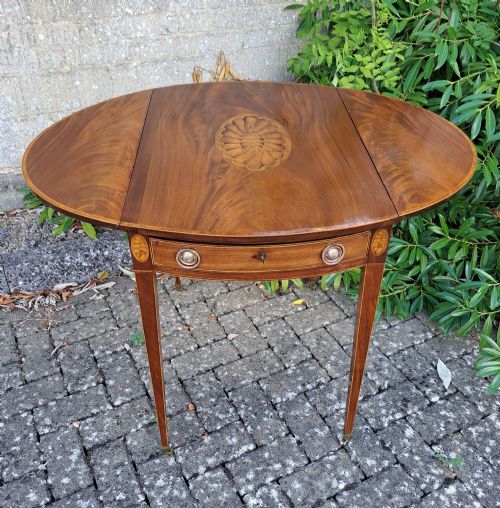
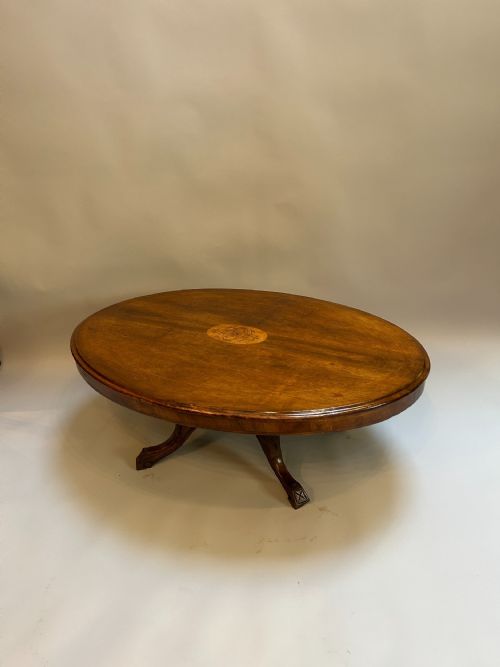
The selection ranges from mid-nineteenth century burr walnut examples featuring hand-carved bases and drop leaves to lighter satinwood and mahogany Edwardian iterations. Buyers frequently encounter forms labelled as occasional tables, two-tier étagères, and Pembroke tables that share this characteristic curved outline and decorative surface.
Originating predominantly from the nineteenth and early twentieth centuries, these tables reflect shifting interior fashions from heavy Victorian timber to lighter revival styles. They function today as practical surface furniture while retaining the decorative marquetry panels that defined their original drawing room purpose.
Materials and construction
Cabinet makers utilised foundational hardwoods such as mahogany, walnut, and rosewood for the structural frames, legs, and table edges. Burr walnut and burr birch veneers provided highly figured, swirling grain patterns across the primary surface areas.
Marquetry decoration relied on contrasting timbers like satinwood and boxwood inlaid directly into the top surface to create pictorial or botanical motifs. Additional detailing often involved brass mounts, gilt bronze, and amboyna borders to frame the central wood panels.
Materials recorded across current pieces include mahogany, satinwood, burr walnut, rosewood, boxwood, and occasional bronze mounts.
Distinctions in quality
Quality rests heavily on the precision of the marquetry cutter and the selection of the veneer, where tighter grain figures in the burr walnut or satinwood indicate superior stock selection. The crispness of the hand-carved elements on the base and the integration of secondary timbers like boxwood demonstrate the maker's underlying skill.
Structural integrity reveals itself in the joinery of the oval top and the stability of the legs, whether configured as a tripod base, stretcher frame, or multi-tiered étagère. Tables that retain their original mounts, balanced proportions, and uncompromised surface patination command greater appreciation among collectors.
Gillows·Edwards and Roberts
The Oval Marquetry Tea Table Glossary
- Marquetry
- Decorative veneer work arranged in pictorial or geometric patterns using various coloured woods. This technique requires exceptional skill to fit contrasting timber pieces tightly together.
- Satinwood
- A durable, yellowish-brown timber with a lustrous sheen frequently used for fine stringing and cabinet veneers. It provides a bright, contrasting background for darker marquetry details.
- Pembroke table
- A small table featuring hinged drop leaves on two opposing sides. These versatile tables were developed in the eighteenth century for breakfast or tea service.
- Étagère
- A piece of furniture consisting of open shelves for displaying small objects or tea wares. Edwardian versions often incorporate oval top tiers with inlaid borders.
- Burr walnut
- Wood taken from the abnormal growth of a walnut tree, yielding complex, swirling grain patterns. It forms the primary decorative surface on many Victorian examples.
Oval Marquetry Tea Table: Frequently Asked Questions
What is an oval marquetry tea table used for?
These tables served historically in the drawing room for serving tea or displaying decorative objects. Today they function primarily as accent furniture, coffee tables, or lamp tables.
Their curved oval shape allows them to fit comfortably into conversational seating layouts without sharp corners restricting movement in the room.
How do I date an inlaid table?
Dating relies on examining the underlying timber construction, the style of the legs, and the nature of the veneer work. Victorian pieces often employ heavy burr walnut, while Edwardian items frequently feature lighter satinwood.
Construction marks, screw types, and secondary woods visible underneath or inside the frame also provide clear chronological indicators for the piece.
Are these tables sturdy enough for daily use?
Most examples are built from solid hardwoods like mahogany and walnut, making them structurally robust for everyday placement. However, their veneered and inlaid tops require sensible protection from moisture and heat.
Using coasters and placing them away from direct heat sources ensures the delicate boxwood and satinwood marquetry remains stable over time.
What is the difference between marquetry and inlay?
Marquetry involves assembling an entire picture or pattern from various veneer pieces on a backing sheet before applying it to the furniture surface. Inlay typically involves cutting recesses into a solid piece of wood and inserting contrasting materials directly into those cavities.
Both techniques appear frequently across nineteenth-century tables to create decorative floral and geometric motifs.