





Oval Mahogany Cellarette
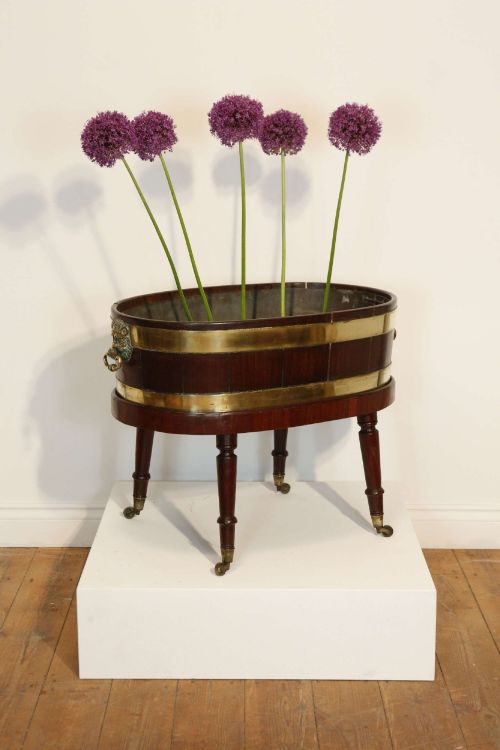
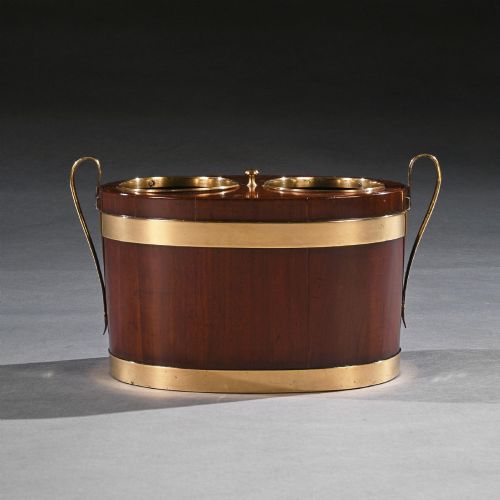
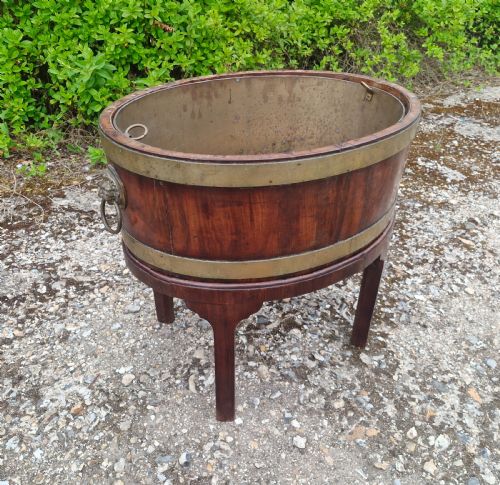
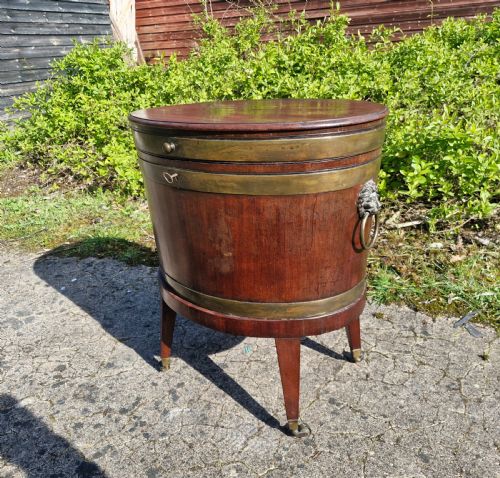
An oval mahogany cellarette is a capacious drinking vessel designed to chill wine bottles beside the dining table.
Oval Mahogany Cellarette
When you search for an oval mahogany cellarette, you encounter containers built to hold wine bottles in ice, often featuring watertight zinc or metal linings. The pieces listed here span the eighteenth century, the Georgian period, the nineteenth century, and later revivals, taking forms such as wine coolers, champagne buckets, and planters.
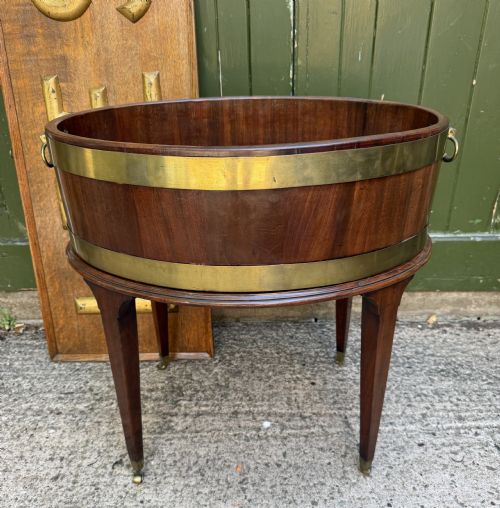
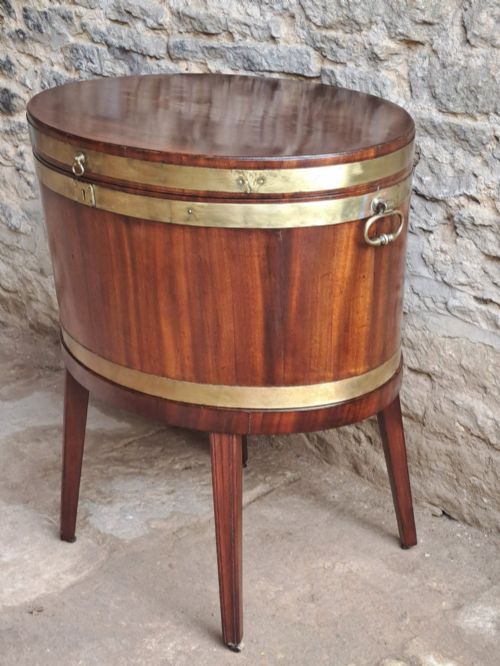
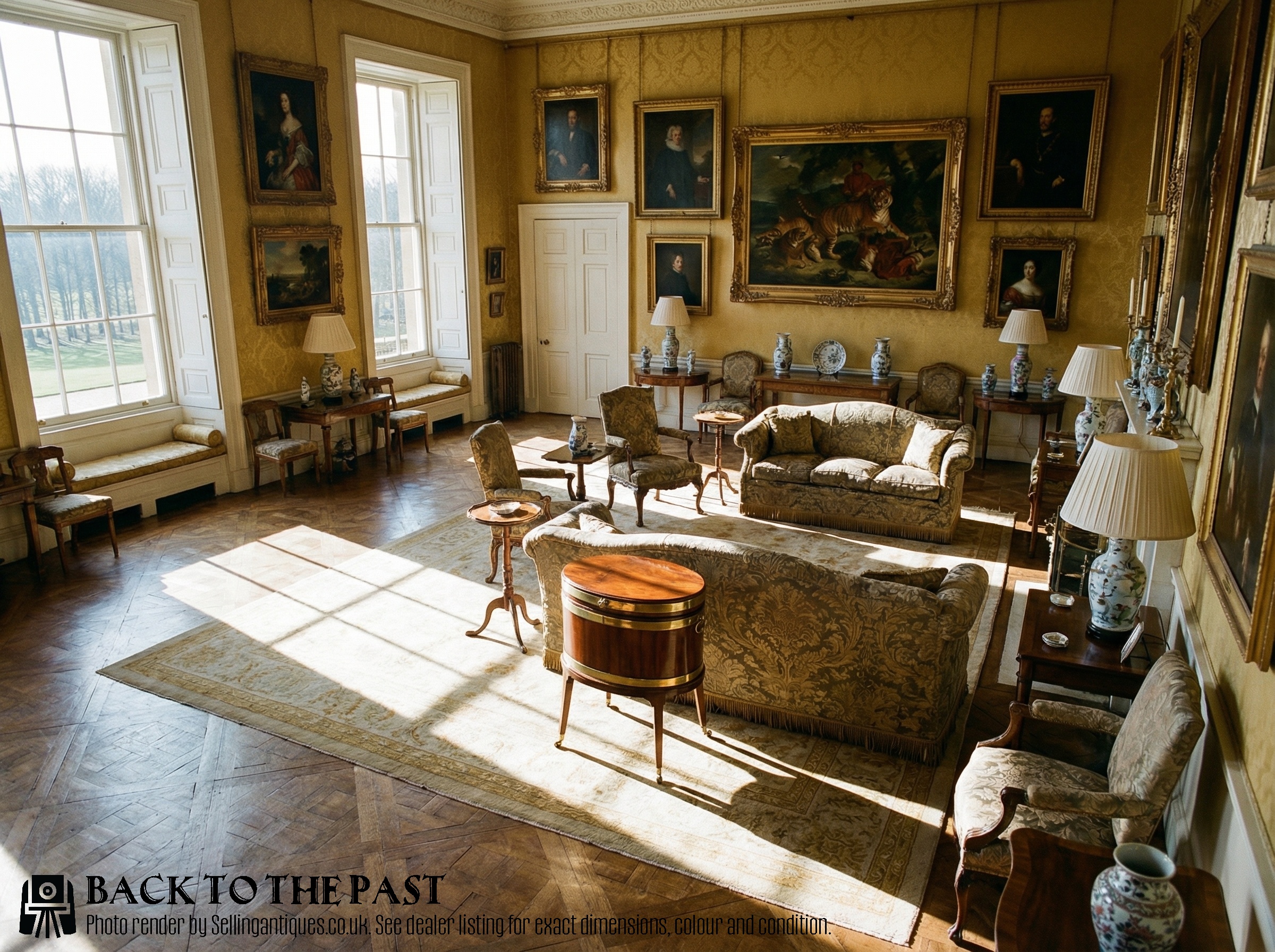
You are most likely to meet George III period examples, frequently bound in brass and occasionally mounted on original stands. Makers constructed these vessels to sit discreetly beneath the sideboard until needed during the course of a formal meal.
Alternative forms on this page include open wine coolers and jardinieres, reflecting how original function sometimes shifted over subsequent generations. Mahogany predominates among the surviving items, alongside occasional instances of walnut and satinwood.
How they were made
Cabinet makers built the bodies of these vessels from solid timber, shaping staves much like a cooper constructs a cask, then reinforced the oval forms with heavy brass bands or metal mounts. Interior metal or zinc liners protected the wood from moisture while ice chilled the bottles.
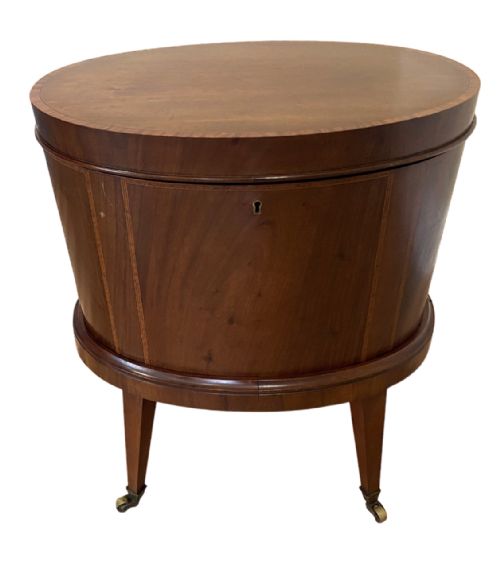
Finer workshops added decorative details such as boxwood inlay and contrasting satinwood stringing to the rich mahogany surfaces. Many coolers also received dedicated stands fitted with sturdy legs to elevate the vessel from the floor.
Oval Mahogany Cellarette Retail Price Guide 2026
Typical asking prices for oval mahogany cellarette among the pieces listed under this phrase on Sellingantiques today, from the lower quarter to the upper quarter. They describe what is for sale here now, not the wider market.
Several seventeenth-century drinking customs required these heavy vessels to be locked so servants could not sample the port.
What varies in quality
Quality rests on the integrity of the timber, the depth of the patination, and the crispness of any brass work or inlay. Pieces retaining their original matching stands command greater interest among collectors than those separated from their bases over time.
The sophistication of the joinery and the weight of the metal bands distinguish standard utility items from elite London workshop productions. Condition of the internal metal or zinc lining also influences desirability, as many liners suffered corrosion from melting ice.
Samual Norman
The Oval Mahogany Cellarette Glossary
- Cellarette
- A lockable container or freestanding chest designed to hold wine bottles near the dining table. They evolved during the eighteenth century to secure expensive vintages from household servants.
- Brass bound
- A construction method utilising heavy brass bands encircling wooden staves to provide structural strength. This technique borrows directly from cooperage traditions used in bucket making.
- Wine cooler
- An open or lidded vessel lined with metal or zinc to hold ice and water for chilling bottles. These items stood on the floor or on low dedicated stands.
- Jardiniere
- An ornamental stand or container used to hold potted plants and flowers. Many eighteenth-century wine coolers later found second lives as planters in Victorian drawing rooms.
- Patina
- The deep surface sheen and coloration developed by aged wood through decades of handling and polishing. Collectors look for a warm, undisturbed glow on mahogany surfaces.
Oval Mahogany Cellarette: Frequently Asked Questions
What is a cellarette used for?
A cellarette served as a portable cellar beside the dining table, holding several wine bottles in readiness for guests.
Servants filled the internal zinc or metal compartment with ice to keep white wines and champagne chilled during lengthy meals.
How do I identify a George III piece?
George III pieces display characteristic eighteenth-century proportions, rich mahogany timber, and traditional brass banding.
Many also feature fine boxwood stringing or rest upon original stands with square tapered legs.
Can I use a wine cooler as a planter?
Many historic wine coolers now function successfully as indoor plant holders due to their waterproof metal linings.
Period listings frequently describe these vessels as jardiniere or planter conversions dating from the nineteenth century.
Did these coolers always have stands?
Some cellarettes sat directly on the floor beneath the sideboard, while others rested on dedicated fitted stands.
Survivors with their original stands remain scarcer and highly sought after by collectors.